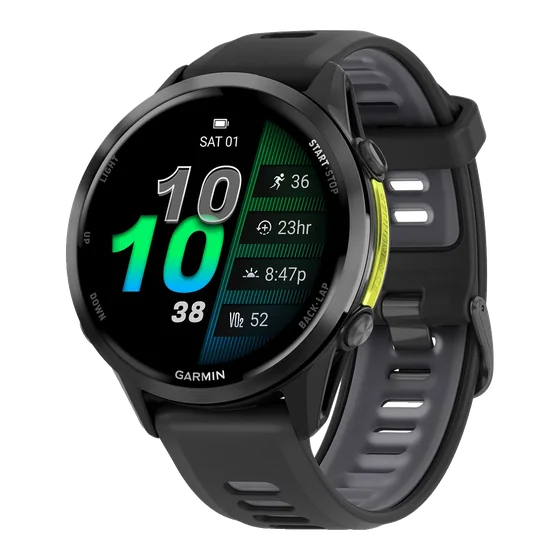
Amazfit Active Max: what living with it is like
Price band: under $200
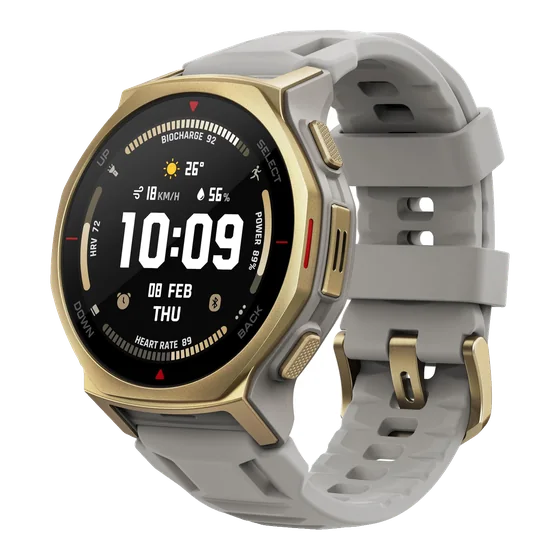
It's a big watch that wears light: 1.9 in (48.5 mm) across, but only 1.4 oz (39.5 g) without the strap, with a 1.5 in AMOLED screen. It comes in one size, model A2557. The smaller Active 3 is a different watch, and nothing on this page carries over to it.
On the box you get free contour and ski maps with turn-by-turn directions, 4 GB for music and podcast files, a speaker and mic, automatic rep counting in the gym and no subscription. The maps are real, though Tom's Guide found setting up navigation needlessly complicated. Hikers are a different buyer from the runner this page is for. On wooded trails and switchbacks, where you need the map most, the tracks testers saw drifting make it the wrong watch. Our hiking with maps guide skips it for that buyer and sends budget hikers to the PACE 4. The music is your own files only: no Spotify, no streaming apps. Owners keep reporting that it finds satellites in seconds and that the big screen is easy to read in the pool. The daily friction lives in the Zepp app, which testers keep describing as cluttered and more like a storefront than a training log, though it's getting better.
How many days does it really last with the screen always on?
Longer than Amazfit says, which is not a sentence we get to write often. Amazfit claims 25 days of typical use and 10 days with the screen always on. The Run Testers got 16 days at full brightness with always-on. T3, on raise-to-wake with a few GPS workouts a week, got comfortably over 10 days. Owners who leave the screen on report over a week. One got seven or eight days on a training week busy enough to include pool and gym sessions.
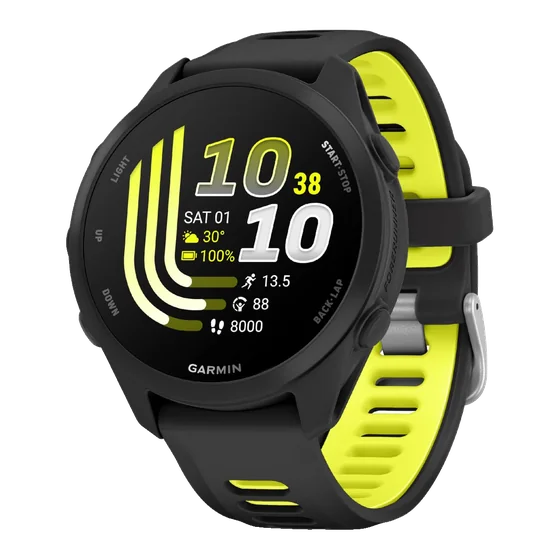
A maker that prints the screen setting beside its battery figure is inviting someone to check it, and I count that in its favor on a spec sheet. Amazfit printed it, and the checks came back on Amazfit's side. Plan on one to two weeks with the screen always on. The Forerunner 70 and PACE 4 both measured between 4.5 and 6 days with the screen on. That's the difference between a charger on the nightstand and one in a drawer.
The one number nobody has checked is the 64 hours of GPS. No tester in our evidence ran it flat on a GPS workout, and the with-music figure some reviews print is Amazfit's own, restated. Our GPS battery planner treats it as a claim until someone measures it.
Is its single-band GPS accurate enough to train by?
On open roads, yes. Worn alongside Garmin's own flagships, the fēnix 8 Pro and Forerunner 970, it logged distances for The Run Testers' team that barely differed from either, even under highway overpasses. The Quantified Scientist's running loops looked solid, and Tom's Guide's ski day lined up with a Garmin Instinct 3.
Off the open road, the story changes. Tom's Guide logged a walk at 4.55 mi where a phone running Strava said 6.1 mi, and the climb at 1,588 ft against 1,232 ft. T3 watched its routes drift off the roads. A phone isn't a perfect yardstick, but losing about a quarter of a walk is not phone noise.
Weigh it this way. Every test against flagship watches on runs went well. The failures came on a walk and on T3's routes. That fits a watch with one GPS band and no stronger mode to switch to when the surroundings get hard. Train by it for weekly mileage and easy pace on open routes. Don't trust it to settle a PR downtown or under trees; our most accurate GPS watch guide covers the watches that will.
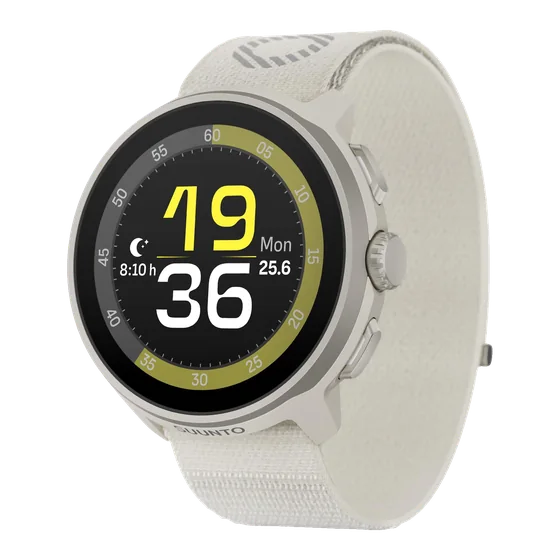
If distance matters most and you can't stretch a band, the Suunto Run gives up maps to get dual-band GPS. Testers who left its screen on found themselves at the charger every 3 or 4 days. Our under $200 guide weighs it for runners who put distance first.
Does the wrist heart rate work on runs and in the gym?
On steady runs, yes. Against a chest strap, The Quantified Scientist found it tracked closely on runs and even more closely on an indoor bike. On intervals, The Run Testers saw it spike and read high on average. On outdoor rides and with weights it wasn't usable; it missed nearly every set's peak.
So the gym case for this watch is the rep counting, which T3 found occasionally miscounts, not the heart rate. Amazfit says it pairs with a chest strap. If your heart rate in the gym matters, wear one; our strength and running guide shows that no wrist sensor gets this right.
The verdict on the watch itself is simple. For open-road running with maps and the least charging in its band, buy it.
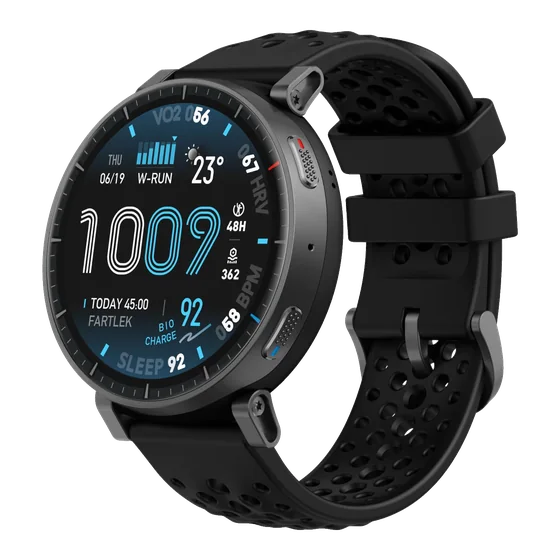 Amazfit Active MaxUnder $200