The verdict

Under $600Buy

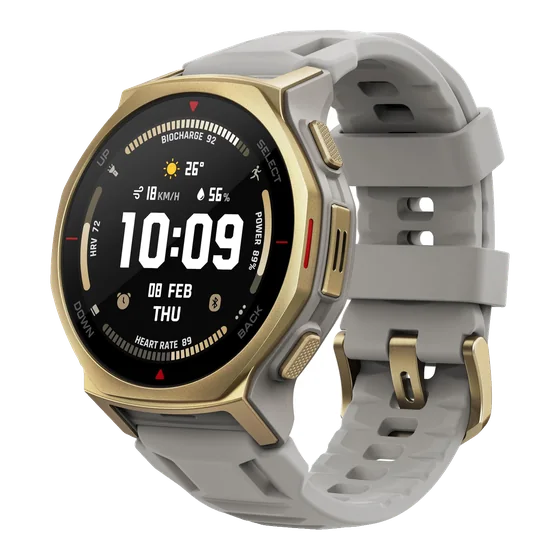
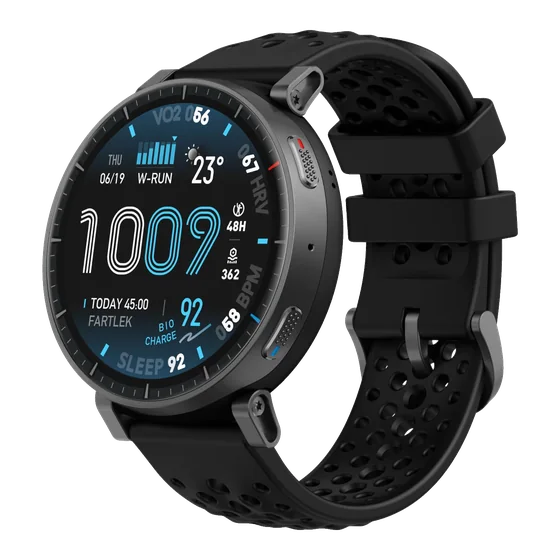
Suunto Vertical 2

The watch under review: the longest AMOLED day with the map up

Milewright's call: buy the steel Suunto Vertical 2 if you hike or run ultras, have an average or larger wrist, and want a bright AMOLED map screen that lasts the longest day. Slim wrists should look at the Forerunner 970.

Who it suits

Hikers and ultra runners with average or larger wrists who want a bright map screen, a real flashlight and the most GPS hours from an AMOLED watch

The catch

Three ounces of steel that slides on a slim wrist, and maps that won't re-route you

Opens Amazon.com · Prices change often

At a glance

Price bands, not prices

WatchVerdictWho it suitsThe catchPrice band and link
Suunto Vertical 2Our pickThe watch under review: the longest AMOLED day with the map upHikers and ultra runners with average or larger wrists who want a bright map screen, a real flashlight and the most GPS hours from an AMOLED watchThree ounces of steel that slides on a slim wrist, and maps that won't re-route youUnder $600View on Amazon (opens in a new tab)
Garmin Forerunner 970BuyThe lighter AMOLED for a slim wrist, and the Garmin to buy nowSlim-wristed hikers and trail runners, and anyone set on Garmin, whose longest day is a 50K or 100K and who want maps that plan the route for themWell under half the Vertical 2's multi-band batteryUnder $800View on Amazon (opens in a new tab)
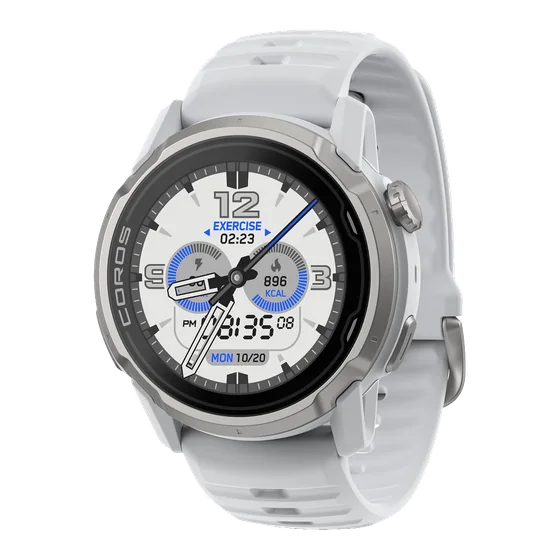
COROS APEX 4BuyLighter, if you'll take an MIP screenHikers and ultra runners who'll give up the bright AMOLED screen for less weight and the same measured drainIn deep forest shade its always-on MIP screen turns murky, right when you want the mapUnder $500View on Amazon (opens in a new tab)
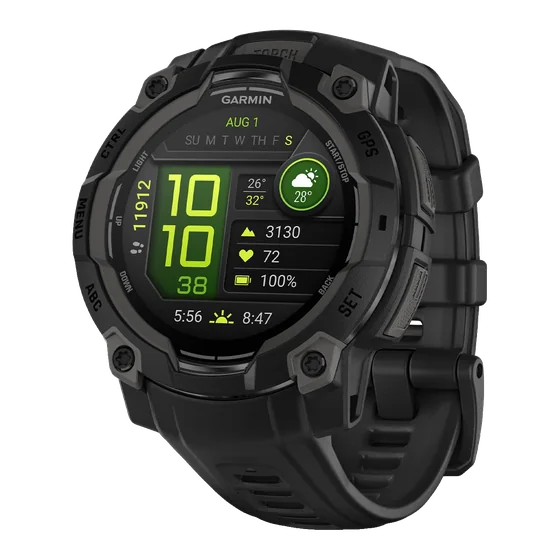
Garmin Enduro 4WaitWait: new solar MIP Garmin, no full battery test yetUltra runners who want Garmin's routable maps and the fewest charges, and can wait for a full testOne tester's extrapolations from a short outing and a single week are the only battery evidence; no one has run it to emptyUnder $900
Garmin fēnix 9 – 47 mmWaitWait: new AMOLED flagship, base model untestedBuyers who want a bright Garmin flagship with routable maps and divingNo one has measured the base 47 mm model's batteryUnder $1,000

Most AMOLED watches handle a long day the way a phone handles a long weekend: fine, as long as you don't look at it. The steel Suunto Vertical 2 is the exception. At 3 ounces, it also makes sure you never forget it's on. We'd buy it for a hiker or ultra runner with an average or larger wrist who wants a bright map screen. With the screen always lit, both GPS bands working and a route up, DC Rainmaker watched it drain about 2%/h over a long mountain day. Kept up, that pace lasts two full days and nights. That's a 100-miler through the dark, with charge to spare. The catches are the weight on a slim wrist, maps that won't find you a new trail, and a fussy iPhone route path. If your wrist is slim, wear the lighter Forerunner 970 instead.

Suunto Vertical 2Under $600
Check price on Amazon (opens in a new tab)

Opens Amazon.com · Prices change often

Suunto Vertical 2 review: what you're buying

Our pick

The watch under review: the longest AMOLED day with the map up

View on Amazon (opens in a new tab)

Price band: under $600

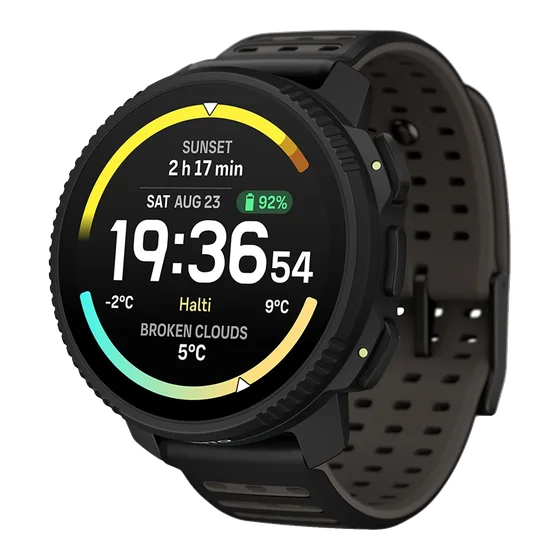
A big 1.5-inch AMOLED screen under sapphire, free worldwide topo maps on 32 GB, dual-band GPS and a real flashlight with white and red LEDs. It has three buttons, no crown and a 10 ATM rating. It doesn't store music or pay for coffee. This review covers the steel model; the titanium edition is a separate, untested watch.

Does the Suunto Vertical 2 battery hold with maps and multi-band on?

Close enough to plan a race on, which most AMOLED watches can't claim. In my old trade, a spec sheet that named its test condition was halfway to being believed. Suunto's does. Nobody has run one to empty in that mode, but DC Rainmaker's pace projects to roughly three-quarters of the 65 h.

Suunto promisesWhat testers and owners gotWhat it means for you
65 h in Performance, its multi-band modeAbout 2%/h through a long day of mountain running and hiking with dual-frequency GPS, the always-on screen and navigation running (DC Rainmaker). That pace projects to roughly three-quarters of the 65 hA 100-mile race through the night with the map up, and charge left at the finish
No figure for this mode66 h of continuous GPS, run to empty in All Systems mode (OutdoorGearLab), the longest it has recorded from an AMOLED watchStrong, but it's a different mode from Suunto's 65 h, so it doesn't check that number
250 h in Tour mode, with lower GPS accuracy and heart rate offNot measured by anyoneAn expedition fallback you take on trust
20 days as a smartwatch, with wake on wrist raiseAbout 10 days between charges over months of two GPS sessions with maps and three gym sessions a week (TechRadar)A charge every week and a half in a real training week

The shortfall from 65 h is mostly the lit screen and navigation, the two biggest drains on any AMOLED watch. One owner's 4-hour hike used 14% with the screen off, close to twice DC Rainmaker's pace. It's one watch, and unexplained. Plan your longest day on the testers' figures in our GPS battery planner.

It recharges in 72 minutes. Suunto's user guide covers a defective battery for 1 year or 300 charges, whichever comes first. At one charge every 10 days, the calendar wins that race by a mile. If one charge must cover your longest day with a bright screen, this is the AMOLED watch we'd buy.

How does 3 ounces sit on a slim wrist?

Not well. It weighs 3.0 oz (85 g) on OutdoorGearLab's scale, against Suunto's 3.1 oz (87 g). The case is 2 in (50 mm) across and comes in one size. Suunto lists it at 0.54 in (13.6 mm) thick; OutdoorGearLab measured it thicker. On a slim wrist, that's a deck of cards hunting for the wrist bone. Gadgets & Wearables found exactly that: it slid onto the bone and read heart rate poorly until moved higher. TechRadar found it clumsy in bed.

The screen is superb, rated to 2,000 nits, though testers found the dimmed always-on face hard to read. Slim wrists should start with our small-wrist guide.

Can you trust its wrist heart rate?

On steady trail runs, once it's warm and snug, yes. OutdoorGearLab found it read 3 to 4 bpm low for the first 15 minutes. After that it stayed within 5 bpm of an armband 90% of the time. The Quantified Scientist's chest-strap test shows where it wobbles:

ActivityAgreement with a chest strap (1.00 is perfect)In plain terms
Running0.88Two of three runs tracked well; one read high, likely locked onto stride rate
Indoor cycling1.00Spot on, in a single session
Outdoor cycling0.84Several rides read low or lost heart rate
WeightliftingNot scoredMissed most of the peaks in two sessions

Trust it for easy miles and long days on foot. For intervals, the bike or the gym, wear a chest strap.

What can't the Suunto Vertical 2 maps do?

It's a very good map and a poor guide. The topo maps are free and, the user guide says, download over Wi-Fi while charging. Routes import from planning apps or a GPX file. But it can't re-route you offline. Wander off and it shows the line you left; the way back is your problem. Owners also find the maps less detailed than Garmin's.

The iPhone route path is the catch owners return watches over. One owner on February 2026 software imported a GPX offline in Suunto's iOS app but couldn't send it to the watch. He sent the watch back, and no fix has been confirmed since. Plan at home on Wi-Fi and it won't touch you. Plan at a trailhead with no bars and it might.

One owner also found no "resume later", so a multi-day hike becomes separate recordings. Our hiking with maps guide covers watches that re-route. If you plan at home and read your own contours, we'd still buy it. If you need the watch to rescue a wrong turn, we wouldn't.

What's it like to live with day to day?

The GPS earns its keep: OutdoorGearLab's distance came within 0.03 mile over a measured 2-mile course. The buttons work through gloves. That matters, because the touchscreen gets confused when wet, and you can switch it off. Owners use the flashlight more than anything, though it resets to half-brightness each time. Sleep tracking is middling. No Suunto watch has ever been recalled by the CPSC.

The one catch, and our call

The weight. Everything else is a quirk or a missing smartwatch trick. Three ounces of steel on a slim wrist costs you daily: worse heart rate, a watch off at night, a lump that snags a jacket cuff. On an average or larger wrist, it's simply a big watch that lasts.

Milewright's call on the Vertical 2 is a buy. It's for the hiker or ultra runner with a wrist of average size or bigger who wants the brightest map screen for the longest day.
Suunto Vertical 2Under $600
Check price on Amazon (opens in a new tab)

Opens Amazon.com · Prices change often

How the Suunto Vertical 2 compares with the APEX 4, Forerunner 970, Enduro 4 and fēnix 9

Our pick

The watch under review: the longest AMOLED day with the map up

View on Amazon (opens in a new tab)
WatchScreenWeightMulti-band battery: claimed, then foundMaps re-route you?Our call
Suunto Vertical 2View on Amazon (opens in a new tab)AMOLED3.0 oz (85 g)65 h; about 2%/h with map and always-on, projecting to about two days and nightsNoBuy
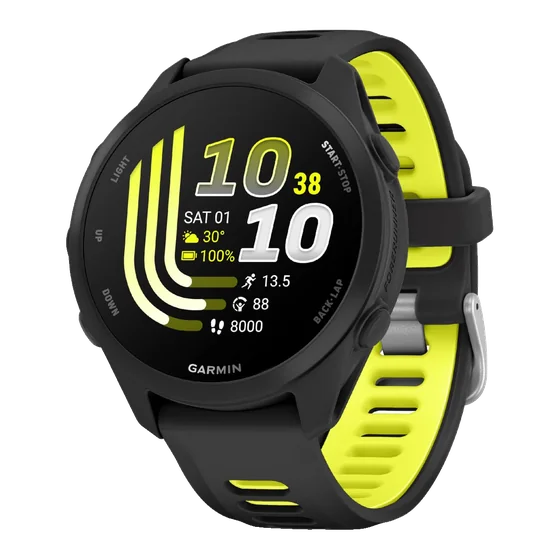
COROS APEX 4 (46mm)View on Amazon (opens in a new tab)MIP2.3 oz (64 g) on silicone41 h; about 2%/h with navigation, the same pace as the Vertical 2NoBuy
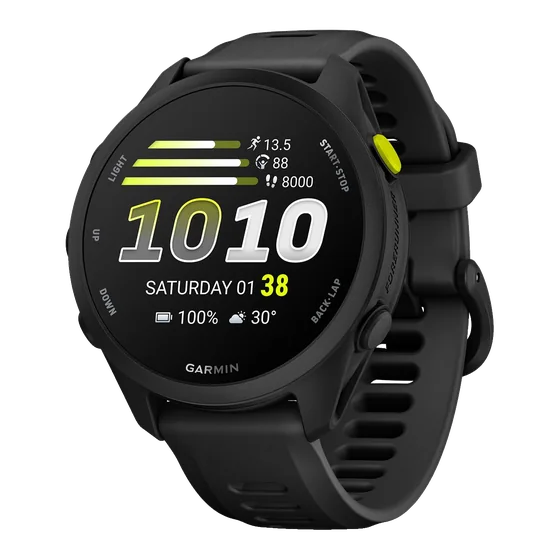
Garmin Forerunner 970View on Amazon (opens in a new tab)AMOLED2.0 oz (56 g)21 hours; 4.8%/hour in a 10K race, projecting to under a dayYesBuy
Garmin Enduro 4Solar MIP2.3 oz (66 g)60 h before solar; 1.4%/h on one outing, projecting about 70 hYesWait
Garmin fēnix 9 (47 mm)AMOLED2.6 oz (75 g)25 h; base model not measuredYesWait

Garmin Forerunner 970: the AMOLED we'd wear on a slim wrist

Price band: under $800

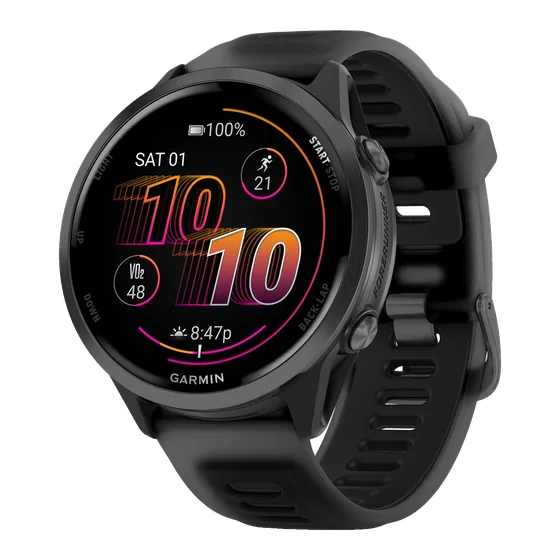
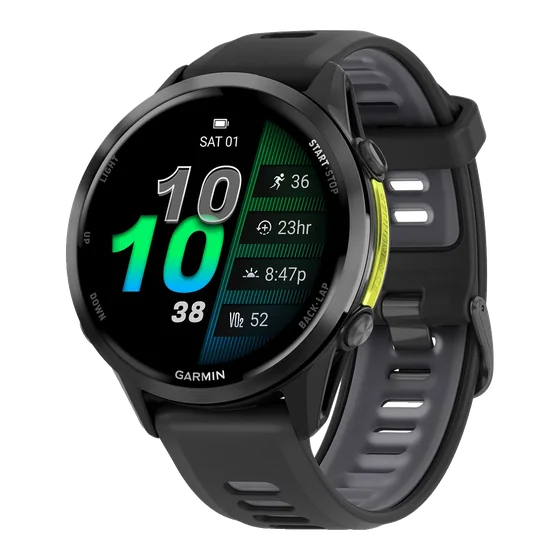
At 2.0 oz (56 g) in a 47 mm case, it weighs a third less than the Suunto. Garmin's maps also plan a new route when you go wrong. You pay in battery. Garmin's manual promises 21 hours with every satellite system and both bands on. Tom's Guide saw it drain at 4.8%/hour in a 10K race, a pace that runs out inside a day. That covers a 50K or 100K, not a 100-miler through the night. Our Forerunner 970 review has the detail. It's also the Garmin we'd buy today if you're set on the brand, ahead of the untested Enduro 4 and fēnix 9 below. For a slim wrist and a day that ends before dawn, we'd buy it.

Garmin Forerunner 970Under $800
Check price on Amazon (opens in a new tab)

Opens Amazon.com · Prices change often

COROS APEX 4 (46mm): lighter, if you'll give up the bright screen

Price band: under $500

On DC Rainmaker's long mountain hike, with dual-frequency GPS and a route up, it drained at the same 2%/h as the Vertical 2. COROS promises only 41 h in that mode, so treat the extra hours as likely, not proven. It weighs 2.3 oz (64 g) on silicone, and its maps don't re-route either. The trade is the always-on MIP screen. It turns murky in deep forest shade, just where the Suunto stays crisp. It's our pick on the hiking and ultra pages; our APEX 4 review and AMOLED vs MIP guide explain the trade. If your days end above tree line, we'd buy it.

COROS APEX 4Under $500
Check price on Amazon (opens in a new tab)

Opens Amazon.com · Prices change often

Garmin Enduro 4: wait

Price band: under $900

New this October: a solar MIP watch with routable maps at 2.3 oz (66 g). Garmin's figure for forced multi-band, before any sun, is 60 h. One tester has measured it so far. His six-hour-plus outing burned 1.4%/h, projecting about 70 h, with the sun's share unknown. He also extrapolated from a single week of training. No one has run it to empty, and there are no long-term owners. If you need a Garmin now, the Forerunner 970 is the one to buy. Otherwise, wait for a full test.

Garmin fēnix 9 (47 mm): wait

Price band: under $1,000

A bright AMOLED flagship with routable maps and dive features, at 2.6 oz (75 g). Garmin's own multi-band figure is 25 h, well under half of Suunto's. Testers so far have worn Pro models, not this base watch. Wait for a test of the exact model.

Our verdict on the Suunto Vertical 2

Our pick

The watch under review: the longest AMOLED day with the map up

For a hiker or ultra runner with an average or larger wrist who wants AMOLED, buy the steel Vertical 2. Suunto's battery promise names its settings. No one has run it to empty in multi-band, but DC Rainmaker's pace projects to roughly three-quarters of the claimed 65 h. The map stays bright under trees through a long night. Its maps won't re-route you, and it's heavy. Of the AMOLED watches here, it's the one still lit at the last aid station.

Suunto Vertical 2Under $600
Check price on Amazon (opens in a new tab)

Opens Amazon.com · Prices change often

The evidence in full

20 sources

Battery, by source (steel Vertical 2)

SourceSettingsResultKind
Suunto USPerformance, multi-band65 hClaimed
Suunto USTour, lower GPS accuracy, heart rate off250 hClaimed
Suunto USSmartwatch, daily heart rate on, wake on wrist raise20 daysClaimed
DC Rainmaker, launch firmware, Sept 2025Long mountain day of running and hiking, dual-frequency, always-on, navigationAbout 2%/h, projecting to roughly three-quarters of the 65 h claim; it outlasted the Garmin and Apple flagships worn the same dayMeasured pace, not a rundown
OutdoorGearLabContinuous GPS, All Systems mode66 h to empty; 72 min to rechargeMeasured rundown
TechRadar, months of wearTwo GPS sessions with maps, three gym sessions a week, smartwatch useAbout 10 days between chargesObserved
One owner, July 2026 thread4-hour hike, Performance, always-on off14% used, close to twice DC Rainmaker's hourly paceSingle report, not a rundown

OutdoorGearLab's rundown was filed first as multi-band and corrected to All Systems mode on 2026-11-04, so it is not a check of Suunto's 65 h Performance figure. The single owner's faster burn is unexplained: map scrolling, a partial-charge reading or firmware are all possible. No one has published a full multi-band rundown, and Tour mode is untested.

Wrist heart rate, by source

  • OutdoorGearLab, three runs against a Polar Verity Sense armband: 3 to 4 bpm low for the first 15 minutes, then a mean difference near zero with 90% of readings within 5 bpm.
  • Gadgets & Wearables, central London: poor readings while the watch slid toward the wrist bone; 150 against 151 bpm average, and maximums of 172 against 171, after it was moved higher.
  • The Quantified Scientist, Polar H10 chest strap: running 0.88 (one of three runs high, possibly cadence lock at about 158 steps a minute), indoor cycling 1.00 (single session), outdoor cycling 0.84 (several rides low or dropped), weightlifting missed most peaks in two sessions. He notes optical sensors struggle on his own wrist. TechRadar also saw confused readings in strength training and racquet sports.
  • These split mainly by wrist, fit and activity rather than by firmware.

GPS

  • OutdoorGearLab: within 0.03 mile over a known 2-mile course.
  • Gadgets & Wearables, central London: 10.71 km against a Garmin Forerunner 955's 10.69 km, and an identical 7.56 km on a second run; average positional gap about 54 m, maximum about 124 m.
  • The Quantified Scientist, dual-frequency: consistent laps beside a tall building.
  • Open water: DC Rainmaker's one swim was off, but his reference buoy sank, so it settles nothing.

Size, weight and comfort

  • Weight: 87 g on Suunto's spec, 85 g on OutdoorGearLab's scale, and TechRadar's figure lands between the two. The titanium edition, a different product, is lighter on Suunto's spec and untested.
  • Thickness: 13.6 mm quoted by TechRadar and The Quantified Scientist; OutdoorGearLab measured more, likely including the sensor bump. Diameter: OutdoorGearLab measured 50.0 mm, and The Quantified Scientist gives a figure a millimeter smaller.
  • Comfort: DC Rainmaker found the band stiff for weeks; TechRadar found the watch heavy and cumbersome in bed.

Maps and software

  • No offline re-routing (Suunto user guide, DC Rainmaker). DC Rainmaker restarted the watch once to get a new map to render.
  • Owners: maps good for orientation on planned and improvised hikes. One trial owner missed trail labels and got impractical city routing.
  • Route capacity: DC Rainmaker found about 10 to 12 routes fit in September 2025; an owner in October 2026 corrected his own figure of 12 to 100. Most likely a firmware change; no release note in our research confirms it.
  • iOS offline GPX import failed to reach the watch for one trial owner on February 2026 software, who returned it for an Enduro 3. Later fixes are not verified.
  • One owner switching from a Quatix 7: no "resume later", no race calendar, re-following a past activity needs the app, notifications lack caller names.
  • Flashlight interface at launch: resets to 50% white each time; menu stays on screen after turning off.
  • Day to day: The Quantified Scientist saw consistent laps beside a tall building; OutdoorGearLab found menu scrolling slower than a crown.
  • Sleep, The Quantified Scientist against a ZMAX EEG headband: deep sleep agreed 50% of the time, REM about as often, and light sleep noticeably better; he calls it mediocre.

Left out because the model isn't confirmed: owner reports of tilted displays and a split on sleep tracking come from threads where the model name is abbreviated, so we haven't attached them to this watch.

Identity and safety: Suunto US lists steel codes SS051204000 to SS051207000. FCC ID not confirmed: the user guide's radio type line appears carried over from the first Vertical, and no filing names the Vertical 2. The CPSC database shows no recall for any Suunto watch.

Rivals

  • Forerunner 970: Tom's Guide's 4.8%/hour came from one 10K race with multi-band, always-on and a chest strap. DC Rainmaker's 4-hour hike at lowest brightness with navigation extrapolated to about 30 hours. Daily battery varies widely with screen settings and firmware date; see our Forerunner 970 review.
  • APEX 4 (46mm): DC Rainmaker's October 2025 test found the recorded track turned to "connect the dots" on switchbacks when a route was loaded; no release note through September 2026 names a fix.
  • Enduro 4: Bautsch Sportstec's figures are extrapolations from a single outing of just over six hours and a one-week test, with solar gain not separated. DC Rainmaker has published only a first look.
  • fēnix 9 (47 mm): DC Rainmaker's battery, GPS and heart rate testing used Pro units; the base model has no measurement in our research.

Research behind this page: 5 models weighed; 4 maker manuals among them; across this site's research, 367 sources kept in full; 148 Reddit threads read, kept as the reader's summary, not in full.

Sources

How we research

Milewright doesn't test watches. It sets each maker's claim against what labs, reviewers and owners measured on the exact same model, and tells you which number to believe.

How we research GPS watches