At a glance

Price bands, not prices

WatchVerdictWho it suitsThe catchPrice band and link
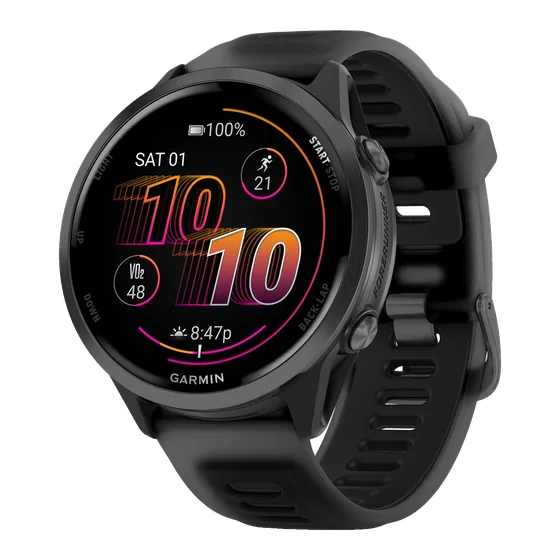
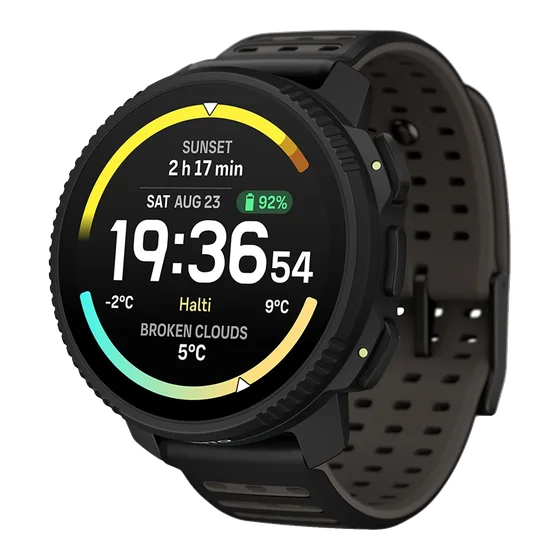
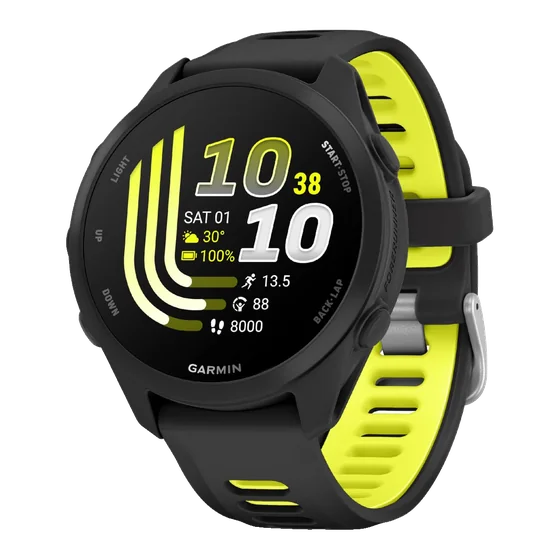
Garmin Forerunner 970Our pickBest watch for marathon trainingSerious road runners who want race-accurate GPS, multi-band battery that projects to about Garmin's 21 hours, and Garmin's deepest training toolsSome units register phantom touchscreen taps, and a warranty swap has cured it for some owners but not allUnder $800View on Amazon (opens in a new tab)
Garmin Forerunner 570 – 47mmBuyThe same race for one price band lessRoad marathoners on familiar routes who never need a map and don't mind charging twice a week with the screen always onThree to four days between charges with the always-on screenUnder $600View on Amazon (opens in a new tab)
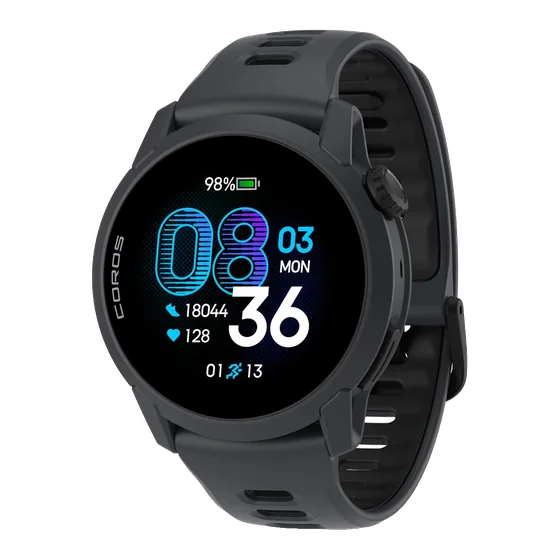
COROS PACE 4BuyBest marathon watch on a budgetRunners who want the most race-day battery and top-tier GPS for the least money, and will judge their own recoveryNo readiness score, and the on-watch training load resets every MondayUnder $250View on Amazon (opens in a new tab)
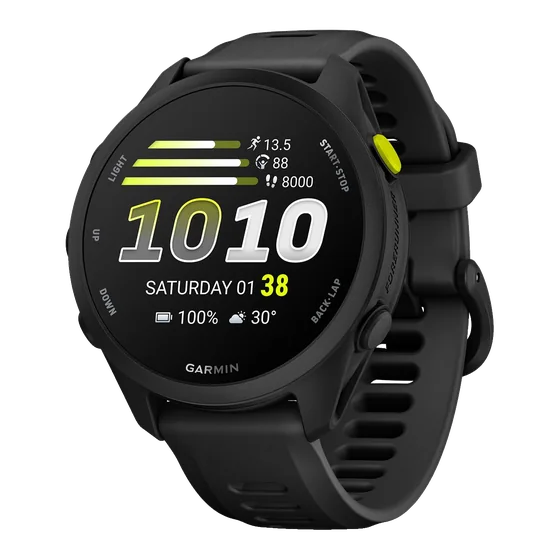
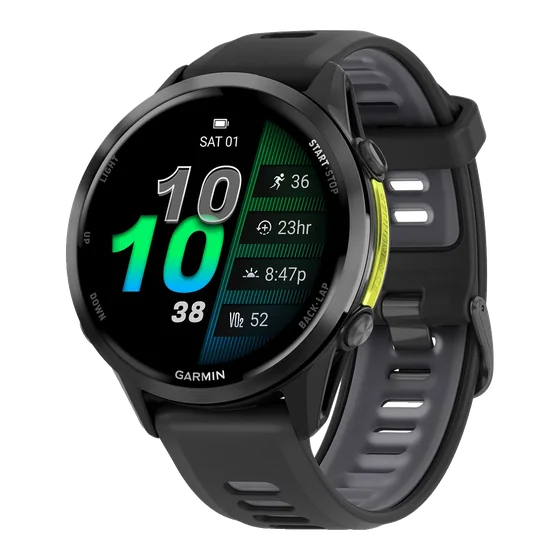
Garmin Forerunner 70BuyBest Garmin coaching under $250First-time marathoners who want Garmin Coach plans and a readiness score on the wristIt doesn't predict your race timeUnder $250View on Amazon (opens in a new tab)
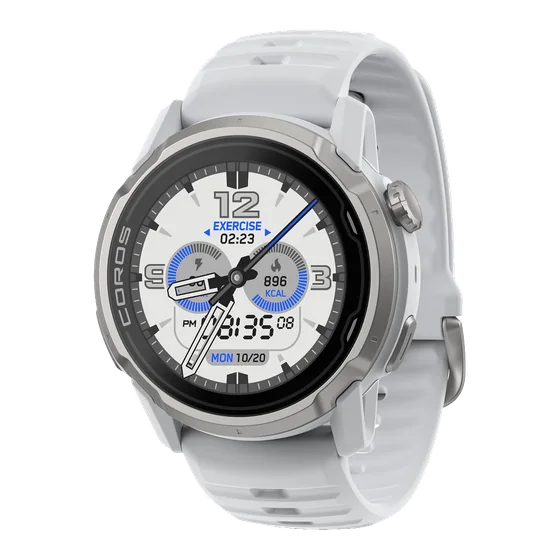
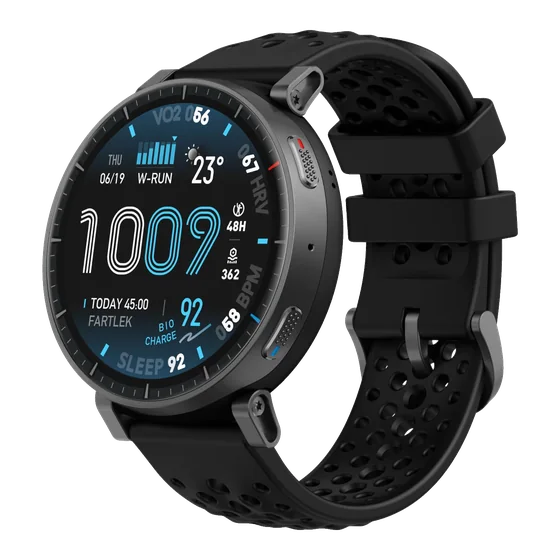
COROS PACE 4 ProWaitNew: wait for the battery fixRunners who want a big, bright screen and maps for less than a Forerunner 570Multi-band battery tested well under COROS's claim, with the promised fix not yet releasedUnder $450

Every watch we'd strap to a marathoner's wrist will still be recording at the finish, even on a 6:00 day. Battery stopped being the race-day question a while ago. Now it's the Wednesday-night question of whether you remembered to charge. What's left to decide is GPS you can trust over 26.2, and training tools worth listening to for a whole block. Milewright's pick for marathon training is the Garmin Forerunner 970. Garmin's manual promises 21 hours of multi-band GPS. A measured 10K race, screen always on, drained it at a rate that projects to almost exactly that. The same race had it finishing a whisker short of the course. Its Running Tolerance score is the training number long-term testers credit with getting them through a mileage build in one piece. The catch: some units register taps nobody made, and a warranty swap has fixed that for some owners but not all.

Garmin Forerunner 970Under $800
Check price on Amazon (opens in a new tab)

Opens Amazon.com · Prices change often

What changes the answer for a marathoner

Three things, and battery isn't one of them.

First, maps and a flashlight. Drop those, along with Running Tolerance and sapphire glass, and the Forerunner 570 runs the same race for one price band less. Our Forerunner 570 vs 970 comparison goes mode by mode. Second, money. The COROS PACE 4 carries more race-day battery than either Garmin and tracks as well for under $250. Its training brain is thinner. Third, Garmin's coaching on a small budget, which is the Forerunner 70's job.

On an iPhone and eyeing the Apple Watch Ultra 4? Read our Apple Watch vs Garmin for running comparison first. It only works with an iPhone, and every marathon it has been tested on so far read long. If your longest day runs well past a marathon, the GPS battery planner works out which watch lasts it.

Garmin Forerunner 970: best watch for marathon training

Our pick

Best watch for marathon training

View on Amazon (opens in a new tab)

Price band: under $800

Garmin prints 21 hours of multi-band GPS. Nobody has run a 970 down in that mode, but a 10K race drain projects to about 21 hours. Burning 4.8%/hour in that race with the screen always on, it uses about a seventh of the charge over a 3:00 marathon. A 6:00 one takes a little under a third. You'll start the race worrying about your hamstring, not your watch.

It's accurate where it counts. Across about 30 workouts against reference GPS units, its land tracks came out perfect or near perfect. On that measured 10K it came in about two bus lengths short. Hold an even pace and its optical sensor reads like a chest strap, which is about the ceiling for wrist heart rate.

The training tools are why it beats the cheaper watches. Training Readiness tells you whether today's tempo run is a good idea. The race predictor and PacePro plan race day itself. Running Tolerance, which the 570 lacks, watches how fast you're piling on mileage. Two testers who wore the 970 for six months or more credit it with getting them through a build without injury. That's where most marathons are won or lost, months before the start.

Between charges, it lasts four to five days with the screen always on below maximum brightness. Owners who don't say which display setting they use report about two weeks between charges. The maps and LED flashlight earn their keep on a 5 a.m. long run in a strange city.

Where it falls down is the screen itself. On Garmin's own 970 forum, the busiest unresolved complaint is ghost touches: a scroll lands as a tap, and menus open by themselves. It seems to vary watch by watch, and Garmin deals with each case as it comes. A replacement has fixed it for some owners and not for others, and one went through three. It's an irritation with a warranty route, not a fault that will cost you a race. We'd buy it.

Garmin Forerunner 970Under $800
Check price on Amazon (opens in a new tab)

Opens Amazon.com · Prices change often

Garmin Forerunner 570 (47mm): the same race for one price band less

Buy

The same race for one price band less

View on Amazon (opens in a new tab)

Price band: under $600

On race morning a Forerunner 570 is most of a 970. You get Training Readiness, the race predictor, projected race time and PacePro. Spotify, Amazon Music, Deezer and YouTube Music download to it; Apple Music doesn't. You give up maps, the LED flashlight, sapphire glass, Running Tolerance and a third of the multi-band battery on paper.

That paper is still plenty. Garmin claims 14 hours in multi-band on the 47mm. In the same 10K race test, a 570 of unrecorded size, possibly the smaller-cased sibling rather than this 47mm, burned 6.0%/hour with the screen always on, a drain that projects past the claim. It was also one short race. One sample on an unidentified part is not a sign-off in my book, so we plan on the 14 hours. Even then, a 6:00 marathon uses well under half the charge. Play music in multi-band and Garmin's manual cuts it to 8 hours. That's still a marathon with a playlist, with less to spare.

A 47mm logged about 150 miles beside chest straps and reference watches. Its tracks and heart rate never wandered meaningfully from them. It also beat the older Forerunner 265 on a twisting city half.

The catch is days between charges. With the screen always on, a 47mm needed charging every three to four days with daily runs. With raise-to-wake it lasted over a week. Garmin's 570 manual puts the cure in its battery tips: stop using the always-on screen and turn the brightness down. Twice-a-week charging is a habit, not a hardship. For a road runner who never navigates by map, we'd buy it and put the savings toward race entries.

Garmin Forerunner 570 – 47mmUnder $600
Check price on Amazon (opens in a new tab)

Opens Amazon.com · Prices change often

COROS PACE 4: best marathon watch on a budget

Buy

Best marathon watch on a budget

View on Amazon (opens in a new tab)

Price band: under $250

The cheapest watch here has the most race-day battery of the three buys. COROS claims 31 hours in dual-frequency, or 24 with the screen always on. Measured in max GPS with always-on, it drained 4%/h, which projects to roughly COROS's own always-on figure. A 6:00 marathon takes about a quarter of the charge.

The GPS is no compromise either. Over six months that took in the London Marathon and the Paris Half, testers found its tracks matching the Forerunner 970's almost flawlessly. With the nylon band it comes to 1.1 oz (32 g), and a few miles in you'll stop noticing it's there. It comes with free marathon plans and race predictions, gained Pace Strategy in a March update, and asks for no subscription. Our PACE 4 review has the rest. COROS vs Garmin sets it beside the Garmins at each price.

The catch is the training brain. There's no readiness score, only an overnight HRV status. The training-load figure on the watch resets every Monday, so by your Sunday long run it describes a week that's nearly over. If you want the watch to judge your recovery, the Garmins do it better. If you'd rather judge it yourself and spend the difference on shoes, we'd buy it.

COROS PACE 4Under $250
Check price on Amazon (opens in a new tab)

Opens Amazon.com · Prices change often

Garmin Forerunner 70: best Garmin coaching under $250

Buy

Best Garmin coaching under $250

View on Amazon (opens in a new tab)

Price band: under $250

The Forerunner 70 skips multi-band GPS, and on the evidence it barely matters. Downtown among tall buildings, its tracks were virtually identical to what a fēnix 8 Pro recorded with multi-band switched on. Training Readiness and Garmin Coach's adaptive plans come on the wrist with no subscription.

Battery is the thinnest here. Its best GPS mode claims 16 hours, and one test hour in that mode burned just under 10%/hour. That leaves a bit under half after a 6:00 marathon. It's enough, with less spare than anything else on this page. According to DC Rainmaker, you can swap its battery yourself, which few watches allow.

The catch is that it won't predict your race time. For a first marathon where the goal is the finish line, that's a missing nicety. For a runner chasing a time, it's the reason to step up to the 570. For a first marathon on Garmin, we'd buy it.

Garmin Forerunner 70Under $250
Check price on Amazon (opens in a new tab)

Opens Amazon.com · Prices change often

New this year, and what we're watching

COROS PACE 4 Pro: wait for the battery fix

Wait

Price band: under $450

This is the September launch with the big 1.47 in screen, sapphire and a titanium bezel, at 1.5 oz (43 g) on nylon. COROS's battery page lists 40 hours in its multi-band Max mode on the default display. It drops to 30 hours when the screen stays lit. DC Rainmaker's runs in that same mode, display lit throughout, pointed to under 20 hours. One run of 90 minutes took 8% of the charge. COROS traced the shortfall to software bugs in the GPS system and in how it scans for cycling sensors, and says a fix will arrive in November. Its release notes on October 30 showed nothing newer than the September build. COROS deserves credit for admitting the bug in public, which beats the usual silence. But a promised fix isn't a measured one.

Race day isn't where this bites. Even under 20 hours, a 6:00 marathon leaves about two-thirds of the charge. The cost shows up between charges across a training block. The readiness score is missing here too, as on the PACE 4. Wait for the fixed firmware and a fresh battery test. If it lands near COROS's always-on figure, this becomes the most interesting COROS for a marathoner.

Apple Watch Ultra 4 and the fēnix 9

Under $800

The Apple Watch Ultra 4 (September) claims 18 hours in a normal outdoor run. A tester's extrapolation from a ride and a longer activity projects to about 18.6 hours. Nobody has yet run one down in an outdoor run. Its 45-hour Max Extended mode gets there by hiding live splits and alerts, which is no use when you're pacing. The open question for a marathoner is distance. One marathon logged 26.57 mi, another finished more than half a mile long, and one owner's watch read nearly a mile over. It needs an iPhone. What we'd wait for is a race checked against the certified course line, not another watch on the other wrist. Until then, our Apple Watch vs Garmin comparison weighs it properly.

The base fēnix 9 47mm (also September) claims 25 hours of multi-band GPS. Nearly every test so far was on Pro models, so wait for one on the base watch. Under $1,000 is a lot of watch for running in a straight line, and nothing on record changes the answer here.

How the picks were decided

Each watch's box figures for battery and GPS went up against what reviewers and owners got from that precise model. We noted the screen mode and firmware behind every gap. Nothing could win without two separate kinds of proof on the very model sold, one of them independent of the maker. A result from a sibling or an unstated case size is labeled as such. Behind this page: 14 models weighed, with 10 maker manuals in that number; 367 sources kept in full across all of Milewright's research; and 148 Reddit threads read and summarized for you rather than kept whole. The CPSC recall database shows no recall naming Garmin, Apple Watch or COROS.

Will the battery outlast my marathon?

Yes, on every pick. The tightest is the Forerunner 70, which leaves a bit under half its charge after a 6:00 finish. The roomiest of the buys is the PACE 4, using about a quarter. The evidence section below breaks down every tested watch from 3:00 to 6:00. Watch the music line, though. Garmin's own multi-band figures with music drop sharply: 8 hours on the 570, 12 on the 970. If your race goes past a marathon, use the GPS battery planner.

Do I need multi-band GPS for a road marathon?

Less than the marketing implies. Garmin's manual says multi-band helps "in challenging environments", meaning tall buildings and trees. On open roads, Garmin's single-band Forerunner 70 matched a multi-band flagship even downtown. If your marathon threads through skyscrapers, multi-band is cheap insurance. If not, the antenna matters more than the band count. Our most accurate GPS watch guide covers it.

Why does my watch read long on race day?

Because you don't run the tangents the course measurer ran. Every wobble in the track adds a few phantom yards, so most watches read a touch long over 26.2. That's normal. It's also a reason to pace by feel late in the race rather than chase the watch's mile splits. For a clean start, Garmin's manual for the Forerunner 570 says to find open sky, tilt the screen upward and hold still until the satellites lock. It also says to sync before race day so the watch's satellite data is current.

Do I need a subscription for the training tools?

No. COROS charges nothing. On Garmin, Connect+ is optional. The manual lists the paid extras: AI insights, LiveTrack+, Garmin Trails and nutrition logging. Garmin told DC Rainmaker that everything free before Connect+ stays free. Training Readiness and the race predictor aren't on that paid list.

The picks side by side

WatchBuyBest forMulti-band battery: box vs testedWhat a 6:00 marathon uses
Garmin Forerunner 970View on Amazon (opens in a new tab)Best overall21 h claimed; a 10K race drain projects to about 21 hA little under a third
Garmin Forerunner 570 (47mm)View on Amazon (opens in a new tab)Road racers who never need a map14 h claimed; one 10K drain projects past it, case size unstatedWell under half
COROS PACE 4View on Amazon (opens in a new tab)The tightest budget31 h claimed (24 h always-on); 4%/h testedAbout a quarter
Garmin Forerunner 70View on Amazon (opens in a new tab)Garmin coaching under $250No multi-band; 16 h claimed in its best mode; just under 10%/hour testedA bit over half
COROS PACE 4 ProWaitWait for the fix40 h claimed (30 h always-on); under 20 h projectedAbout a third

Our pick: the Garmin Forerunner 970

Our pick

Best watch for marathon training

The PACE 4 gives you more battery for less, and the 570 gives you the same race for less. Neither watches your training as closely, and the training is where a marathon is decided. The 970's GPS measured true on a race course, and its race drain projects to about the hours Garmin prints. Running Tolerance is the feature most worth paying for when the miles start stacking up. Charge it on Saturday, and the only thing left to worry about at the start line is you.

Garmin Forerunner 970Under $800
Check price on Amazon (opens in a new tab)

Opens Amazon.com · Prices change often

The evidence in full

36 sources

Battery at marathon pace, every watch with a test

Share of a full charge used at each finish time, worked out from the tested drain. Where a watch has no test in its multi-band mode, the row says which mode was measured.

WatchBox claim (multi-band)Tested drain3:00 finish4:00 finish5:00 finish6:00 finish
Forerunner 97021 h4.8%/hour (10K race, always-on)About a seventhAbout a fifthAbout a quarterUnder a third
Forerunner 57014 h (47mm)6.0%/hour (one 10K, always-on, on a 570 of unstated case size that may have been the smaller sibling)Under a fifthAbout a quarterJust under a thirdOver a third
COROS PACE 431 h (24 h always-on)4%/h (max GPS, always-on)An eighthA sixthA fifthA quarter
COROS PACE 4 Pro40 h (30 h always-on)Under 20 h projected; 8% in a 90-minute run (max GPS, always-on)A sixthOver a fifthOver a quarterAbout a third
Forerunner 70No multi-band (16 h All-Systems)Just under 10%/hour (best GPS mode, one hour)Nearly a thirdNearly two-fifthsNearly halfNearly three-fifths
COROS APEX 4 (46mm)41 h2%/h (dual-frequency with navigation, long hike)A sliverUnder a tenthA tenthAn eighth
Apple Watch Ultra 418 h (standard workout)7%/hour (one trail run, normal workout mode)A fifthOver a quarterOver a thirdOver two-fifths
Suunto Run20 h19 h measured in Colorado; about 10%/hour in Alaskan coldNearly a third (cold)Nearly two-fifths (cold)Nearly half (cold)Nearly three-fifths (cold)

Notes on the table:

  • None of these rows is a full rundown in multi-band except the Suunto Run's Colorado figure; the rest are drain rates over part of a charge, so their hours are projections.
  • The Forerunner 570 drain comes from Tom's Guide's 10K race, which did not say which case size raced. The only measured 47mm figures are for days between charges. No tester has run a 47mm through a marathon-length effort in multi-band.
  • The PACE 4 Pro rows use DC Rainmaker's projection on the launch firmware (V3.2008.0, 26 September 2026). A runner's half marathon, in a GPS mode he didn't name, drained 4.3%/h, which also projects well short of the claim. COROS's promised November fix had not appeared in its release notes by October 30.
  • The Forerunner 70 has no multi-band mode. TechRadar's figure is one hour in its best mode, brightness not stated, against Garmin's 16-hour All-Systems claim.
  • In the same hour-long run, the Ultra 4's Max Extended mode barely dented the battery, but it hides live heart rate and splits.

Every watch considered

WatchBandMulti-band claimRace or GPS evidenceHere
Garmin Forerunner 970under $80021 hFinished a measured 10K a whisker short; near-perfect land tracks over about 30 workoutsOverall pick
Garmin Forerunner 570 (47mm)under $60014 h47mm: no meaningful error over about 150 miles; a 570 of unstated size finished the measured 10K a whisker longPick
COROS PACE 4under $25031 hNear flawless over six months, including a marathon and a halfPick
Garmin Forerunner 70under $250None (16 h All-Systems)Downtown tracks matched a multi-band fēnix 8 ProPick
COROS PACE 4 Prounder $45040 hMatched a fēnix 9 Pro on trails; one city loop offset to the wrong side of the streetWait
Apple Watch Ultra 4under $80018 hTwo marathons read long, one at 26.57 miNew, listed with facts
Garmin fēnix 9 (47mm)under $1,00025 hNo test of the base modelNew, listed with facts
COROS APEX 4 (46mm)under $50041 hGood without a route loaded; over-smoothed with navigation on launch firmwareConsidered
Polar Vantage M3under $50027 hSplit: close to a fēnix 8 on runs, wobbly downtownConsidered
Suunto Rununder $20020 h1.98 mi on a known 2-mile courseConsidered
Garmin Instinct 3 (45mm AMOLED)under $35023 hAccurate on a fixed courseConsidered
Garmin vívoactive 6under $300None (17 h All-Systems)Within a few hundredths of a mile on a 2-mile courseConsidered
Garmin Forerunner 165under $200None (17 h All-Systems)Strong single-band tracks, on an unstated editionConsidered
Garmin Forerunner 170None (14 h All-Systems)Identical tracks to the Forerunner 70Considered

New releases: what we're waiting to see

  • Apple Watch Ultra 4, released September 2026. Apple claims 18 hours for a standard outdoor run. DC Rainmaker's extrapolation, from a ride and a longer activity rather than a run, projects to about 18.6 hours, and nobody has yet run one down in an outdoor run. Max Extended reaches 45 hours by hiding live splits, it needs an iPhone 11 or later, and two marathons so far read long against other watches. What we're waiting for: a marathon measured against the certified course line, a full battery rundown in an outdoor run, and race-day button use in rain once more owners report it. Our Apple Watch vs Garmin page covers it in full.
  • Garmin fēnix 9 (47mm), released September 2026. It claims 25 hours of forced multi-band and 30 hours in its normal mode, with maps, an LED flashlight and a 10 ATM case. Every tester result so far is on Pro units. What we're waiting for: battery, GPS and heart-rate tests on the base 47mm itself.

Skip these, and also considered

  • COROS APEX 4 (46mm). The battery leader, and our APEX 4 review and best ultra marathon watch page explain why it's a trail runner's watch. For road marathons it's heavier at 2.3 oz (64 g) on silicone, its MIP screen is duller, and the PACE 4 does the same race job for less.
  • Polar Vantage M3. The free running program reaches a marathon and its 27-hour claim is ample, but on a track session wrist heart rate ran up to 20 beats per minute under the chest strap, and the interval builder targets speed zones rather than exact paces.
  • Suunto Run. Its dual-band GPS is good, and our under-$200 page favors it for budget runners who build their own workouts. For marathon training, Runna plans never make it onto the watch and Suunto's own AI plans are marked incompatible with it. Wrist heart rate bobbed around on track intervals, and the Run 2 has already replaced it.
  • Garmin Instinct 3 (45mm AMOLED). It has Training Readiness and a race predictor, and our best running watch for beginners guide picks it for a new runner who wants a screen that stays lit for a whole week, with Garmin coaching and buttons only. A marathoner building toward a time is a different reader: its older heart-rate sensor and lack of music make the picks above the better fit here. Our under-$500 page also picks it for marked trails.
  • Garmin vívoactive 6. No multi-band, no Training Readiness, and running heart rate lagged a chest strap on changes of pace. Our Which Garmin guide picks it for runners and walkers who want playlists and Garmin Pay for the least money and will give up Garmin's training feedback. That trade is the opposite of what a marathoner buying for training tools wants.
  • Garmin Forerunner 165. No Training Readiness, Training Status or load features, and it sits on Garmin's older software that won't get the new features. The Forerunner 70 is the better start.
  • Garmin Forerunner 170. The same running core as the Forerunner 70 plus Garmin Pay and a barometric altimeter, with a slightly shorter battery. Nothing a marathoner needs over the 70.

Who tested what, and where sources disagree

  • Forerunner 970 battery: DC Rainmaker got 2.5 days with the screen always on at default brightness on launch firmware (June 2025). Tom's Guide (six months) and DesFit (one year) got four to six days later, after battery updates and at lower brightness. Owners who don't state their display setting report about two weeks; a gesture-wake screen is the likely explanation, but none of them confirmed it. No tester has run a 970 down in multi-band; the 21-hour figure on this page is a projection from Tom's Guide's 10K drain.
  • Forerunner 970 reliability: the ghost-touch forum thread is the largest open defect. Owners also describe early crashes that updates fixed, one display failure after an update (replaced), and elevation reading high since a May update. Forum views show attention, not failure rates, and no one has published a failure rate.
  • Forerunner 970 heart rate: The Quantified Scientist's correlation with a Polar H10 was 0.98 for running and 0.79 for weightlifting. Running Economy and Step Speed Loss need Garmin's HRM 600 strap.
  • Forerunner 570 battery: Tom's Guide (47mm) measured three to four days with always-on and over a week with raise-to-wake. Android Central (47mm) got up to about eight days with a gesture-wake screen. TechRadar and Live for the Outdoors tested the smaller 570, so their figures don't apply here. Tom's Guide notes Garmin has since pushed a battery update.
  • Forerunner 570 heart rate and GPS: The Quantified Scientist's results (running 0.97 against a Polar H10) and Tom's Guide's 10K race used a 570 of unstated size. Tom's Guide's long-term 47mm review found heart rate matching HRM200 and HRM600 straps "more or less beat for beat". Separately, one 570 logged far too much distance until a chest-strap distance setting was changed: a sensor setting, not GPS reception.
  • Garmin music: on the 570, 970 and other Garmins, headphone audio can cut out once an activity starts, and software 18.29 mutes on the second track skip. It depends on the headphone model.
  • PACE 4 GPS: beyond The Run Testers' six months of races, The Quantified Scientist ran it around the same loop again and again to see how closely its tracks agreed, and found them strong.
  • PACE 4 heart rate: DC Rainmaker, Tom's Guide and The Run Testers found running heart rate good. The Quantified Scientist, testing in winter against a Polar H10, found it poor and suspects cadence lock. Reddit reports lean his way in cold weather and on fast pace changes. Temperature, fit and individual wrists are the likely explanation. Our call stands either way: a chest strap settles it.
  • PACE 4 maps: maps arrived by firmware on 26 September 2026. Reviews from before then say it has none, and COROS's own FAQ still does. Storage is 4 GB, and DC Rainmaker found much of it already used.
  • PACE 4 indoor runners: one US runner who trained only on a treadmill never got Running Fitness or VO2 Max figures after months. It's one report, but worth knowing for a winter build indoors.
  • PACE 4 Pro, released September 2026: Tom's Guide measured over seven days with always-on and daily runs on its first charge, while DC Rainmaker got four to six days with one to two hours of GPS a day; GPS volume explains most of that. Early wearers, one heavily tattooed, describe wrist heart rate reading low on hard efforts, with no chest-strap reference. What we're waiting for: a battery re-test on the promised November firmware in Max mode with the screen always on, and open-water results, which no tester had published by November 1.
  • Forerunner 70: Tom's Guide got six days with always-on as a newer runner, and The Run Testers got four and a half running daily, against Garmin's five-day claim. DC Rainmaker's note that the battery can be swapped came in a comment reply; the procedure and parts are not yet published.
  • Apple Watch Ultra 4 distance: DC Rainmaker found its GPS very good on training runs and trails. The long readings came from crowded city marathons, and the reference watches in those races also read over the certified distance, so the pattern is real but the size of the error is open.
  • GPS across brands: in The Quantified Scientist's eight-watch marathon test, Garmin and COROS tracks sat closest to the average track, with Polar and Suunto further off. One run, one tester.
  • Connect+: TechRadar says formerly free Garmin features moved behind the paywall. Garmin's manual lists only new items as paid, and DC Rainmaker reports Garmin saying existing features stay free. We follow the manual.

Sources

How we research

Milewright doesn't test watches. It sets each maker's claim against what labs, reviewers and owners measured on the exact same model, and tells you which number to believe.

How we research GPS watches