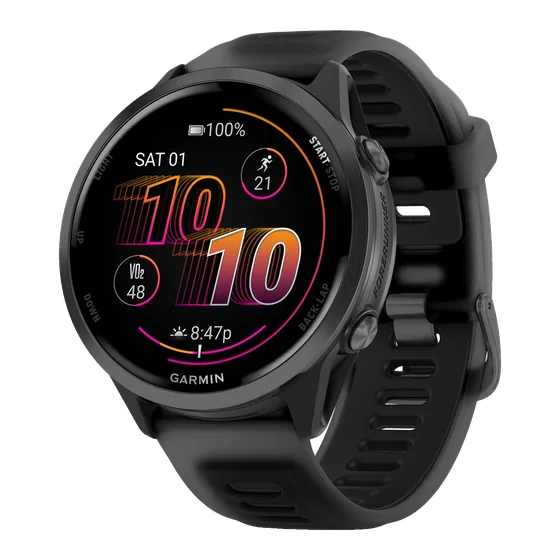
Ultra runners who want Garmin's routable maps and the most claimed hours, and can wait
Its battery hours rest on one six-hour test
Under $900
COROS PACE 4 ProWait
New: wait for the battery fix
COROS fans who want the big, bright screen, once a fresh test shows COROS's battery update has worked
Measured multi-band battery falls far short of COROS's own claim, fix pending
Under $450
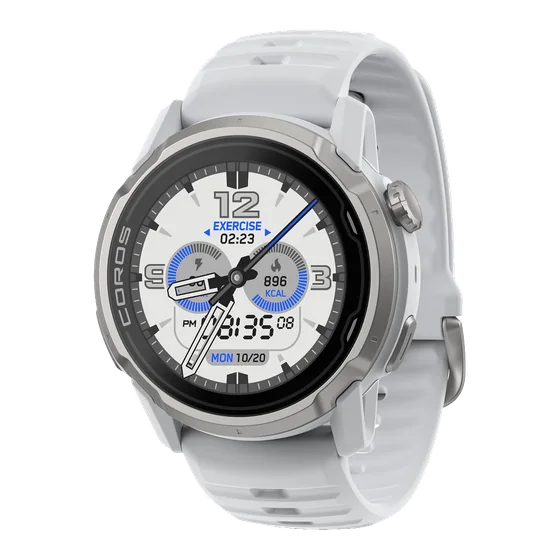
Most ultra watches are sold on a battery figure measured with the map closed and the screen asleep. That's a fine way to run a 100-miler, if you never need to know where you are. The COROS APEX 4 (46mm) is a rare watch whose measured pace, projected forward, runs longer than the figure on its box. The box promises 41 hours in its most accurate, dual-frequency mode. On a 14-hour mountain day with dual-frequency and navigation running, DC Rainmaker saw it burn a steady 2%/h. At that pace, a 100-miler ends with roughly two-fifths of the battery still there. It weighs 2.3 oz (64 g) and keeps topo maps with trail names on your wrist. Milewright's pick for an ultra marathon is the COROS APEX 4 (46mm). The catch: with a route loaded, that same lab found its recorded track smoothing switchbacks into straight lines. Total distance stayed close.
You need two days of GPS with no charger at all. Think a 200-miler or a multi-day stage race. Take the Suunto Vertical 2, the pick on our GPS watch battery planner. A lab has run it all the way to empty on continuous GPS, in its All Systems mode. The APEX 4 matches its multi-band pace, but only one long day of it has been measured.
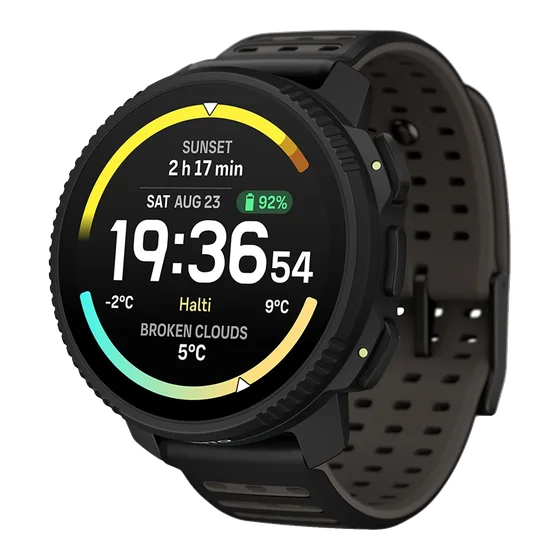
You'll run through the night on an average or larger wrist. The Vertical 2 again. It measured the same drain with its screen always on. Its AMOLED map stays bright where the APEX 4's always-on MIP screen goes dull in low light, and it carries a real LED light.
You live in Garmin's world and your longest race is 100K. The Forerunner 970's maps plan a new route for you. ClimbPro breaks down every climb.
Your budget ends in the under $250 band and so do your races at 100K. The PACE 4.
You run alone where your phone has no signal. None of our picks can call for help by satellite. Our guide to watches with satellite SOS weighs the ones that can, and what they cost to keep connected.
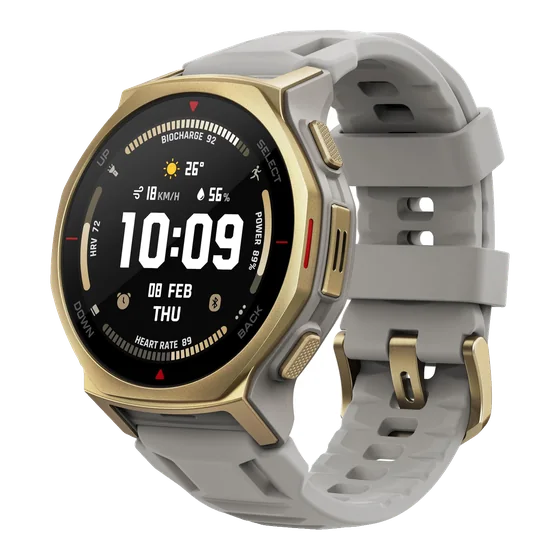
COROS APEX 4 (46mm): best ultra marathon watch for most trail runners
COROS prints three battery figures for this watch: 65, 53 and 41 hours. They wander around the internet as if they were interchangeable. The 65 belongs to Endurance mode, which never switches to dual-frequency at all. It tells you nothing about the GPS you'd race on. The figure that matters for racing is COROS's 41 hours in Dual Frequency, and the APEX 4's measured pace projects well past it with the map running. That's one long day measured and the rest projected, not a run to empty. But it was measured in exactly the condition you'll race in. Between races it barely needs the charger: a tester running almost daily was still at 34% after 12 days.
Testers who ran it under tree cover found the tracks excellent. Owners keep reporting that the maps pan fast enough to use at a junction, not just admire back at the car. Climb tools arrived late, but they arrived. The March 2026 update added Hill Alerts and Pace Strategy, which plans your effort around aid stations. At 2.3 oz (64 g), you can wear it for a day and a night without resenting it.
Its weak spot is what it writes down, not what it shows you. With a route loaded, DC Rainmaker's mountain tracks turned into connect-the-dots and lost their switchbacks. That was on October 2025 firmware, and the update log COROS has published since is silent on it. Your splits survive. Your map of the descent may look like it was drawn with a ruler. Annoying, and it won't cost anyone a finish.
We'd buy it for any race from a 50K to a 100-miler. If your event runs past two days without a charger, the Vertical 2 is the safer bet: a lab has run it to empty at 66 hours, in All Systems mode. Our COROS APEX 4 review has the rest.
Suunto claims 65 hours in its multi-band Performance mode. The same lab tested it with dual-frequency, the screen always on and navigation running over a long trail day. It measured the same 2%/h as the APEX 4, a pace that outlasts a 100-miler by a comfortable margin. It projects short of Suunto's 65 because the box doesn't count an always-on screen or a map. Then OutdoorGearLab ran one all the way to empty on continuous GPS in All Systems mode and got 66 hours. That's two kinds of test on the steel watch: a multi-band pace with the map up, and a full rundown in a lighter GPS mode. That rundown is why it's the pick on our battery planner. Nobody has yet run one down in multi-band.
What you get for the night section is the point. The AMOLED map stays bright at a dark junction. Two white LEDs and a red one are built into the case, so your light doesn't depend on the screen. Climb Guidance shows the next hill. The free topo maps show the trail, though they won't reroute you after a wrong turn.
The catch is weight: 3.0 oz (85 g) in steel, the heaviest watch we'd buy here. On a slim wrist, one tester found it sliding toward the wrist bone. It read heart rate poorly until he wore it higher. On an average or larger wrist, that's a price we'd pay for a real light at 3 a.m.
We'd buy it for any 100-miler where the night is the hard part, and for anything longer. Our Suunto Vertical 2 review covers the fit in detail.
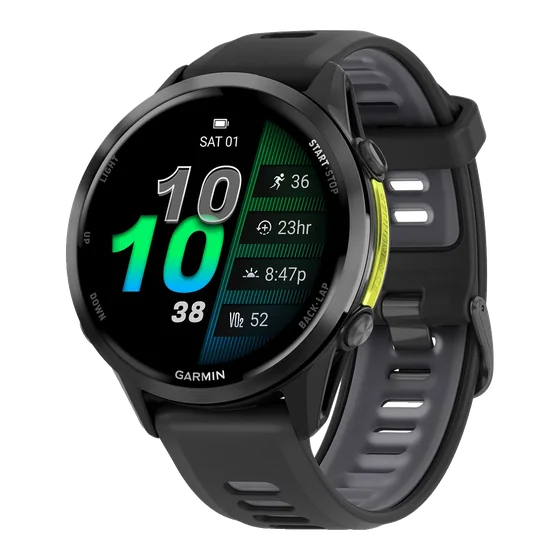
Garmin claims 21 hours with all satellite systems and multi-band on. In a 10K race with the screen always on, Tom's Guide saw it burn 4.8%/hour. That projects to about 21 hours. It's a 50K with about three-fifths of the battery left, and a 100K finished with under a quarter. Gentler settings stretch it. On a lab's hike at lowest brightness, in Garmin's SatIQ mode with full navigation, the numbers extrapolated to about 30 hours. SatIQ only uses multi-band when it thinks it needs to.
What the 970 does that the COROS and Suunto watches don't: its maps are routable. It can plan a way back when the course markings have blown into a ditch. ClimbPro tells you how long and how steep each climb is before you start it. It also has an LED flashlight and plays Spotify without your phone, all at 2.0 oz (56 g).
The catch is plain. In multi-band its measured pace projects to about 21 hours. A 100-miler means a charge on the move or a lighter GPS mode.
We'd buy it if you're a Garmin runner whose longest race is 100K. For a 100-miler, the APEX 4 lasts longer for less. More in our Forerunner 970 review.
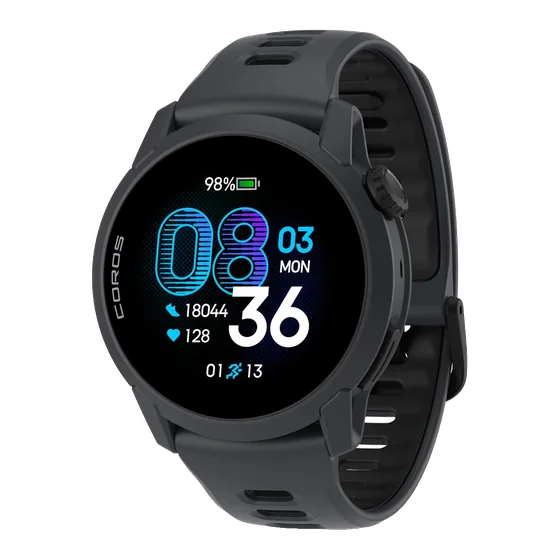
The box figure for the PACE 4 is 31 hours with dual-frequency on. A lab ran it that way with the display lit the whole time and measured 4%/h. That projects to about 25 hours, short of the box because the box assumes the screen sleeps. It's still a 50K with about two-thirds left, and a 100K with about a third. Since the September 2026 update it has real topo maps. The March update added Hill Alerts and Pace Strategy. At 1.1 oz (32 g) on its nylon band, it's the least watch you can wear and still navigate.
The catch is the 100-miler: that pace projects to an empty battery around hour 25. COROS's All Systems mode claims longer, but nobody has measured it on this watch. We wouldn't bet a buckle on an unmeasured claim.
We'd buy it for races up to 100K. If a 100-miler is on the calendar, stretch to the APEX 4. Our COROS PACE 4 review has the full picture.
Five watches here are new this fall. Three of them have no measured run with the map up on their exact models: the fēnix 9 (47 mm), the fēnix 9 Pro inReach (47 mm) and the Apple Watch Ultra 4. Their own claims sit in the 100K class. Garmin gives 25 and 26 hours of multi-band for the two fēnixes. Apple gives 18 hours for a standard outdoor workout and publishes no multi-band figure. The inReach's satellite messaging matters more to a solo runner than to anyone passing aid stations. In its Normal (SatIQ) mode, Garmin's claim halves from 32 hours to 16 hours with LiveTrack streaming over LTE; it gives no LTE figure for multi-band. The other two new watches are closer to this page's reader.
Garmin Enduro 4: wait for a full battery test
Wait
Price band: under $900
On paper, this is the ultra watch. Garmin claims 60 hours with multi-band forced on, more in steady sun. Its maps plan routes for you, ClimbPro maps out each climb, and an LED light sits in the case, all for 2.3 oz (66 g). The first independent number is encouraging and thin. On a walk-run of just over six hours in Max Accuracy, Bautsch Sportstec saw it use 1.4%/h. He extrapolated that to about 70 hours. It's one outing, with the solar gain not separated out and no run to empty. So the 70 is a projection, not a result. With navigation running, in a GPS mode he didn't state, the same tester saw about 2%/h. That's the pace the APEX 4 measured in dual-frequency, though the two may not be like for like.
Either way a 100-miler looks comfortable. That's exactly the conclusion we won't hand out on six hours of evidence. The same test found wrist heart rate within 2 bpm of a chest strap only 60% of the time over a long walk-run. And the Enduro 4 runs the fēnix 9's software, which crashed mid-run on DC Rainmaker's fēnix 9 test units at launch. A full rundown with the map up would change our minds.
Until then, we'd wait. If your race won't, buy the APEX 4.
COROS PACE 4 Pro: wait for the battery fix
Wait
Price band: under $450
On COROS's own battery page, the PACE 4 Pro gets 40 hours in dual-frequency, or 30 hours with the screen always on. DC Rainmaker tested exactly that always-on setting. He kept getting projections under 20 hours, with 8% gone in an hour and a half of running. One runner's half marathon, GPS mode unstated, burned 4.3%/h, about 23 hours. COROS has admitted bugs in the GPS system and promised a fix for November. Its release notes through October 30 show none. The conflict is open. A watch that may run a third short of its own always-on figure doesn't belong on a start line.
We'd wait for the update and a fresh measurement. If you need a watch now, buy the APEX 4, one band up.
How the picks were decided
We set each watch's measured battery drain against three finishes: a 50K at about 8 hours, a 100K at about 16 and a 100-miler at about 30. Each figure comes from a tester who switched the watch to its highest-precision satellite setting and kept a map on screen whenever the test let them. Where a test ran without navigation, we say so. Where a figure is a pace over part of the battery, we call it a projection. To win, a watch needed that measurement on its exact model, from someone other than its maker. In aerospace production, a supplier who sent me a figure with no test condition beside it got it back with a red pen. A watch battery quoted with no screen setting deserves the same. On a watch, the screen and the map are most of the story.
Will it last a 100-miler with the map on?
On their measured pace, two of our picks project to finish one with battery to spare. The APEX 4 and the Vertical 2 both used about 2%/h with dual-frequency and navigation. That pace projects to roughly two-fifths of the battery left at hour 30. Nobody has yet run either down in multi-band, so treat it as a projection from one long day each. The Forerunner 970 and PACE 4 project to run dry in the low-to-mid twenties. They're 100K watches unless you plan a charge or drop to a lighter GPS mode. Our GPS watch battery planner runs the same sums for your own longest day. For days of GPS beyond a 100-miler, its pick is the Vertical 2.
Why does the box figure differ from what testers get?
Three settings explain nearly every gap: whether the screen stays on, which GPS mode you pick, and whether a map is drawing. Makers quote the frugal end. Garmin's own Forerunner 970 manual spans 21 to 26 hours for one watch, depending only on GPS mode. Firmware is the fourth. The PACE 4 Pro's shortfall is a bug its maker has admitted.
Do I need routable maps for an ultra?
On a marked course, rarely. The route line warns you when you stray, and that's most of the job. Routable maps earn their money when you're lost and need a new way back. That's when Garmin's justify the step up. If your season is more mountain days than races, our roundup of the best GPS watch for hiking with maps goes deeper.
Of all the numbers printed on an ultra watch's box, the APEX 4's is the only one a lab's measured pace projects past with the map running. It's the lightest watch here whose measured pace projects to a 100-miler finish with battery to spare, though nobody has yet run one down. It carries real topo maps. And it costs less than the Garmin that can't go the distance. For any race from a 50K to a 100-miler, buy it, wear it to the buckle, and charge it on the drive home.
Multi-band GPS, navigation on where the test allowed. Every figure except OutdoorGearLab's is a pace over part of the battery, projected forward; none is a run to empty with navigation on.
Watch
What was measured, and by whom
Projects to
Maker's claim, same mode
50K (8 hours)
100K (16 hours)
100-miler (30 hours)
COROS APEX 4 (46mm)
2%/h, dual-frequency plus navigation, 14-hour mountain hike (DC Rainmaker, October 2025 firmware)
well past a 100-miler, projected from one long day
41 hours
most left
about two-thirds left
about two-fifths left
Suunto Vertical 2
2%/h, dual-frequency, always-on and navigation, long trail run and hike (DC Rainmaker, September 2025); separately, 66 hours to empty in All Systems, a different GPS mode (OutdoorGearLab)
projects to a little over two days of multi-band GPS with the map up; the rundown to empty was in All Systems, not multi-band
65 hours
most left
about two-thirds left
about two-fifths left
Garmin Enduro 4
1.4%/h in Max Accuracy over a walk-run of just over six hours, solar not separated (Bautsch Sportstec, October 20, 2026); about 2%/h with navigation, GPS mode not stated
70 hours, extrapolated by the tester; with navigation, the pace the APEX 4 measured in dual-frequency, though this test's mode is unknown
60 hours without sun
most left
over three-quarters left; about two-thirds with navigation
over half left; about two-fifths with navigation
Garmin Forerunner 970
4.8%/hour, multi-band, always-on, chest-strap HR, no map, one 10K (Tom's Guide)
about 21 hours
21 hours
about three-fifths left
under a quarter left
projected empty around hour 21
COROS PACE 4
4%/h, dual-frequency, always-on (DC Rainmaker, November 2025)
about 25 hours
31 hours
about two-thirds left
about a third left
projected empty around hour 25
COROS PACE 4 Pro
Projections consistently under 20 hours, dual-frequency and always-on, 8% in an hour and a half (DC Rainmaker); 4.3%/h in one runner's half marathon, mode unstated (Max Kelly)
under 20 hours (DC Rainmaker); about 23 hours (one runner)
40 hours; 30 hours with always-on
about half left, or less
nearly empty
projected empty before hour 20 (DC Rainmaker): open conflict, fix promised for November
Every watch we weighed
Watch
Price band
Our call
Multi-band claim
Best measurement on this exact model
COROS APEX 4 (46mm)
under $500
Buy
41 hours
2%/h with dual-frequency and navigation (DC Rainmaker)
Suunto Vertical 2
under $600
Buy
65 hours
2%/h with dual-frequency, always-on and navigation (DC Rainmaker); 66 hours to empty in All Systems (OutdoorGearLab)
Garmin Forerunner 970
under $800
Buy
21 hours
4.8%/hour in a 10K, always-on (Tom's Guide)
COROS PACE 4
under $250
Buy
31 hours
4%/h, always-on (DC Rainmaker)
Garmin Enduro 4
under $900
Wait
60 hours
1.4%/h over one walk-run, about 70 hours extrapolated (Bautsch Sportstec)
COROS PACE 4 Pro
under $450
Wait
40 hours
projections under 20 hours, always-on (DC Rainmaker)
Garmin fēnix 9 (47 mm)
under $1,000
Left out: new, base model untested
25 hours
none on the base model
Garmin fēnix 9 Pro inReach (47 mm)
under $1,200
Left out: new, untested on this exact model
26 hours (separately, 16 hours with LTE LiveTrack in Normal (SatIQ) mode, against 32 hours without)
none on this exact model
Apple Watch Ultra 4
under $800
Left out: new, no navigation test
No multi-band figure published. Apple's workout claims: 18 hours, standard outdoor workout; 45 hours in Max Extended Workout (no alerts or splits)
about 18.6 hours extrapolated in a normal workout (DC Rainmaker); 7%/hour on a one-hour trail run (CNET)
Amazfit T-Rex 3 Pro, smaller 44.8 mm case
under $400
Skip for ultras
26 hours on one part of Amazfit's page, a higher figure in its own comparison table
no lab battery test on this size
Garmin Forerunner 570 (47mm)
under $600
Skip for ultras
14 hours
none on the 47mm
Garmin Instinct 3 AMOLED (45 mm)
under $350
Skip for ultras
23 hours
none in multi-band
Suunto Run
under $200
Skip for ultras
20 hours
19 hours to empty (OutdoorGearLab); 12–15 hours in Alaska cold (CleverHiker)
Skip these, and also considered
Skip these for an ultra:
Amazfit T-Rex 3 Pro, in the smaller 44.8 mm case this page weighed: Amazfit's own page gives two different hours for the same watch in the same GPS mode, and no lab has measured this size's battery. It wins on our hiking maps page for slim-wristed hikers who want maps that reroute; for a 100K and beyond, the smaller case is the smaller battery.
Garmin Forerunner 570 (47mm): 14 hours of multi-band and no maps. It's a strong watch for road racers who want music on multi-band GPS, as our Forerunner 570 review explains, but not for a trail ultra.
Garmin Instinct 3 AMOLED (45 mm): breadcrumbs only, and no ClimbPro (DC Rainmaker). A good buttons-only Garmin for beginners and for familiar trails, not for navigating a mountain course at night.
Suunto Run: no maps, and 19 hours to empty in a mild-weather test, less in the cold. Fine for a 50K, short for anything longer.
Also considered, all new this fall:
Garmin fēnix 9 (47 mm): DC Rainmaker's fēnix 9 tests were mostly on Pro units; nothing has been measured on the base model, and his units crashed mid-run on launch firmware.
Garmin fēnix 9 Pro inReach (47 mm): the only watch here that can text and send SOS by satellite with no phone. In Normal (SatIQ) mode, Garmin's own claim halves with LiveTrack over LTE, and Garmin gives no LTE figure for multi-band. No battery test exists on this exact model. See our satellite SOS guide.
Apple Watch Ultra 4: iPhone only. Apple publishes no multi-band battery figure. Its 45-hour Max Extended Workout hides live heart rate and splits (DC Rainmaker), and ending a workout needs a swipe that he found falls apart with gloves in the cold.
Methods, firmware and disagreements that don't change the call
APEX 4: DC Rainmaker's switchback smoothing appeared only with a route loaded, on October 2025 firmware; Tom's Guide (about 100 miles against a fēnix 8 Pro and an Ultra 3), Believe in the Run and The Run Testers report clean tracks, mostly without navigation. Latest firmware read: V3.2008.0, September 26, 2026. One of two Run Testers saw wrist heart rate spike after stops, which he flagged for aid stations; the others found it close to a chest strap. No ANT+ sensor support. Testers agree the MIP screen is duller than AMOLED on map pages in low light. No one has run an APEX 4 to empty in dual-frequency.
Vertical 2: OutdoorGearLab's 66 hours ran in All Systems mode, not multi-band, so it is not a rundown of the multi-band claim. One owner's four-hour hike in Performance mode, with always-on off, burned battery faster than DC Rainmaker's pace with it on; that's unexplained, and a single report. DC Rainmaker found room for only about 10–12 routes in September 2025; an owner in October 2026 reports 100, likely a firmware change.
Forerunner 970: Tom's Guide's 10K firmware isn't stated, and no one has run a 970 to empty in multi-band. DC Rainmaker's hike extrapolation was on June 2025 launch firmware at lowest brightness in SatIQ, not forced multi-band. iRunFar puts it in a lesser battery class than the Vertical 2. Owners on Garmin's forum report touchscreen ghost touches on some units, fixed for some by replacement.
PACE 4: maps arrived in V3.2008.0 on September 26, 2026, with 4 GB of storage, much of it already used on DC Rainmaker's unit. Wrist heart rate splits testers: good for most, poor in one tester's winter runs.
Enduro 4: Bautsch Sportstec's video is the only independent test of the Enduro 4 found so far, and it doesn't say where its watch was bought; DC Rainmaker's full review is still pending, and RunMorph says no multi-week field test exists yet. Until a US-bought unit is measured, treat these hours as a first look rather than a US result. Its navigation figure gives no GPS mode, so it may not compare like for like with the APEX 4's dual-frequency pace. It shares the fēnix 9's software and gets updates the same day.
PACE 4 Pro: Max Kelly's unit was supplied by COROS and his video carries an affiliate code.
No recall: the CPSC database shows none for any Garmin, COROS, Suunto, Apple or Amazfit watch here.
Research count for this page: 13 models weighed; 7 maker manuals among them; across this site's research, 367 sources kept in full; 148 Reddit threads read, kept as the reader's summary, not in full.
Milewright doesn't test watches. It sets each maker's claim against what labs, reviewers and owners measured on the exact same model, and tells you which number to believe.

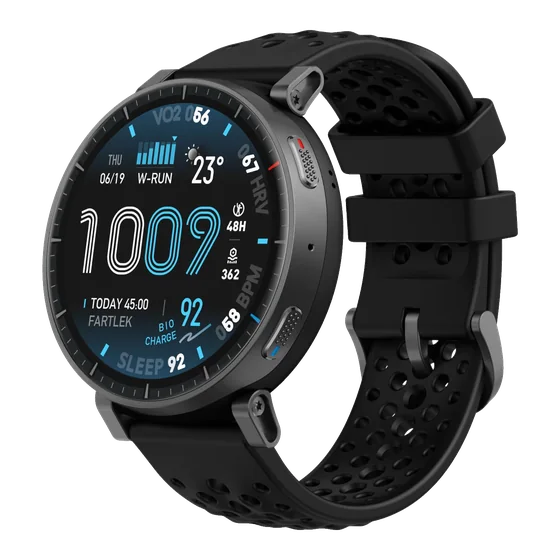
 Suunto Vertical 2Best for running through the nightUnder $600
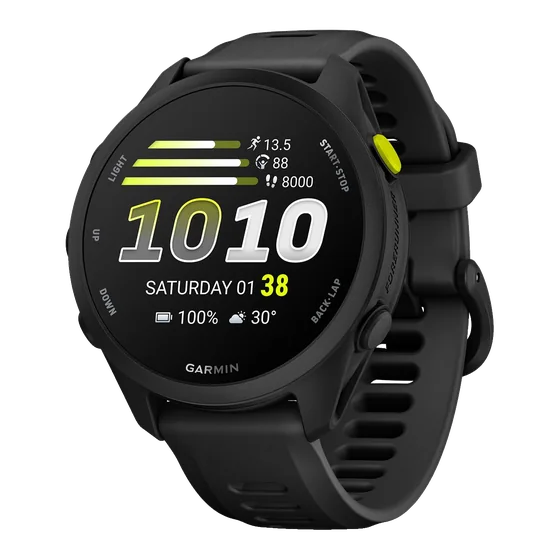
 Garmin Forerunner 970Best Garmin for 50K and 100K racesUnder $800
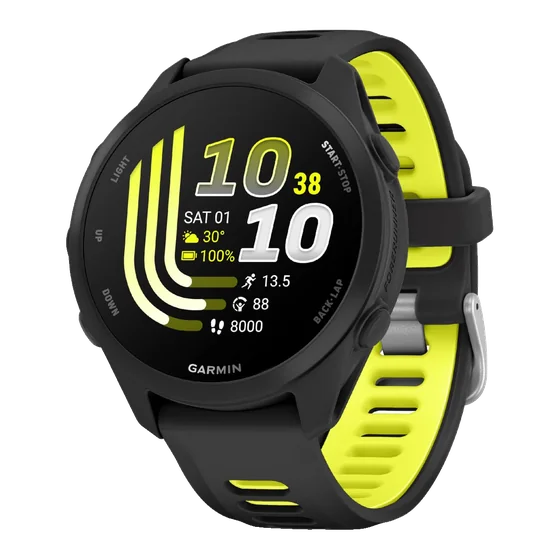
 COROS PACE 4Best under $250 for 50K and 100K racesUnder $250