Who writes the site, and why an engine builder?
David King is the editor here, and the person accountable when a page gets something wrong. His career was spent on factory floors that build aircraft engines: at Rolls-Royce he was the Production Leader in charge of assembling jet engine sections that fly on Airbus and Boeing aircraft, and earlier he ran production at WEC Group as its Production Manager. You'll find the rest on his LinkedIn profile (opens in a new tab) and our About page.
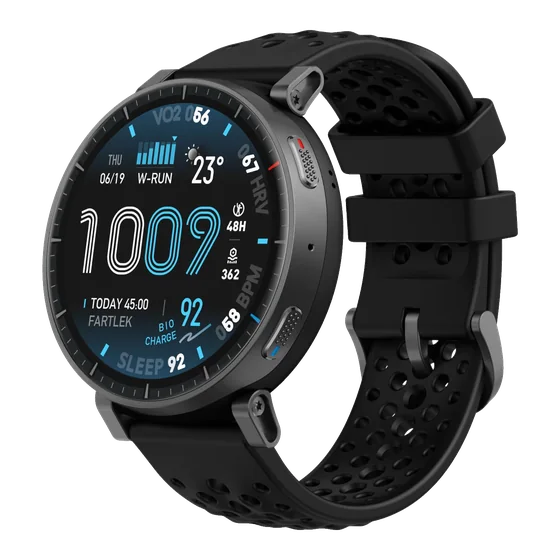
That isn't watch expertise, and he claims none. It's a way of reading. In a factory, a tolerance with no measuring conditions beside it goes straight back to the supplier. Here, a battery figure with no screen setting, GPS mode or firmware date beside it gets the same treatment. When I see a maker print two different battery figures for one watch on its own page, as Amazfit does for the T-Rex 3 Pro 44mm, my instinct is still to reach for the phone.
What we never do
Has anyone here actually tested these watches?
No. We don't run a lab, we don't accept watches from makers, and no maker can pay for a place on a page. So every finding on the site belongs to whoever made it: a lab, a reviewer, a maker's own manual or an owner, and the page says whose when a claim leans on it. Our opinions are ours. The miles are other people's.
Plenty of pages in US search results put "Tested" in the title with no method anywhere in sight. We'd rather show you whose test produced a number than borrow its authority for ourselves.
How the research is done
The research is AI-assisted. AI models read makers' product pages and US manuals, independent labs' published tests, reviewers' write-ups and videos, and owners' reports on Reddit and YouTube. Like a diligent assistant, they chase each claim to the page it first appeared on, and we save a complete copy of every web source a page depends on. That way any sentence on the site can be traced to the words behind it.
Every fact is then filed under the exact watch it describes, dated and sourced, and tagged by kind so that a maker's claim can never pass itself off as a measurement. Look-alikes stay apart, because a result for one is not a result for another. The two sizes of the Forerunner 570 are two watches on file, and so are the 2024 and 2025 Galaxy Watch Ultra. A drain test on the larger T-Rex 3 Pro appears on the smaller one only with a label saying exactly that.
The rule behind every battery verdict
This is the part you won't find anywhere else. The real GPS battery planner runs on it, and so does every battery call on the site.
Which battery number does a verdict rest on?
For your chosen GPS mode, in this order:
- A measurement on this exact watch. If several testers measured it, we take the lowest, so the verdict errs on the side of you finishing with a working watch. Where a tester published how fast the battery drained rather than how long it lasted, we turn that rate into hours, round down, and label it as our arithmetic on their test.
- If nobody has measured it, the maker's claim, labeled as a claim nobody has checked.
- If the maker is silent too, a sibling's figure, with the reason in plain view, never hidden in a tooltip.
- Otherwise, "not measured". Never a guess. A watch with no multi-band mode says so instead of pretending the data is missing.
If a tester left their GPS mode unstated, the figure can sit on the page for reference, but it can't settle a call. And a watch only counts as lasting your day with roughly a quarter more battery than the outing needs. That margin is there for things like a frigid start or a battery that has lost some capacity with age.
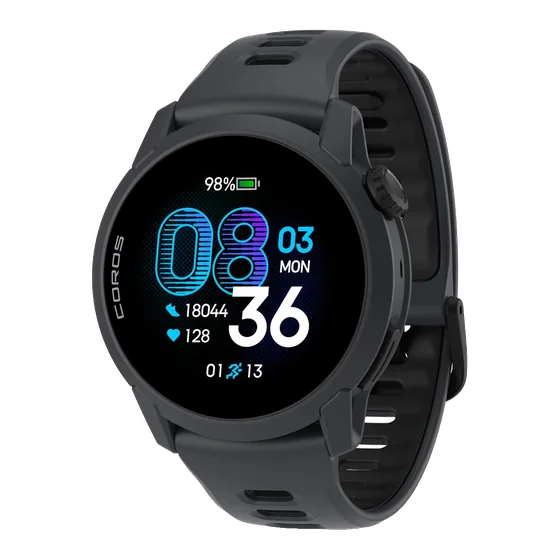
The rule matters because of how thin the field really is. Of the 22 watches on file, only 11 have any independent GPS battery figure for their exact model. The other half is sold on the box's number alone, and the planner shows them that way. Where claim and test land on opposite sides of your outing, you see both, marked as a disagreement. The widest gap today is the COROS PACE 4 Pro: with multi-band GPS and the screen always on, DC Rainmaker's test on launch firmware projected about a third less than COROS's own figure for that same setting, and COROS has promised a fix for November. We set the test against the maker's always-on figure, not its bigger headline number, which is for a different screen setting. Comparing those would flatter our point and mislead you.
When the sources disagree
Why do two reviews of the same watch disagree?
Usually because they measured different things. One tester checks heart rate against a chest strap, another checks GPS against a second watch, a third walks a mile measured with a wheel on a London street. Wrist heart rate holds up on steady runs and falls apart lifting weights, so the activity matters. Always-on screens and multi-band GPS eat battery, so the settings matter. Early bugs, like the Instinct 3's solar display at launch, get fixed by later updates, so the firmware date matters. And most tests are one person and a handful of sessions.
That's why each number stays attached to the test that produced it, and we never blend them into a single score. Averaging a chest-strap test with a wheel-measured mile produces a number nobody measured. Pages give our conclusion in plain words, and every buying page ends with "The evidence in full", where each source's number, method and disagreement sits for anyone who wants to check the working.
Can I trust owners' reports from Reddit?
Owners see what a review loan can't: months of wear and what an update did to the watch. We count how many owners report each thing and flag posts that don't say which model they mean. The counts get a sanity check too, since DC Rainmaker found that a real share of one 2026 Reddit pile-on came from fake accounts. Threads we read before November 2026 survive as our reader's notes on them rather than the whole conversation, and the tally at the foot of this page gives them a line of their own instead of folding them in with complete sources.
How pages are written and checked
An AI model drafts each page using only the evidence gathered for it, and it is cut off from the internet while drafting, so a convenient stray number has nowhere to come from. Nothing is published until automated checks have passed it. They reject price figures and any hint of testing, match every number carrying a unit to a filed fact about that same model, and confirm that each source link points to something the page genuinely drew on.
Each product section closes with a verdict and the reader it suits. A skip always names the watch we'd point you to instead, because "don't buy this" with no alternative is just a shrug.
Prices and keeping pages current
We stick to price bands, because watch prices move every day; Amazon shows you the current one when you click through. Whenever the site is updated, product links are rechecked for availability, and when a watch disappears from sale, its link is redirected to whatever replaced it. Each page carries the date of its latest revision.
How the site earns money
Does the commission decide the pick?
As an Amazon Associate I earn from qualifying purchases.
That commission comes from Amazon when you buy through a link, and it costs you nothing extra. It never decides a call. If a watch is wrong for you, we say skip, no matter how generous Amazon's cut on it would be. That's the only reason a page like this is worth reading.
What's on file today
The tally as of November 4, 2026: 22 exact models, holding 952 facts between them (215 measurements, 119 observations, 618 makers' claims). Behind those facts sit 367 sources we hold complete copies of, plus 148 Reddit threads we read and hold only as our reader's summary.
Look at the shape of that. Makers' claims outnumber measurements nearly three to one. That ratio is the whole reason we do this.
The evidence in full
Sources
- OutdoorGearLab: best GPS watches, with measured battery life and test method (opens in a new tab)
- DC Rainmaker: Garmin Forerunner 70 in-depth review and test method (opens in a new tab)
- The Quantified Scientist: eight watches through one marathon, GPS track comparison (opens in a new tab)
- The Running Channel: GPS accuracy against a wheel-measured mile (opens in a new tab)
- DC Rainmaker: Garmin Instinct 3 in-depth review (battery method, launch firmware) (opens in a new tab)
- DC Rainmaker: on bricking, the latest updates and the Reddit pile-on (opens in a new tab)
- David King on LinkedIn (opens in a new tab)