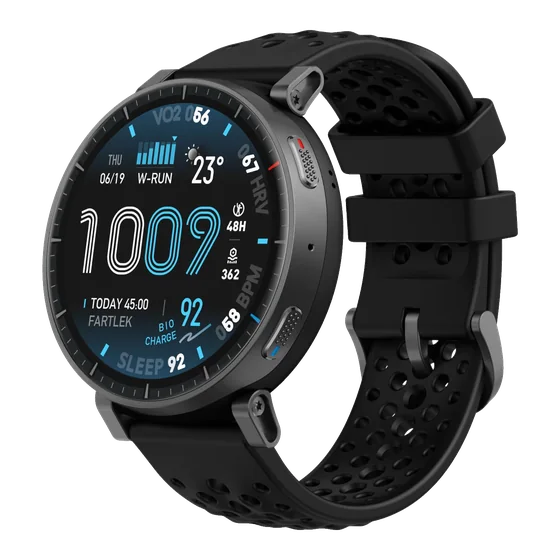
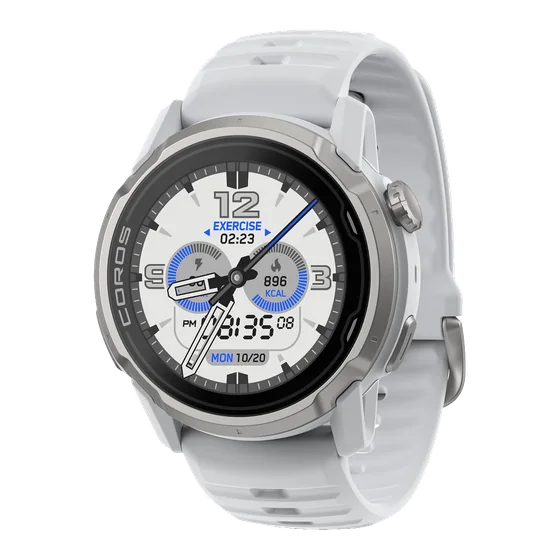
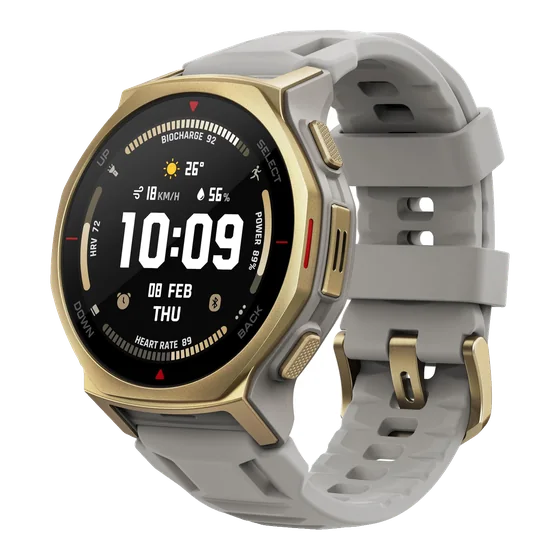
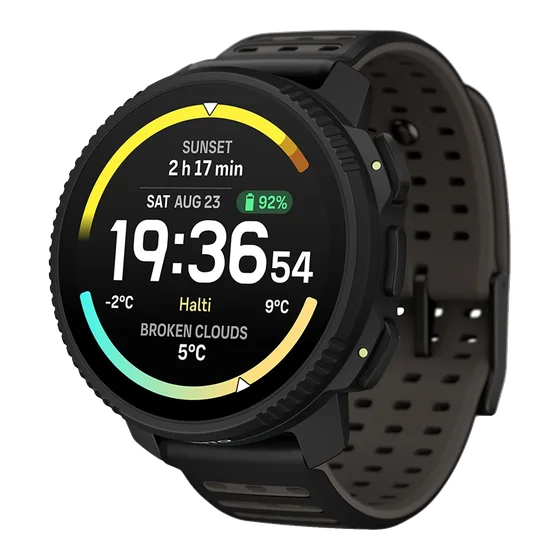
iPhone owners who want one watch for running and daily life
Read longer than the watches beside it at two city marathons, and works only with an iPhone
Under $800
COROS PACE 4 ProWait
Wait for the battery fix
Runners who want the PACE 4's clean tracks on a bigger, brighter screen
Multi-band battery projected well short of COROS's own claim until a promised firmware fix lands
Under $450
Accuracy is the one thing you no longer need flagship money for. On downtown streets lined with towers, the hardest everyday test for GPS, DC Rainmaker found Garmin's single-band Forerunner 70 tracing almost exactly the same route as Garmin's fēnix 8 Pro flagship on full multi-band. Multi-band still earns its place where signals bounce: under thick trees, against cliffs, between glass towers. It just no longer costs extra. Milewright's pick for a runner who wants pace and distance they can trust is the COROS PACE 4. It has multi-band GPS and the cleanest record here across four independent testers, in the same under $250 band as that single-band Garmin. Pay more for maps, music or a flashlight if you want them. Nothing pricier on this page measured meaningfully more accurate.
How GPS accuracy works, and where multi-band helps
Does multi-band GPS make your watch more accurate?
Where the going is hard, yes. Garmin's Forerunner 570 manual words the promise carefully: multi-band gives "more consistent track logs" and fewer "multi-path errors" in "challenging environments". Multi-path is the satellite signal bouncing off a glass tower or canyon wall before it reaches your wrist. The watch times the echo and decides you're somewhere you aren't. Your line wanders across the street and back, adding distance you never ran. Listening on more than one frequency gives the watch a better chance of catching the echo. On an open road there's little to fix, so nearly every watch here tracks well there.
It isn't free. The same manual lists 18 hours on GPS alone for the 47mm Forerunner 570, and 14 hours with multi-band on. That's still more than any marathon. But it's roughly a fifth of your GPS time spent on a feature your usual loop may not need.
Here the testers and the manual part company. DC Rainmaker ran the single-band Forerunner 70 beside a multi-band fēnix 8 Pro on trails, gravel and downtown, and the tracks were virtually identical. A second team saw it match multi-band watches too. Both can be true: Garmin's single-band antenna leaves multi-band little to fix outside the worst spots. Nobody has shown this carries over to other makers' single-band watches; testers split sharply on the Amazfit Active Max. And no tester has yet put the Forerunner 70 under heavy forest against a measured reference. One owner in New Zealand found a multi-band fēnix cleaner under light trees, though that compares two watches, not two settings.
What this means for what you buy
Don't pay extra for multi-band. Take it where it comes at no premium. The PACE 4 puts it in the under $250 band beside the single-band Forerunner 70. You get the margin for trees and towers without a flagship's price. On an ordinary tempo run, either watch reads your pace per mile true. On the day your race dives under trees or between skyscrapers, the PACE 4 has the extra hardware and the Forerunner 70 has only its antenna.
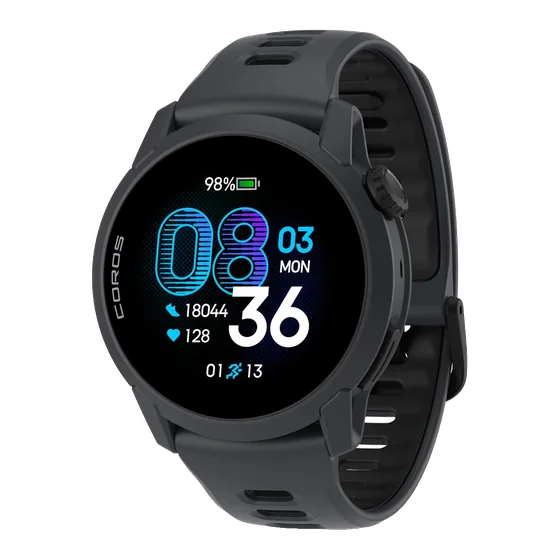
COROS sells the PACE 4 on dual-frequency GPS and promises 31 hours of it, or 24 with the screen always on. The tracks hold up wherever testers took it. Everyone who wore it beside reference watches reported clean lines on roads, trails and city streets. It matched Garmin's Forerunner 970 stride for stride through six months of training, including the London Marathon and the Paris Half. In an eight-watch marathon test, COROS and Garmin tracks sat closest to the group's average line.
The battery backs the accuracy up. With dual-frequency GPS and the screen always on, DC Rainmaker measured it draining at 4%/h. That pace projects to about 25 hours: a marathon with most of the charge left for the drive home. Our GPS battery planner works it out for longer days. A September software update added topo maps as well, though COROS's own FAQ still says the watch can't do them. That makes COROS the rare maker caught underselling.
Its weak spot is wrist heart rate in the cold. One tester found running heart rate poor all winter and suspected it was locking onto his cadence. Owners keep voicing the same doubt on cold mornings and fast pace changes. Your distance and splits don't depend on it. If your training is built on heart-rate zones and your winters bite, wear a chest strap for the cold months.
We'd buy it. It makes paying more for accuracy hard to justify.
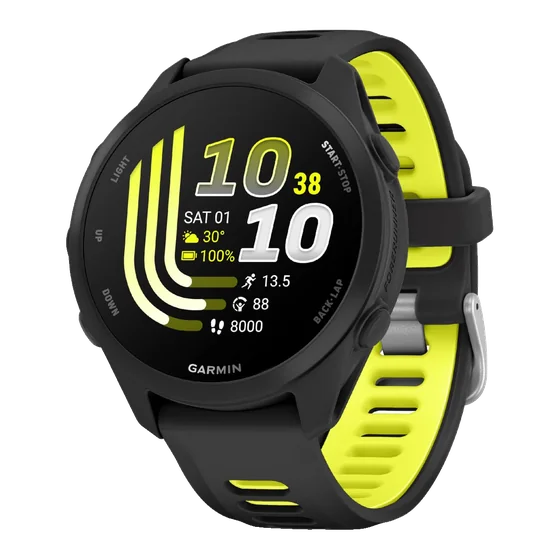
Garmin is straight with you on the spec sheet: five satellite systems, one frequency, no multi-band. On paper that reads like the budget compromise. On the street it isn't one. Beside a multi-band fēnix 8 Pro, on trails, gravel and among downtown towers, its line was virtually identical. Garmin deserves the credit: its antenna does with one band what rivals need two for.
The catch is hills. With no barometer, climbing is worked out from GPS. On a walk beside a barometric Apple Watch, it logged considerably less climb. If your runs are flat and you care about splits, you won't notice. If you track how much you climbed, treat its number as an estimate.
The PACE 4 is the accuracy buy. The Forerunner 70 is for a newer road runner who wants Garmin Coach's free adaptive plans on the wrist, run/walk plans included. For that runner we'd buy it. The Forerunner 70 review covers what it leaves out.
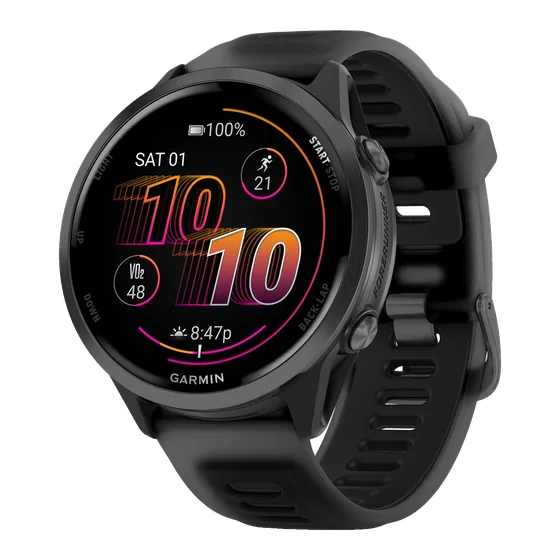
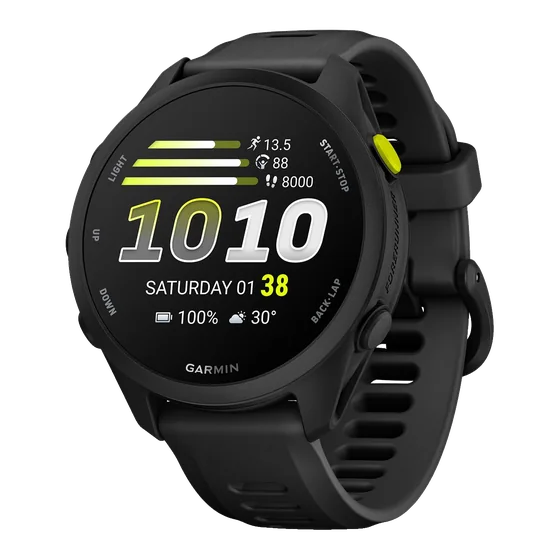
Garmin promises 21 hours of multi-band GPS and a race predictor to plan your splits by. The GPS is as good as anything here. On an officially measured 10K, the 970 Tom's Guide raced logged 6.20 miles (9.98 km). That's short by less than the length of a tennis court. Testers who logged dozens of workouts against reference units found its land tracks perfect or near perfect.
Its weak spot is the water. DC Rainmaker found its open-water swim tracks weaker than recent Garmins, slow to recover after he stopped to tread water. On later firmware he judged it no better, arguably worse, and we found no retest since. If the swim leg is where you want accuracy, this is the soft spot.
It doesn't beat the PACE 4 on accuracy. What the higher band buys is the kit around the GPS, maps and a flashlight above all. For a marathoner who wants that kit with Garmin's deepest training tools, it's our pick for marathon training. We'd buy it. The Forerunner 970 review has its battery by firmware.
Apple Watch Ultra 4: wait, and keep an eye on its marathon readings
Wait
New this year: wait for a race test
Price band: under $800
Apple promises "precision dual-frequency GPS". On trails, DC Rainmaker found its tracks very close to a fēnix 9's. Race day is where the questions start. It's new this year and works only with an iPhone.
Why does my watch read long on race day?
The Frankfurt Marathon was run in the rain between high-rises. There the Ultra 4 Tom's Guide wore logged 26.9 miles (43.33 km), about seven-tenths of a mile more than the course. A 43 mm fēnix 9 Pro inReach, the smaller sibling of the 47 mm watch we weighed, logged 26.6 miles (42.76 km) on the same runner. The Ultra 4 also showed a faster pace than her bib timing. That's flattering in the way a bathroom scale that reads light is flattering. At Loch Ness, another reviewer's Ultra 4 read 26.57 miles, about a third of a mile over.
Bad GPS isn't the whole story. A certified course is measured along the shortest line a runner could take. Your watch measures the line you actually ran, every weave around a slower runner included. Noise in the signal adds a little on top. So nearly every watch reads long in a crowded city race. The Ultra 4 read longer than the watches beside it both times, but those references were watches too, not a measured line. That's a pattern worth watching, not a verdict.
Our call is wait. If you want accurate distance now, buy the PACE 4.
COROS PACE 4 Pro: the same clean tracks, but wait for the battery fix
Wait
Wait for the battery fix
Price band: under $450
The tracks are no worry. Testers found them in line with Garmin's Forerunner 970 and fēnix 9 Pro on trails and under skyscrapers, bar one city loop logged on the wrong side of the street. The battery is the worry. COROS's own figure for multi-band GPS with an always-on display is 30 hours. DC Rainmaker's runs projected to under 20 hours. COROS put the drain down to a bug in its GPS software and said a fix would come in November. As of the end of October, no such update had appeared in its release notes.
Wait for the fix. Until it lands, the PACE 4 tracks just as cleanly for less.
How many testers measured each watch?
Here are the five watches we give a call on, and how many independent testers published GPS results on each exact model. Sibling results don't count. The full count for all ten watches is in the evidence at the bottom of the page.
Watch
Multi-band
Testers, exact model
What they found
Our call
COROS PACE 4
Yes
4
Clean on road, trail and downtown; matched a Forerunner 970 through two big-city races
In line with a 970 and fēnix 9 Pro; one city loop on the wrong side of the street
Wait for the battery fix
Apple Watch Ultra 4
Yes
3
Close to a fēnix 9 on trails; read long at two marathons
Wait: new this year
The five we left out each taught us something. Polar is the only maker here that prints a tolerance: distance within 2% either way in open sky. I wish every maker did; on a supplier's spec sheet, a tolerance is the first line I'd look for, and its absence is the first question I'd ask. Testers split on whether the Vantage M3 stays inside it downtown. The fēnix 9 Pro inReach, the priciest watch we weighed, has had its exact model's GPS measured by nobody. Its siblings tracked well, but a sibling's result isn't a measurement of this watch. The Amazfit Active Max's single band behaves differently by route, and that makes it the wrong watch for finding your way along wooded trails; our Amazfit Active Max review weighs where it does suit. The Forerunner 570 has the same multi-band Garmin GPS without maps; the Forerunner 570 review says who it suits. If your accuracy worry is navigating switchbacks and trail junctions rather than logging pace and distance, you're the reader our hiking with maps guide is written for.
Getting an honest track from the watch you buy
How do I get the cleanest track from my watch?
For Garmin owners, the Forerunner 570 manual gives the routine. Before a run, find open sky away from tall buildings and trees. Hold still with the watch face up for a few minutes while it locks. Sync often: a synced watch carries several days of satellite data and locks faster. Avoid bands with metal parts near the case. On a standard outdoor track, use Track Run. Set your lane if it isn't lane 1, and stay in it. If the watch doesn't recognize the track, run four laps to calibrate.
The same manual clears up a common mix-up. All Systems isn't multi-band: it adds satellite systems rather than frequencies. Auto Select (SatIQ) lets the watch choose, which Garmin says gives the best accuracy while favoring battery life. For other brands, check your own maker's manual.
Our pick: the COROS PACE 4
Our pick
Most accurate for the money
Accuracy used to be the reason to buy the expensive watch. It isn't anymore. The PACE 4 draws as clean a line as the flagships through towers and trees. It brings multi-band for the spots where one band runs out of answers. What you save can go on the race entry. Pay for maps if you want maps. Accuracy now lives in the under $250 band.
What we read: 10 models weighed; 6 maker manuals among them; across this site's research, 367 sources kept in full; 148 Reddit threads read, kept as the reader's summary, not in full.
All ten watches, counted by exact model
Watch
Multi-band
Testers, exact model
What they found
Our call
COROS PACE 4
Yes
4
Clean on road, trail and downtown; matched a Forerunner 970 through two big-city races
Buy
Garmin Forerunner 70
No
2
Virtually identical to a multi-band fēnix 8 Pro downtown; climb reads low
Buy
Garmin Forerunner 970
Yes
3
6.20 miles (9.98 km) on a measured 10K; open-water tracks weaker
Buy
COROS PACE 4 Pro
Yes
2
In line with a 970 and fēnix 9 Pro; one city loop on the wrong side of the street
Wait
Apple Watch Ultra 4
Yes
3
Close to a fēnix 9 on trails; read long at two marathons
Wait
Garmin Forerunner 570 (47mm)
Yes
1
No significant GPS error in one long test
Weighed, not picked
Suunto Run
Yes
3
1.98 mi on a known two-mile course; small short and long readings elsewhere
Weighed, not picked
Polar Vantage M3
Yes
4
Split: close to a fēnix 8 for one, wobbly downtown and on a trail for others
Weighed, not picked
Amazfit Active Max
No
3
Split: matched Garmin flagships on open runs; read well short on a walk, drifted off roads
Weighed, not picked
Garmin fēnix 9 Pro inReach (47 mm)
Yes
0
Only its siblings measured so far
Weighed, not picked
COROS PACE 4 (standard, model W336)
Tester
Method
Finding
DC Rainmaker (Nov 2025)
Side by side with several watches on road, trail and city; battery logged in Max GPS with always-on
Very good tracks, minor offsets only; 4%/h in Max GPS with always-on; open water acceptable, cutting one corner
Tom's Guide
Beside a Forerunner 970 and a Suunto Vertical 2
GPS excellent; heart rate close to a chest strap with spikes at the start of runs or after pauses
The Run Testers (six months)
Training plus the Paris Half and London Marathon, beside a Forerunner 970
GPS "pretty much flawless"; heart rate matched the 970 in races
The Quantified Scientist (Mar 2026)
Repeated loops; Polar H10 for heart rate
"Some of the best performance I've ever seen" on GPS; running heart rate poor in winter, suspected cadence lock
The Quantified Scientist (Jun 2026)
Eight watches carried through one marathon on a straight out-and-back course, tracks aligned and compared with the average track
Garmin and COROS tracks closest to the average; COROS most consistently the lowest distance, which is no bad habit given that watches tend to read long. One test, one runner
Conflicts: running heart rate is good for three testers and poor for one, most likely down to cold weather and how the watch sits on each wrist (open). Maps: older reviews and COROS's FAQ say none; the September 2026 firmware (V3.2008.0) added topo maps, so the FAQ is stale. Battery: COROS's 31 hours is the dual-frequency figure; the larger headline figure some reviews quote is All Systems mode.
Our call: buy. It's this page's pick for a runner who wants accurate pace and distance.
Garmin Forerunner 70 (43mm)
Tester
Method
Finding
DC Rainmaker (May 2026)
Media loaner and his own retail unit; several weeks beside a fēnix 8 Pro in multi-band and other watches, including his downtown building test
Tracks "virtually identical" on trail, downtown and gravel; elevation within a few meters of the reference on a hilly trail run
The Run Testers (Jun 2026)
Two runners, compared with multi-band watches
Matched them
Tom's Guide (Jun 2026)
Walk beside an Apple Watch SE 3 and a control
Climb "considerably lower" (no barometer)
TechRadar (Jul 2026)
About an hour in the best available GPS mode
Just under 10%/hour, which projects to roughly ten hours of GPS; one sample, brightness not stated
One Reddit owner
Forerunner 70 on All Systems against a different watch, a multi-band fēnix 7 Pro, under light trees
Multi-band tracks cleaner; compares two watches, not two settings
The single-band result rests on two testers, and it has not been tested under heavy forest against a measured reference.
Our call: buy, for a newer road runner who wants Garmin Coach plans on the wrist.
Garmin Forerunner 970
Tester
Method
Finding
DC Rainmaker (Jun 2025, launch firmware)
About 30 workouts against two to four reference GPS units
Land tracks perfect or near perfect; open-water swims weaker than recent Garmins, poor re-acquisition after treading water
DC Rainmaker (Sep 2025 comment reply)
Retest on the then-current firmware, number not given
Open water "still not fixed", "arguably getting worse"; no later update found as of Nov 1, 2026
6.20 miles (9.98 km); 4.8%/hour, which projects to about 21 hours
Tom's Guide (six months)
Training in multi-band and All Systems
No GPS errors of note
the5krunner (Sep 2025)
One lake lap in a wetsuit, reference GPS in a towed buoy, SatIQ mode
About 2,500 ft (762 m), 1.6% over the official distance, with a smoothed track; an Apple Watch Ultra 3, the previous Apple model and not the Ultra 4, followed the reference more closely
In the same 10K, a Forerunner 570 of unstated case size, so not confirmed as the 47mm, logged 6.23 miles (10.02 km).
Our call: buy, for a marathoner who wants maps and a flashlight on top of race-accurate GPS.
Garmin Forerunner 570 (47mm)
Tom's Guide tested the 47mm and found no significant GPS error over a long stretch of running. The Quantified Scientist's 570 (size not stated) produced a 10K track he called some of the best he'd seen. Garmin's manual for the 47mm lists 18 hours GPS only, 16 hours Auto Select and 14 hours multi-band.
Our call: not a pick on this page, where accuracy alone is the question. It suits road runners who want multi-band GPS with phone-free music and never need a map, and the Forerunner 570 review covers them.
COROS PACE 4 Pro
Tester
Method
Finding
DC Rainmaker (Oct 2026)
Beside a fēnix 9 Pro and other watches; battery in Max GPS with always-on
Matched the fēnix 9 Pro on trails; one city loop consistently on the wrong side of the street; battery projected under 20 hours against COROS's 30 h always-on claim, 8% in a 90-min run
Tom's Guide (11 days)
Beside a Forerunner 970 and fēnix 9 Pro, including under skyscrapers
"Right in line with" both; same tracks as the PACE 4 and 970 downtown
Max Kelly (COROS-supplied unit)
Half marathon, GPS mode not stated
4.3%/h, which projects to about 23 hours
COROS blamed bugs in the GPS subsystem and in cycling sensor scanning and promised a November fix; its release notes listed only the Sept 26 build as of Oct 30, 2026. No open-water result yet.
Our call: wait for the firmware fix.
Apple Watch Ultra 4 (49mm, GPS + Cellular)
Tester
Method
Finding
DC Rainmaker (Sep 2026)
Trail runs and rides against Garmin references
Trail tracks very close to a fēnix 9; battery extrapolated from two activities to about 18.6 hours against Apple's 18 hours claim
Tom's Guide (Frankfurt Marathon, Oct 2026)
Worn with a 43 mm fēnix 9 Pro inReach in the rain between high-rises
26.9 miles (43.33 km) against the fēnix sibling's 26.6 miles (42.76 km); average pace faster than bib timing on both, more so on the Ultra 4
The Morning Coffee Run (Loch Ness Marathon)
Worn with a Suunto Vertical 2
26.57 mi; the Suunto read shorter
One Reddit owner
A five-hour marathon
Recorded twenty-seven miles where a Garmin read the course distance
The conflict stays open: very good GPS in DC Rainmaker's training and trail runs, against long readings at crowded city races where the references were other watches rather than a measured line.
Our call: wait; it's new this year and needs a race test against a measured course.
Suunto Run (first generation)
OutdoorGearLab (Colorado, Nov 2025) measured 1.98 mi on a known two-mile course with clean tracks under trees and near rock walls. DC Rainmaker found trail tracks virtually identical to a fēnix 8 and an Apple Watch Ultra 2, but open-water swim GPS poor against a buoy reference. CleverHiker (two months in Alaska) rated it strong but sometimes short, from a few hundredths up to 0.2 mi. A Suunto forum tester found every run long, by up to nearly 3%. Different routes and no shared reference leave the distance bias open.
Our call: not a pick on this page, because the PACE 4 has the stronger accuracy record. It suits runners on a tight budget who want dual-band GPS.
Amazfit Active Max (single-band)
The Run Testers (three runners, Apr 2026) found distance matched a fēnix 8 Pro and Forerunner 970 closely, even under flyovers, with live pace lagging about 10 s. Tom's Guide (several months) logged a walk at 4.55 mi where Strava on a phone logged 6.1 mi, and 1,588 ft of climb against 1,232 ft, though a ski day matched a Garmin Instinct 3. T3 (May 2026) saw routes drift off roads. The Quantified Scientist, on pre-release firmware, called running loops "pretty solid". Route and environment likely explain the split; it stays open.
Our call: not a pick on this page, where the testers' split on its single band counts against it, and not a watch to navigate wooded trails by. It suits runners on a hard budget who mostly run open roads and want the fewest charges.
Polar Vantage M3
Polar's manual claims distance within 2% either way in open sky. Android Central (Nov 2024), beside a fēnix 8, found it close on runs with slight drift near buildings and underpasses, wavering under trees but finishing within 0.02 mi. TechRadar saw wobbles in dense urban areas. Matt LeGrand, over a long-term test, found it the least accurate of four watches on an out-and-back trail. DC Rainmaker called it generally good. Owners split two and two. The Polar in the Quantified Scientist's marathon test was the Vantage V3, a different model, and is not counted here.
Who it's for: runners who want a simple, training-first watch; it isn't our pick when accuracy is the point, nor when maps are.
Garmin fēnix 9 Pro inReach (47 mm, AMOLED)
No GPS test on this exact model. DC Rainmaker's fēnix 9 Pro AMOLED and Pro Solar units (inReach status not stated) showed the default SatIQ mode matching forced multi-band downtown in San Francisco, on trails and on a 10 h hike. Tom's Guide's Frankfurt unit was the 43 mm inReach sibling.
Our call: not a pick on this page, since nobody has measured this exact model's GPS. It suits solo backcountry users who need satellite SOS on the wrist.
How the testers worked
DC Rainmaker wears watches side by side against multi-band references. For urban tests he has used the same New York route for over a decade. The Quantified Scientist exports each brand's tracks, aligns them in time and space, and measures each against the average track; his marathon comparison is one run and one hike. Tom's Guide and The Run Testers compare against other watches and chest straps rather than a measured line, except where a race course was certified. Most results here come from one person and a handful of sessions, which is why we count testers rather than trust any single one.
Milewright doesn't test watches. It sets each maker's claim against what labs, reviewers and owners measured on the exact same model, and tells you which number to believe.

 Garmin Forerunner 70Single-band Garmin with a free coachUnder $250
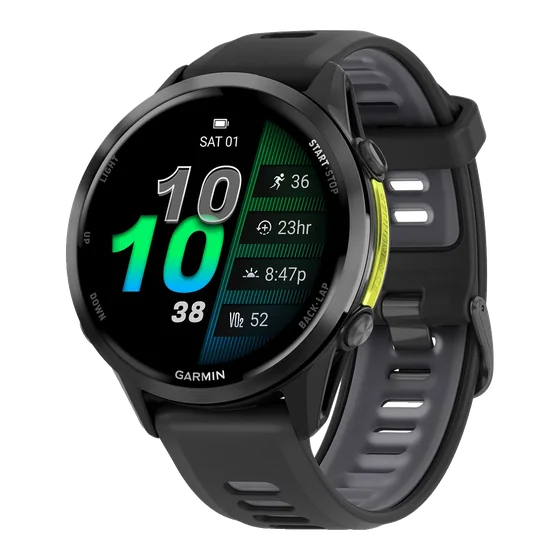 Garmin Forerunner 970For marathoners who want the full kitUnder $800