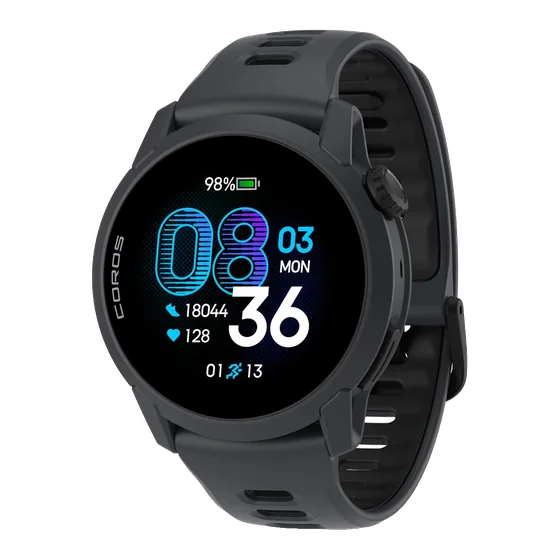
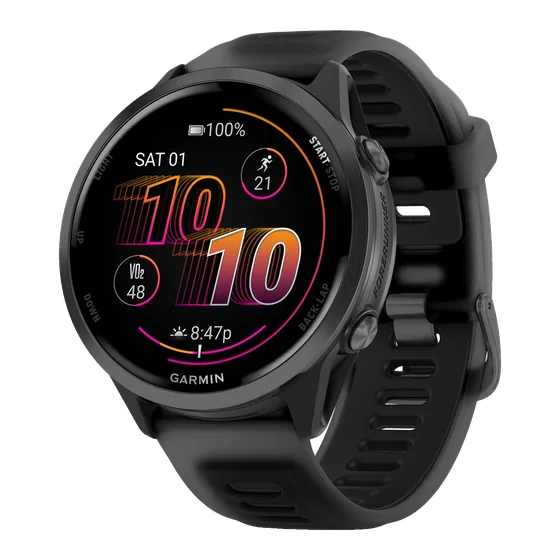
COROS APEX 4 (46mm): the box against the trail
Price band: under $500
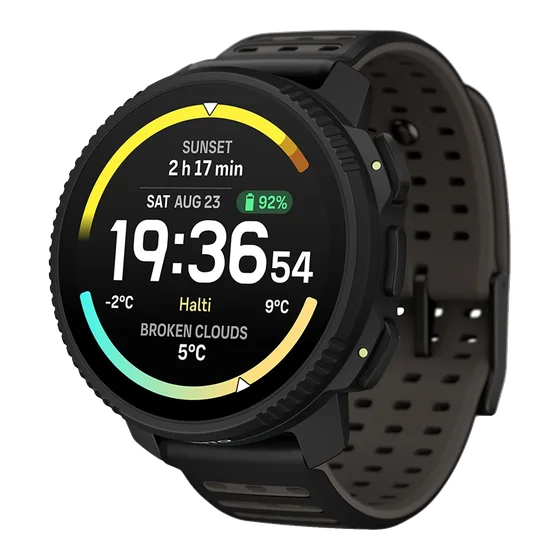
This is COROS's mountain watch. You get a 1.3 in always-on MIP touchscreen under sapphire, a titanium bezel, and free topo maps labeled down to trail names, stored in 32 GB onboard. A speaker and mic let you take calls from your phone. It weighs 2.3 oz (64 g) on the silicone strap. Nothing sits behind a subscription, which in 2026 is almost a feature. Check the listing says 46 mm: the smaller APEX 4 has less screen and less battery.
How long does the APEX 4 46mm last with navigation on?
COROS prints three GPS figures for one battery: 65 h, 53 h and 41 h. I spent a career reading supplier data sheets, and a part rated three ways usually earns a phone call. In fairness, COROS prints the mode beside each one. The 65 h Endurance mode never steps up to dual-frequency. The 41 h figure is the full dual-frequency mode you'd run under cliffs and trees. It's the one that matters.
The only measured pace projects past it. With dual-frequency and route navigation running on a long mountain day, DC Rainmaker logged a drain that projects to about 50 h from a full charge, close to two days and nights. That figure comes from part of a charge: no tester has drained a 46 mm to empty on dual-frequency yet. If it holds, that's a hundred-miler with margin, or a long weekend with the charger left in the car. Between trips it barely needs the cable.
That drain matches what DC Rainmaker saw from the Suunto Vertical 2 on the same kind of day. If the longest battery anyone has measured is all you're shopping for, our GPS watch battery planner picks the Vertical 2. The APEX 4 gets you the same navigating drain in a lighter watch, one price band lower. For navigation that projects to about two days (COROS claims 41 h; no full rundown yet), with an MIP screen you can live with, it's the one to buy.
Does the track hold up with a route loaded?
The launch reviews split here, and the split comes down to one thing: whether a route was loaded. Without one, every tester found the track excellent, even under trees beside Garmin's and Apple's flagships. With one, DC Rainmaker's mountain tracks turned to connect-the-dots. Switchbacks you climbed one by one came back as a ruler line. Total distance stayed close.
What suffers is the record you upload afterward. The route line you follow draws accurately on the watch. Turn prompts are the other irritation. Routes built in Gaia GPS or COROS's app sometimes call turns that aren't there, and Ride With GPS imports arrive with no turn cues. No release note through V3.2008.0 on September 26, 2026 names a fix for the track, so treat it as unfixed. If you hike to get somewhere rather than to post a perfect squiggle, it shouldn't stop you buying.
Can you read the MIP screen under trees?
MIP is lit by the sun, which works beautifully until you walk into the part of the trail that has none. Testers agree it looks duller than AMOLED indoors, on gray days and on map pages at dusk. A Garmin switcher who likes it overall still squints at it in deep forest shade. There's no brightness setting to turn up. Nor does it win in full sun: one tester found it no easier to read there than the brightest AMOLED flagships.
What MIP buys you is a screen that's always on without eating the battery. Our AMOLED vs MIP guide lays out that trade. It's the right screen for hikes that finish above tree line, and the wrong one if you live under a canopy.
What do owners love and hate about it?
The maps are the love affair. Owners who left Garmin keep reporting fast, lag-free panning, an uncluttered app and easy route building. It's light enough to sleep in, even on a 6.75 in wrist. The maps don't calculate routes for you, though.
The irritations are smaller but real:
- The white silicone strap shifts with sweat, and decent 0.9 in (24 mm) replacement bands are scarce.
- Incoming calls repeatedly failed to show on the watch in DC Rainmaker's testing. After a swim the speaker is useless for hours, which is a long time to wait for a watch to stop gargling.
- It pairs Bluetooth sensors only, so older ANT+ power meters and footpods won't connect.
- Wrist heart rate tracked a chest strap well for nearly every tester. For one of The Run Testers, it read high and spiked after stops, which is what aid stations are made of.
- There's no satellite SOS. Live Tracking and safety alerts need your phone.
The warranty is two years, and no COROS watch has a CPSC recall. COROS's May 2026 update bricked a batch of watches. The company replaced them, after a slow start.
Our call on the APEX 4 46mm
Buy it. It does the two jobs this buyer pays for, maps that keep up and a battery that outlasts the hike, at a lower band and lighter weight than anything that matches it. COROS has added to it nearly every month since launch. Its one real catch is the screen in heavy shade. If your trails are deep forest, you'll notice it at every junction.
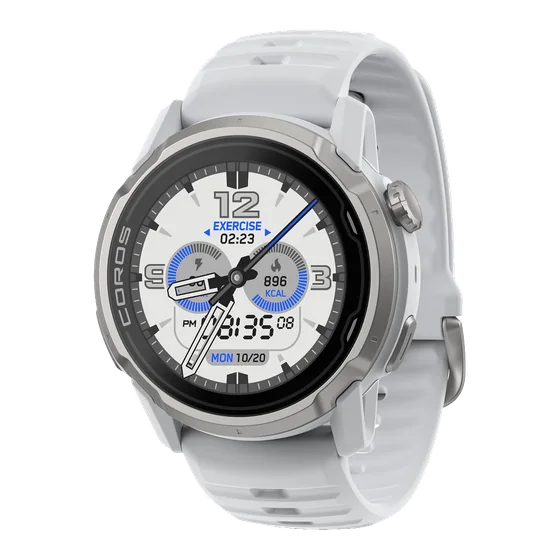 COROS APEX 4Under $500