At a glance

Price bands, not prices

WatchVerdictWho it suitsThe catchPrice band and link
COROS PACE 4Our pickBest AMOLED for the batteryRunners and day hikers who want a bright screen and the least charging for the moneyAlways-on cuts everyday battery to about a thirdUnder $250View on Amazon (opens in a new tab)
Garmin Instinct 3 – 45 mm, AMOLEDBuyBest Garmin for a week of always-onGarmin buyers on familiar trails who want buttons and an always-lit color screenBreadcrumbs only, no mapsUnder $350View on Amazon (opens in a new tab)
Garmin Forerunner 970BuyBest Garmin for anyone set on the brandRunners, hikers and triathletes set on Garmin who want maps, a flashlight and a bright screenSome units register ghost touches on the touchscreenUnder $800View on Amazon (opens in a new tab)
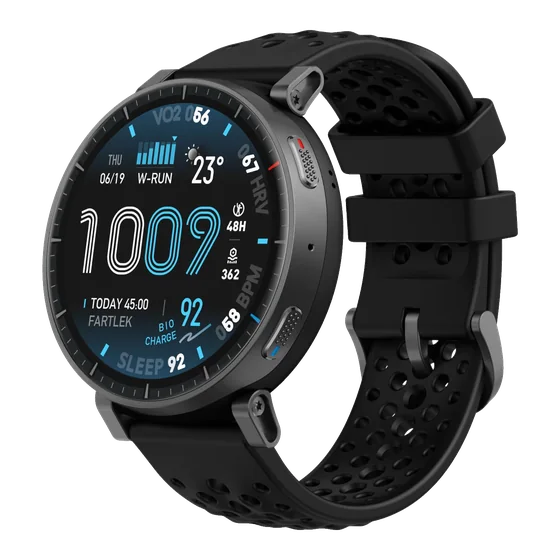
COROS APEX 4BuyBest MIP screenHikers and trail runners who navigate for days and want the screen always visibleMIP goes dull on map pages under trees and indoorsUnder $500View on Amazon (opens in a new tab)
Suunto Vertical 2BuyBest AMOLED for long trail daysHikers and ultra runners with average or larger wristsHeavy, and one size onlyUnder $600View on Amazon (opens in a new tab)
Garmin Enduro 4WaitWait: solar MIP Garmin, full battery test pendingBuyers who want a solar MIP Garmin and the fewest charges, and can wait for a full testNo full battery test yetUnder $900
Garmin fēnix 9 – 47 mmWaitWait: new AMOLED flagship, base model untestedBuyers who want a bright AMOLED flagship with maps and divingThe base model hasn't been tested; early firmware bugs on Pro unitsUnder $1,000

The old rule says MIP for battery and AMOLED for looks. The evidence says it's half wrong. Screen type no longer decides your GPS hours, at least on the makers' own ratings. COROS swapped the PACE 3's MIP screen for AMOLED on the PACE 4 and raised the rated dual-frequency hours from 15 h to 24 h with the screen lit throughout, or 31 h with always-on off. What drains an AMOLED watch is one setting, always-on. Garmin's manual gives the Instinct 3 AMOLED 18 days with wrist-turn wake and 7 days always lit, and testers and owners got almost exactly that. MIP's sunlight advantage has faded too. Testers now find bright AMOLED as easy or easier to read outdoors, while MIP goes dull indoors and under trees. So buy AMOLED and set it to wake on a wrist turn. MIP earns its place only if you want the screen showing around the clock for weeks. Milewright's pick for this choice is the COROS PACE 4, the AMOLED watch COROS rates above its own MIP predecessor in every GPS mode.

COROS PACE 4Under $250
Check price on Amazon (opens in a new tab)

Opens Amazon.com · Prices change often

How AMOLED and MIP screens differ, and where the battery goes

A MIP (memory-in-pixel) screen works like a printed page. It holds its image for almost no power and is lit by daylight bouncing off it. That's why it can stay on all the time and gets crisper as the sun gets stronger. It's also why it struggles where light is scarce, like a kitchen at 6 a.m. or deep forest. DC Rainmaker puts it plainly: MIP watches last longer "due to less power being required."

AMOLED
MIP

An AMOLED screen makes its own light, pixel by pixel. Colors are rich and you can read it in a dark room. But every lit pixel draws power, so the watch blanks or dims the screen between glances. "Always-on" keeps a dimmed face lit all day, and that's where the battery goes. Garmin's fēnix 9 manual names a second cost: burn-in is "normal behavior for AMOLED devices," and always-on "impacts the battery and display life." It advises against static images at high brightness for long periods. Calling a known wear mode normal behavior is a bold piece of copywriting.

On Garmin, every solar watch uses MIP. Choosing AMOLED also means giving up solar.

What this means for what you buy

Pick the screen you enjoy, then pick the setting. AMOLED on raise-to-wake gives you color and maps you can read in the dark, with GPS hours rated to match MIP watches of its class. Switch always-on on and expect to charge two or three times as often. For most runners choosing a screen rather than a brand, that makes the PACE 4 the one to buy, in the under $250 band. It's the clearest sign on paper that AMOLED no longer means a short battery, though no one has run its GPS down to empty yet. Already set on Garmin? Then your choice is a different one, and the Forerunner 970 is the Garmin we'd buy, as our which Garmin should I get guide explains.

COROS PACE 4Under $250
Check price on Amazon (opens in a new tab)

Opens Amazon.com · Prices change often

The battery cost, measured

Does an AMOLED screen cost you GPS hours?

Far less than spec-sheet folklore suggests. The PACE 3 and PACE 4 are the nearest thing to a controlled test: same maker and software, one MIP and one AMOLED. COROS rates the MIP PACE 3, whose screen is always showing, at 15 h of dual-frequency GPS. Like for like, with its screen lit throughout, the AMOLED PACE 4 is rated at 24 h, rising to 31 h with always-on off. DC Rainmaker says the PACE 4 beats the PACE 3 in every GPS mode, though what he measured was a burn rate, not a rundown. In its most accurate mode with always-on, it burned about 4%/h, which projects to about 24 h.

I spent years on parts where you change one thing at a time or learn nothing. This pair changed the screen and the internals together. So on the ratings it suggests a modern AMOLED watch can beat an older MIP one, not that AMOLED is free; neither watch has been run to empty in dual-frequency. The cost shows up in everyday wear instead: the PACE 4's 19 days on raise-to-wake drop to 6 days with always-on.

At the top end, a big AMOLED can match MIP on the trail. On one long mountain day with dual-frequency and navigation, DC Rainmaker measured the AMOLED Suunto Vertical 2 and the MIP COROS APEX 4 both burning about 2%/h. The Suunto just needs a much heavier watch to do it.

How much battery does always-on take?

About two-thirds of your days between charges. The Instinct 3 AMOLED is the purest case, because only one menu setting changes. Garmin claims 18 days on wrist-turn wake and 7 days always-on, and for once the box isn't flattering itself. Testers got just under 7 days with always-on. Owners with it off report 18–21 days, and TechRadar ran one down over 16 days without recording the setting. That's a week against most of three weeks, decided by a toggle.

The PACE 4 and Forerunner 970 follow the same curve; their numbers are in the evidence below. Brightness matters almost as much. The 970 lasted 2.5 days always-on at its launch default brightness. DC Rainmaker found a third of full brightness roughly doubled that. Garmin's battery tips, in its Forerunner 570 manual and other current manuals, list stopping always-on and lowering brightness. Those two settings decide whether you charge on Wednesday or next week. For hours on the move rather than days on the wrist, the GPS battery planner runs the numbers for your longest planned outing.

The readability cost, counted

Is MIP easier to read in sunlight?

Not by testers' accounts anymore. DC Rainmaker found the fēnix 9 Pro's AMOLED easier to read than MIP even in Mediterranean midday sun. One of The Run Testers found the APEX 4's MIP no better in sun than AMOLED rivals. Today's panels reach 1,500 nits on the PACE 4 and 2,000 nits on the base fēnix 9. That brute force has caught MIP up outdoors.

MIP loses in poor light. Tom's Guide and DC Rainmaker both found the APEX 4 duller indoors and on map pages in low light. Still, MIP keeps its fans for a real reason: your pace is simply there, without the wrist flick. Believe in the Run prefers it for climbing and skiing.

Which screen do owners send back?

MIP, in the owner threads behind this page. Three people returned a MIP watch over its screen. A COROS Nomad went back after three days. A PACE 3 went back at once, unreadable indoors. An Enduro 4 was swapped for an AMOLED fēnix 9 Pro because its maps were hard to read on the run. We found nobody returning an AMOLED watch over the screen itself. Traffic the other way is about charging: two Garmin owners moved to solar MIP because always-on cost too much battery. Owners who post aren't a survey, but the pattern runs one way. People leave MIP because they can't see it, and leave AMOLED because they're tired of charging it.

The watches, screen by screen

COROS PACE 4: the AMOLED rated above its MIP ancestor

Our pick

View on Amazon (opens in a new tab)

Price band: under $250

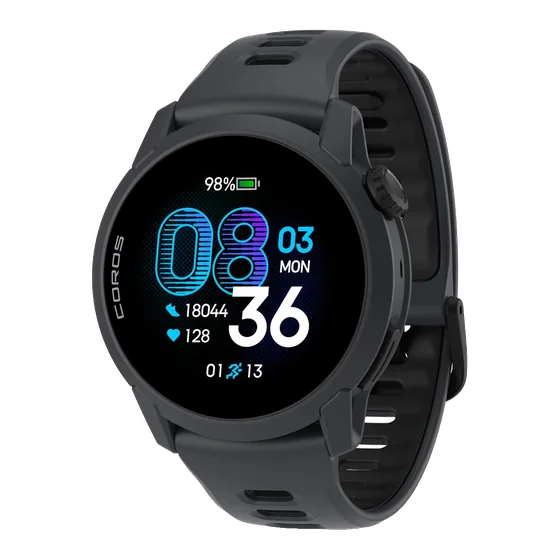
COROS promises 31 h of dual-frequency GPS, or 24 h with always-on. No tester has drained a PACE 4 to zero in that mode yet, but DC Rainmaker's burn rate with always-on projects to about 24 h. A marathon is finished before the battery icon starts to look worried. On raise-to-wake, TechRadar got 10–14 days with a few workouts a week. The Run Testers found the always-on screen easy to read after six months.

The catch is always-on in daily life. COROS's 6 days became 4–5 days in Tom's Guide's test: a charger on the nightstand twice a week. Leave it on raise-to-wake and the problem disappears. Weighing it against the MIP model it replaced? Our PACE 4 vs PACE 3 page settles it. We'd buy the PACE 4.
COROS PACE 4Under $250
Check price on Amazon (opens in a new tab)

Opens Amazon.com · Prices change often

Garmin Instinct 3 AMOLED (45mm): a week of always-on, honestly labeled

Buy

View on Amazon (opens in a new tab)

Price band: under $350

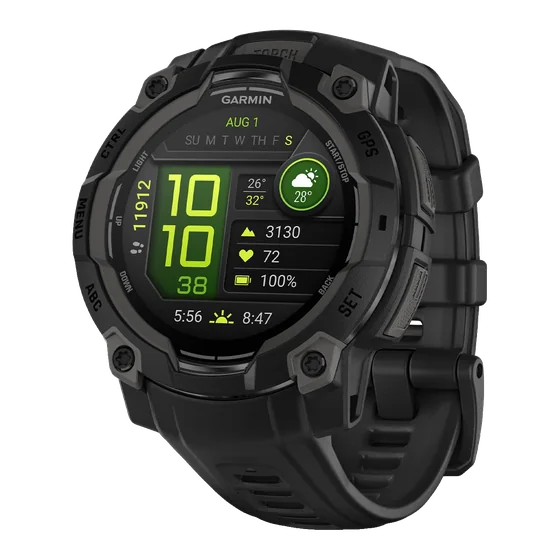
Garmin publishes battery for both screen settings, and both hold. Testers measured just under 7 days always-on, and owners with it off report 18–21 days. Standard GPS reached about 30 h against Garmin's 32 h. It runs on buttons alone, which suits gloved hands. The color screen is why people buy it; one owner coming from an Apple Watch found the Solar's MIP screen unacceptable.

Its catch is navigation. It shows a breadcrumb line, not a map, and DC Rainmaker found a multi-way trail fork turns into trial and error. If a month between charges beats color, the Instinct 3 Solar is the MIP version. For familiar trails and a week of always-on, we'd buy this one.
Garmin Instinct 3 – 45 mm, AMOLEDUnder $350
Check price on Amazon (opens in a new tab)

Opens Amazon.com · Prices change often

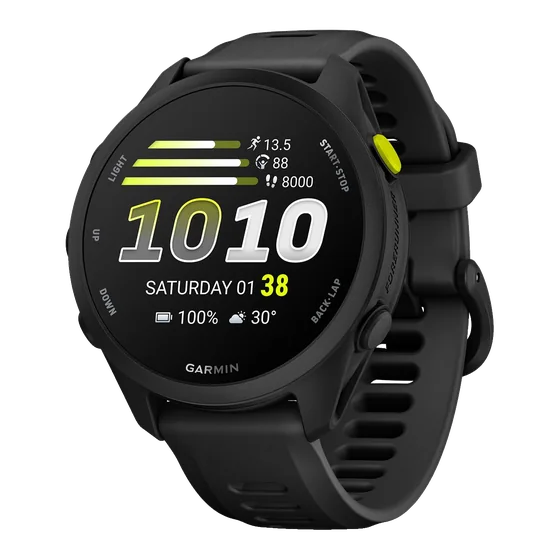
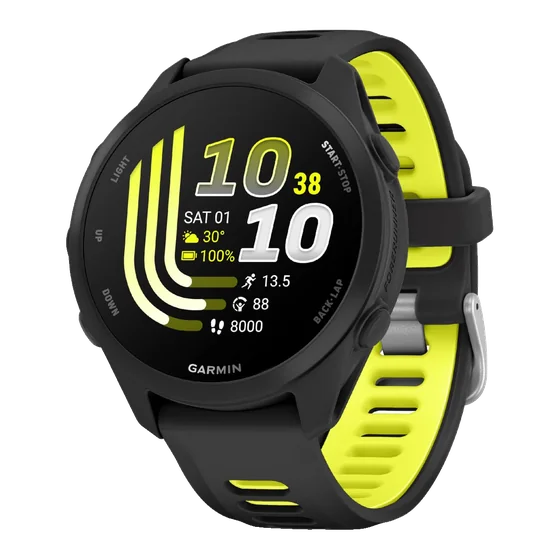
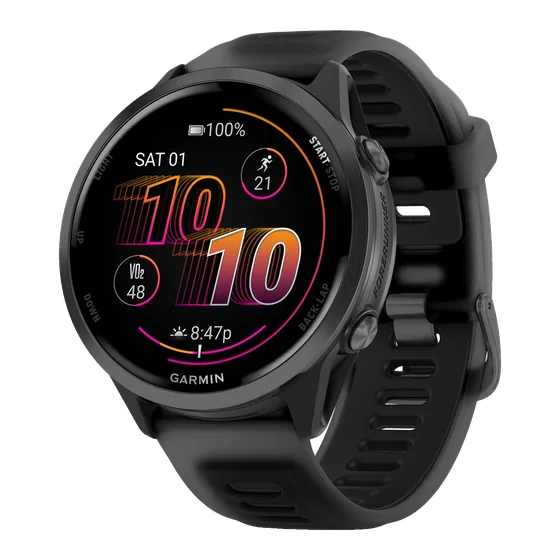
Garmin Forerunner 970: the Garmin to buy if you're set on the brand

Buy

View on Amazon (opens in a new tab)

Price band: under $800

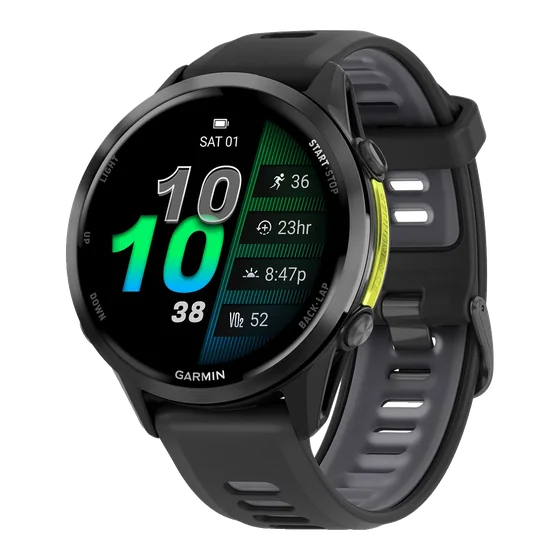
Garmin rates it at 21 hours with every satellite system and multi-band on. Tom's Guide raced a 10K with always-on and saw the battery fall 4.8%/hour, which projects to about 21 hours. A marathon leaves plenty in reserve. Owners mostly get about two weeks between charges against a 15-day rating. Testers running always-on below full brightness got 4.5 days and 5.5 days.

The catch is the touchscreen on some units. The largest open thread on Garmin's 970 forum is about scrolls registering as taps. Garmin is dealing with it watch by watch. So scroll the menus hard in the first week, while you can still return it. For runners, hikers and triathletes set on Garmin who want maps and a flashlight on a bright screen, we'd buy the Forerunner 970. It's the same Garmin our which Garmin should I get guide picks for buyers loyal to the brand.
Garmin Forerunner 970Under $800
Check price on Amazon (opens in a new tab)

Opens Amazon.com · Prices change often

COROS APEX 4 (46mm): the MIP watch worth buying

Buy

View on Amazon (opens in a new tab)

Price band: under $500

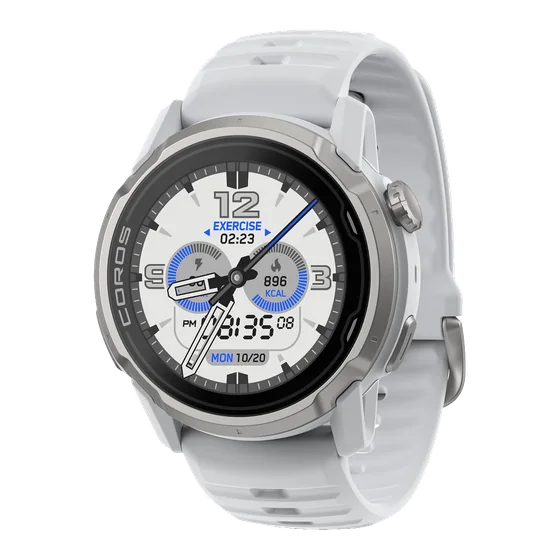
COROS claims 41 h of dual-frequency GPS. No tester has yet taken an APEX 4 all the way to empty in that mode, so what exists is a burn rate. On a long mountain day with navigation running, DC Rainmaker measured about 2%/h, a pace that projects well past the 41 h claim. Tom's Guide got 12 days of near-daily running from one charge, with a third left over. The screen stays on at no cost. At 2.3 oz (64 g), it's far lighter than the AMOLED watch that burned battery at the same rate.

Its weak spot is this page's subject. In deep shade the MIP map page fades to a murky gray, just as you're squinting at a junction to pick the right fork. If you navigate for days and want the screen always visible, we'd buy the APEX 4. Our hiking with maps guide weighs the alternatives.
COROS APEX 4Under $500
Check price on Amazon (opens in a new tab)

Opens Amazon.com · Prices change often

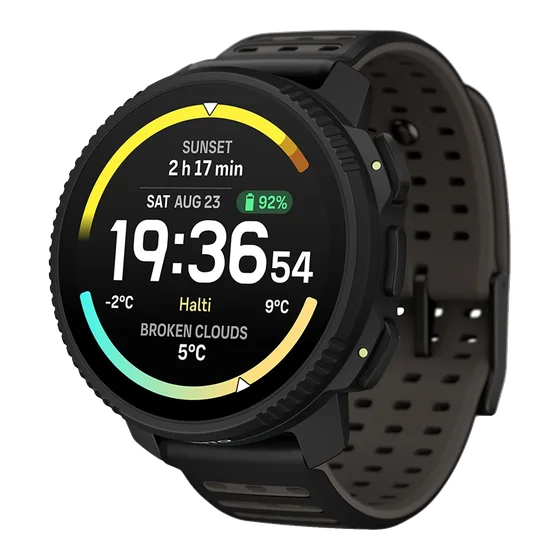
Suunto Vertical 2: AMOLED with MIP stamina

Buy

View on Amazon (opens in a new tab)

Price band: under $600

Suunto claims 65 h of multi-band GPS. No one has run one down in multi-band. The nearest evidence is an all-systems rundown and a multi-band burn rate that projects short of the claim. OutdoorGearLab got 66 h of continuous GPS in all-systems mode, longer than any other AMOLED watch it measured. DC Rainmaker's multi-band day, with the map up and always-on, burned about 2%/h. That rate projects to around two full days: short of the box, but still a day and a night of trail on a bright screen. Everyday wear falls short too: TechRadar charged about every 10 days, against Suunto's 20.

The catch is mass. The steel version tips the scale at 3.1 oz (87 g), in one size, and TechRadar found it cumbersome in bed. That's the price of MIP-class battery behind an AMOLED screen. For average or larger wrists on long trail days, we'd buy the Vertical 2.
Suunto Vertical 2Under $600
Check price on Amazon (opens in a new tab)

Opens Amazon.com · Prices change often

Garmin's two new watches: wait for the tests

Garmin Enduro 4: a solar MIP claim still unproven

Wait

Price band: under $900

Garmin rates this solar MIP watch at 60 h of multi-band GPS without sun and 36 days of everyday wear. The one independent test so far measured 1.4%/h and extrapolated about 70 h. Encouraging, but it's a projection, not a run to empty. One early owner swapped it for an AMOLED fēnix 9 Pro over map readability. It launched in October. Wait for a full battery test.

Garmin fēnix 9 (47mm): a new AMOLED flagship, untested as sold

Wait

Price band: under $1,000

Garmin rates the base 47mm at 16 days and 30 h of GPS, with a 2,000-nit screen. The sunlit praise for its AMOLED comes from Pro units, which also crashed mid-run on early firmware. No one has tested the base 47mm's battery or GPS yet. Wait until someone does.

The picks at a glance

WatchBuyScreenOur call
COROS PACE 4View on Amazon (opens in a new tab)AMOLEDBuy: our overall pick
Garmin Instinct 3 AMOLED (45mm)View on Amazon (opens in a new tab)AMOLED, buttons onlyBuy for familiar trails
Garmin Forerunner 970View on Amazon (opens in a new tab)AMOLEDBuy if you're set on Garmin
COROS APEX 4 (46mm)View on Amazon (opens in a new tab)MIPBuy for days of navigation
Suunto Vertical 2View on Amazon (opens in a new tab)AMOLEDBuy for long trail days, bigger wrists
Garmin Enduro 4MIP, solarWait for a full test
Garmin fēnix 9 (47mm)AMOLEDWait for a base-model test

Our pick: the COROS PACE 4

Our pick

Best AMOLED for the battery

The question used to be battery or beauty. On paper, the PACE 4 settles it. Its AMOLED screen is rated for more GPS hours than the MIP watch it replaced. With always-on off, it lasts a week or two between charges. You give up the always-lit face. In return you can read it in a dark kitchen and in July sun. Buy the bright screen and switch off always-on; you'll soon forget where the charger lives.

COROS PACE 4Under $250
Check price on Amazon (opens in a new tab)

Opens Amazon.com · Prices change often

The evidence in full

38 sources

Research count: 8 models weighed; 5 maker manuals among them; across this site's research, 367 sources kept in full; 148 Reddit threads read, kept as the reader's summary, not in full.

PACE 3 (MIP) against PACE 4 (AMOLED)

GPS mode (COROS's rating)PACE 3, MIPPACE 4, AMOLEDPACE 4, always-on
All systems25 h41 h30 h
Dual-frequency (most accurate)15 h31 h24 h
Everyday wear15 days19 days6 days
  • Ratings are from COROS's current battery specifications page. The PACE 3 also has a Standard GPS rating of 38 h; COROS doesn't publish a PACE 4 standard-GPS figure.
  • The PACE 3's MIP screen is always on, so its figures compare most directly with the PACE 4's always-on column.
  • COROS lowered the PACE 3's everyday rating after a February 2024 firmware change; DC Rainmaker's 2023 launch test matched the older, higher claim. The current figure is the one compared here.
  • DC Rainmaker (Nov 2025) states the PACE 4 beats the PACE 3 in every GPS battery mode, and measured about 4%/h in Max GPS with always-on. That is a burn rate over part of a charge, not a rundown to empty. Neither watch has a published rundown in dual-frequency, so the GPS comparison rests on COROS's ratings plus that one rate.
  • PACE 4 always-on daily wear: about 6 days with about 1 h of GPS a day (DC Rainmaker); 4–5 days running daily in multi-band (Tom's Guide); about 5 days over six months and about 1,500 miles (The Run Testers). Raise-to-wake: 10–14 days with a few workouts a week (TechRadar); one owner about 12 days, settings unstated.
  • Not a one-variable test: the PACE 4 also has a newer HR sensor, a microphone and an Action button. All PACE 3 lab testing dates from its 2023 launch firmware.
  • PACE 3 owners praise its MIP screen in summer sun and for quick pace glances; one owner of both prefers it over the PACE 4's AMOLED timeouts.
  • The PACE 3 suits only a buyer who wants an always-lit MIP face above all; for anyone choosing between the two today, we'd take the PACE 4.

Always-on against wrist-turn wake, watch by watch

WatchWakes on wrist turnAlways-on
Garmin Instinct 3 AMOLED (45mm)18 days claimed, 18–21 days by owners7 days claimed and measured
COROS PACE 419 days claimed, 10–14 days measured6 days claimed, 4–5 days measured
Garmin Forerunner 97015 days claimed, about 14 days by owners4.5 days and 5.5 days measured

Instinct 3 AMOLED (45mm)

  • Garmin (manual and US spec block for 010-02936-00): 18 days with wrist-gesture wake, 7 days with Always On Display, 32 h GPS-only, 23 h all systems plus multi-band.
  • OutdoorGearLab: "just under seven days" with always-on, health tracking, notifications and intermittent GPS; about 30 h in standard GPS. Its variant is inferred as the 45mm AMOLED from list price and measured weight.
  • TechRadar (45mm AMOLED): ran the battery down over 16 days; always-on setting not stated, so it isn't counted as a wrist-turn measurement.
  • Owners (45mm AMOLED): two report about 7 days with always-on; others report an 18-day estimate and 19–21 days between charges with always-on off. Estimates, not all completed cycles.
  • DC Rainmaker's on-watch projections from SatIQ runs ran above Garmin's multi-band figure, but they are short-activity estimates on an AMOLED unit of unstated size and are not used for the call.
  • Triathlete's longer always-on result is for the 50mm AMOLED and isn't carried across.
  • Call unchanged: we'd buy it for buttons and familiar trails.

Forerunner 970, always-on by firmware and brightness

  • 2.5 days always-on at default brightness with 1–3 h of GPS a day, launch firmware, June 2025 (DC Rainmaker); a third brightness "basically doubles" it.
  • 4.5 days after battery updates, below the brightest setting (Tom's Guide, six months); 5.5 days at lowest brightness with a short screen timeout and night pulse ox (DesFit, one year).
  • Owners report about 14 days, display mode mostly unstated; iRunFar charged about every 8.5 days with settings unstated. Gesture wake is the likely explanation.
  • GPS: Tom's Guide's 10K with always-on and multi-band drained 4.8%/hour, which projects to about 21 hours; no one has published a rundown to empty in that mode.
  • Ghost touches: the Garmin Forums thread is the largest open defect thread on the 970 board; owners suspect hardware, and some say a replacement unit fixed it while others say it didn't.
  • Call unchanged: we'd buy it for anyone set on Garmin, as our which-Garmin guide does, and return a unit that ghost-touches while the window is open.

APEX 4 (46mm) and Vertical 2 on the same kind of day

  • DC Rainmaker's APEX 4 hike with dual-frequency and navigation: about 2%/h, matching a Suunto Vertical 2 and projecting well past COROS's 41 h claim. It is a burn rate from one long day, not a rundown to empty.
  • DC Rainmaker's Vertical 2 trail day with dual-frequency, always-on and navigation: about 2%/h, ahead of a fēnix 8 Pro MicroLED and an Apple Watch Ultra 3 that day. That projects short of Suunto's 65 h multi-band claim. DC Rainmaker ran always-on and navigation, which may account for some of the gap; no multi-band rundown of a Vertical 2 exists to pin down the real figure.
  • OutdoorGearLab measured 66 h of continuous GPS on the Vertical 2, in All Systems mode rather than multi-band, so it doesn't verify the multi-band claim directly.
  • One Vertical 2 owner's trail hike with always-on off burned faster than DC Rainmaker's rate, which cuts against the idea that lighter settings would close the gap; the cause is unexplained (map scrolling, a partial-charge reading or firmware are all possible).
  • APEX 4: DC Rainmaker saw the track become "connect the dots" with a route loaded on October 2025 firmware; no release note names a fix through September 2026. This doesn't affect the screen or battery call.
  • Calls unchanged: we'd buy the APEX 4 for days of navigation and the Vertical 2 for long trail days on bigger wrists.

Readability reports, by source

  • AMOLED easier than MIP in every condition tried, including midday Mediterranean sun: DC Rainmaker, on fēnix 9 Pro AMOLED and Solar units, not the base 47mm.
  • A Run Testers reviewer who wore the APEX 4 alongside an AMOLED Apple Watch Ultra 3 and fēnix 8 Pro saw no sunlight readability advantage for its MIP screen; his co-reviewer didn't report on it.
  • APEX 4 MIP duller indoors, under cloud and on map pages in low light: Tom's Guide and DC Rainmaker. An owner who left Garmin after ten years prefers MIP overall but finds it harder to read in dense-tree shade.
  • iRunFar: one tester "legitimately shocked" by the APEX 4's dimness after AMOLED watches, with no brightness adjustment; another finds it "perfectly suitable."
  • Pro-MIP: Believe in the Run prefers always-on MIP for climbing and skiing; two PACE 3 owners praise it in summer sun and for quick pace glances; one owner of both prefers the PACE 3's MIP over the PACE 4's AMOLED timeouts; a fēnix 9 AMOLED owner prefers the dimmer look of their fēnix 8 Solar.
  • Returns over a MIP screen: a COROS Nomad after three days (r/Suunto); a PACE 3 at once, unreadable indoors (r/Coros); an Enduro 4 swapped for a fēnix 9 Pro over map readability while running, partly because the solar ring shrinks the usable screen (r/GarminWatches).
  • AMOLED complaints, none of them returns over the screen: a PACE 4 swimmer couldn't read the dimmed standby screen mid-swim (model not repeated in the thread); DC Rainmaker found the Vertical 2's dim always-on face hard to read; a fēnix 9 owner turned always-on on because of a short wake delay.
  • Moves from AMOLED to solar MIP: two owners (Epix Pro Gen 2 and fēnix 8) over the always-on battery trade and the screen waking at work (r/Garmin).

Enduro 4 and fēnix 9 (47mm): what exists so far

  • Enduro 4: DC Rainmaker's October 2026 piece is a first look with no battery test. Bautsch Sportstec measured 1.4%/h in Max Accuracy over a single walk-run outing and about 20 days from a training week, both extrapolated; solar contribution wasn't separated. Enduro 3 figures, which DC Rainmaker says share identical battery, are proxies and aren't used here.
  • fēnix 9 (47mm base): Garmin rates 16 days, 30 h Normal, 25 h Max Accuracy. Almost all tester data is on Pro units; the only base-unit test is route-calculation speed, and no base-unit heart-rate test exists either. Early firmware crashes, missing data and broken Mac map sync appeared across DC Rainmaker's units.
  • Calls unchanged: wait on both until a full test of the exact model is published.

How the testers measured

  • DC Rainmaker logs battery percentage across longer workouts and warns that short activities can't show changes smaller than a whole percent; most units are maker loaners.
  • OutdoorGearLab buys its watches and measures daily battery with always-on against gesture wake, and continuous GPS hours.
  • Tom's Guide and The Run Testers report long-term wear; The Run Testers compare tracks against other watches.
  • No CPSC recall was found for any Garmin, COROS or Suunto watch.

Sources

How we research

Milewright doesn't test watches. It sets each maker's claim against what labs, reviewers and owners measured on the exact same model, and tells you which number to believe.

How we research GPS watches