The quick answer
Our pick
COROS PACE 4
Best under $300: maps, dual-band GPS and the least charging
Opens Amazon.com · Prices change often
Running
By price band
Trail & outdoors
Multisport & gym
Compare & decode
The quick answer
Best under $300: maps, dual-band GPS and the least charging
Opens Amazon.com · Prices change often
Price bands, not prices
| Watch | Verdict | Who it suits | The catch | Price band and link |
|---|---|---|---|---|
 COROS PACE 4Our pick | Best under $300: maps, dual-band GPS and the least charging | Road and trail runners who want distance they can trust and maps on the wrist, and don't need Spotify or tap-to-pay | Wrist heart rate split testers; hard efforts in the cold want a chest strap | Under $250View on Amazon (opens in a new tab) |
 Garmin Forerunner 70Buy | Best for Garmin's coaching | Runners who want a free adaptive plan and a morning readiness score on Garmin's app | No music, no Garmin Pay, no maps, no barometer | Under $250View on Amazon (opens in a new tab) |
 Garmin vívoactive 6Buy | Best for offline Spotify and Garmin Pay | Runners who want playlists and tap-to-pay on the wrist with the phone left at home | Owners report Bluetooth headphones dropping out mid-run | Under $300View on Amazon (opens in a new tab) |
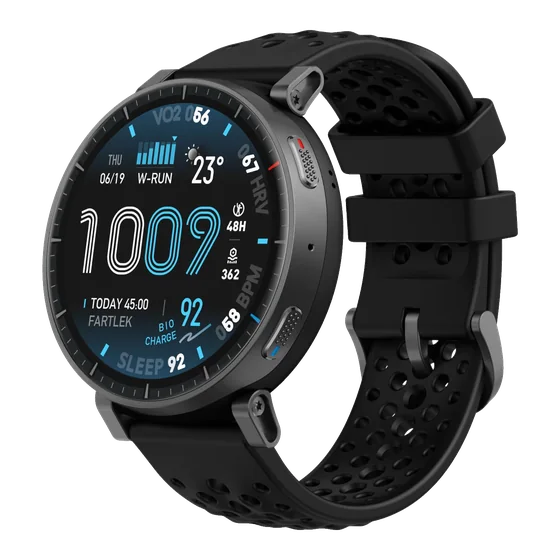 Amazfit Active MaxBuy | Best if your budget stops under $200 | Open-road runners who want free maps and two weeks or more between charges | Single-band GPS that testers split on under trees and buildings | Under $200View on Amazon (opens in a new tab) |
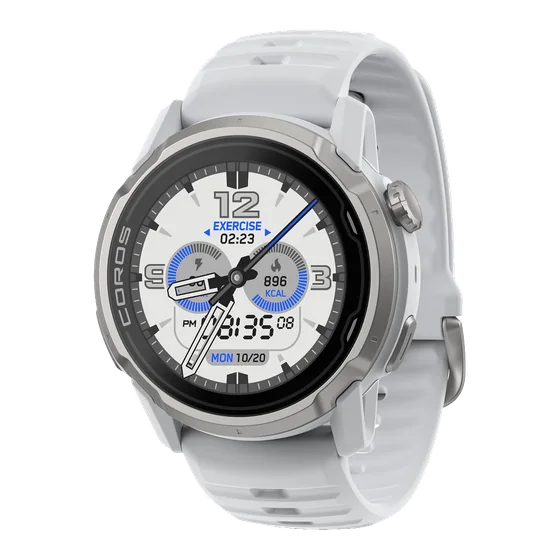
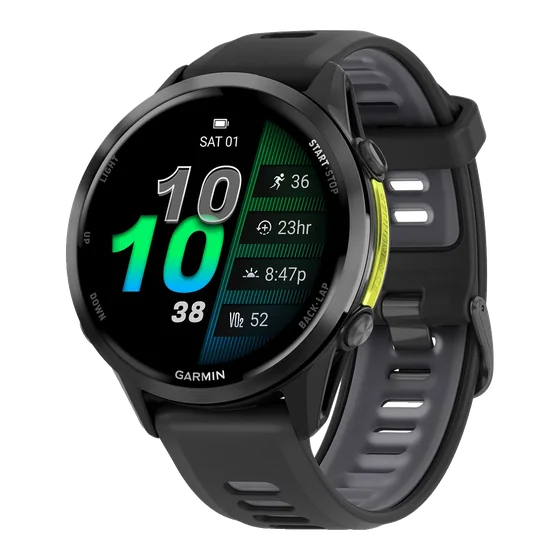
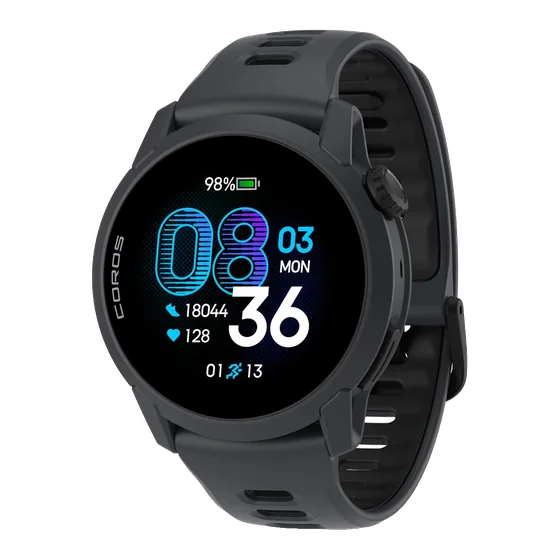
The PACE 4, Forerunner 70, vívoactive 6 and Forerunner 170 crowd the top of the under $300 shelf this fall. Each is built around a different strength: maps on the PACE 4, offline Spotify on the vívoactive 6, Garmin Pay with a real altimeter on the 170, and Garmin's coaching for the least money on the 70. That makes it sound like a matter of taste. It isn't, quite. Only one of the four pairs its trick with GPS every tester trusts and a battery a marathon barely dents. Milewright's pick for a runner shopping under $300 is the COROS PACE 4, a band lower at under $250. Four separate testers came back impressed by its dual-band GPS. Free topo maps arrived in September. In a lab's run, its battery drained slowly enough to project past a full day with the screen always on. Its catch is wrist heart rate, which split the testers. If you run hard in the cold, budget for a chest strap.
COROS PACE 4Under $250Opens Amazon.com · Prices change often
The PACE 4 suits most runners at this money. Here's when it isn't yours.
One feature is missing from every watch we weighed under $300: LTE, for taking a call without your phone. The only LTE watch we weighed sits above this ceiling, and the question on it below explains why.
Price band: under $250
COROS gives a separate battery figure for every GPS setting and every screen setting. That's a spec sheet worth reading. It promises 31 hours when the watch listens on both satellite frequencies, and 24 if the screen never sleeps. In that setting, screen lit throughout, DC Rainmaker logged a drain of about 4%/h. At that rate, the battery would outlast a full day on the move. A marathon barely shows on the gauge, and a first 50K leaves charge for the drive home. Between runs, testers who kept the screen on got 4 to 6 days. If your longest day runs past a marathon, our GPS battery planner shows what you'd have left at the finish.
GPS is where it earns the pick. Four testers found only minor offsets, one of them over a whole London Marathon. That's distance you can trust with a PR.
Maps arrived by firmware on September 26: topo and landscape maps worldwide, at no charge. They show where you are, but they won't route you around a closed trail. The 4 GB of storage also fills fast. COROS's own FAQ still says the PACE 4 doesn't do full mapping, a modest way to describe a feature you shipped in September. When a maker's FAQ contradicts its release notes, I read it like a drawing two revisions out of date. The newer document wins.
The catch is wrist heart rate. Three testers saw it track a chest strap closely on runs. The Quantified Scientist, testing in winter, found it poor and suspects it latched onto his stride. Owners who run in the cold or throw in fast pickups say much the same. Easy miles are fine. Intervals on a January morning want a strap.
It plays only MP3 files you copy over, and it has no payments. If those matter, see the vívoactive 6 below.
Our call: buy it if you run outdoors and want distance you can trust and maps on your wrist. Our PACE 4 review has the full story, and COROS vs Garmin sets it against its Garmin rivals pair by pair.
COROS PACE 4Under $250Opens Amazon.com · Prices change often
Price band: under $250
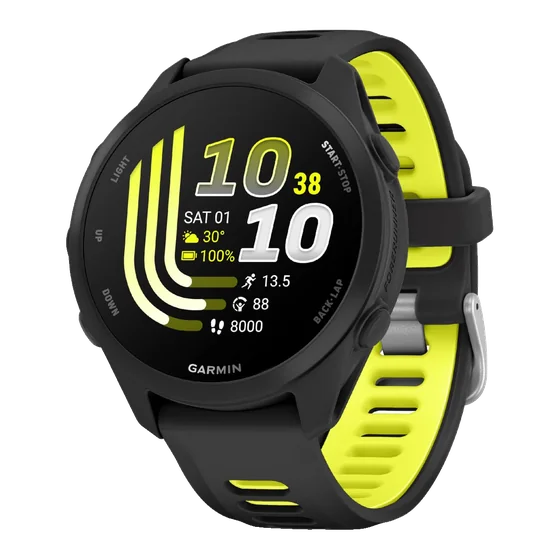
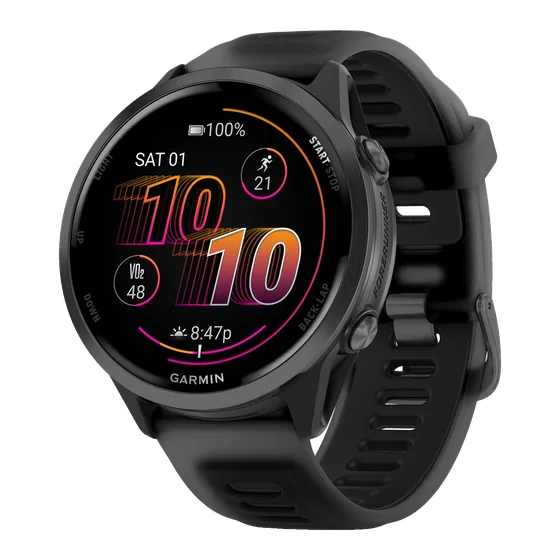
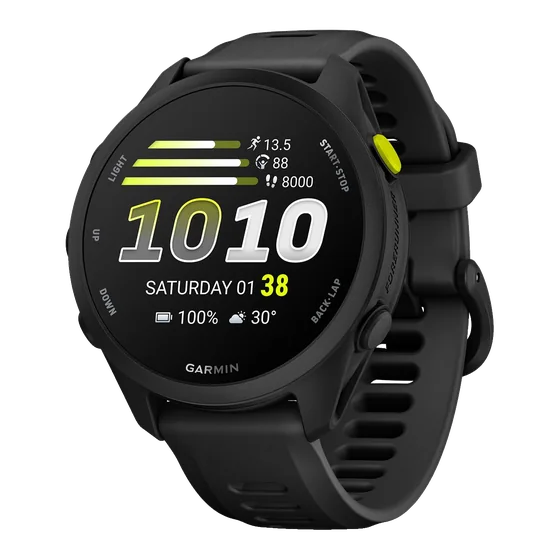
On paper the Forerunner 70 reads like the cheap seat, with single-band GPS where the PACE 4 has two. Garmin's antennas make a fool of the spec sheet. In DC Rainmaker's testing its tracks landed on nearly the same line as a fēnix 8 Pro running multi-band, even among downtown towers. A second test team saw it keep up with multi-band watches too. Heart rate held up against chest straps on steady runs, if a beat slow to settle after a hard rep.
The reason to buy it lives on the training screens. Garmin Coach writes a plan that adjusts as your weeks go, with run/walk options for newer runners. Training Readiness tells you each morning whether today should hurt. None of it needs a subscription. It also sits on Garmin's newer software platform, which gets new features first. That matters for a watch you plan to keep three years.
Garmin claims 16 hours with all satellite systems. One tester's hour in the best GPS mode burned close to 10%/hour, a pace that projects to under two-thirds of that. It's enough for a marathon, and thin for a full day on mountain trails. Left always-on, it lasted 4.5 to 6 days for testers, around Garmin's 5.
The catch is what stays at home. There's no music and no Garmin Pay, so your playlists and your wallet stay with the phone. Routes show as a breadcrumb line, not a map. With no barometer, climbs come from GPS, and one test found them undercounted on a walk. It's a running tool and nothing more, which is exactly what plenty of runners want.
Our call: buy it if you want a watch that tells you what to run today and when to rest. Our Forerunner 70 review has the detail.
Garmin Forerunner 70Under $250Opens Amazon.com · Prices change often
Price band: under $300
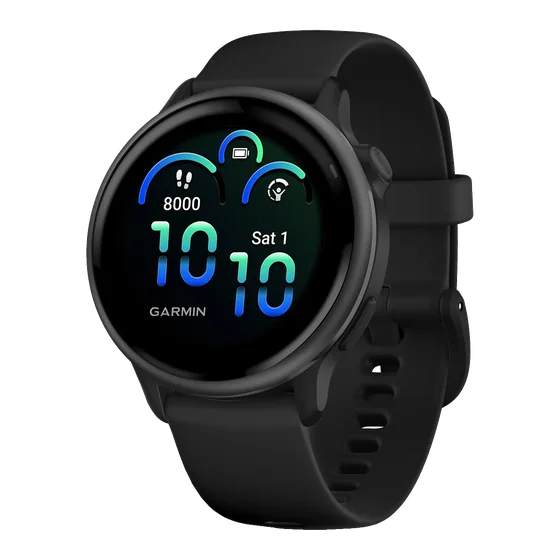
The vívoactive 6 is the Garmin that admits it's also a smartwatch. Spotify and Amazon Music support it in Garmin's app store, as do Deezer and YouTube Music. A downloaded playlist plays from the watch's 8 GB while the phone stays on the kitchen counter. Garmin Pay then covers the bagel on the way home. Downloads need each service's paid tier. No Garmin plays Apple Music; type its name into Garmin's store and the results are all watch faces.
The box holds up where anyone has checked it. Garmin claims 21 hours on GPS alone, and OutdoorGearLab ran it down at 20. Garmin's manual says 8 hours with every satellite system and music running, which nobody has measured. That's a marathon with a podcast, not a trail day. Its single-band GPS came within 0.04 mi on that lab's measured course, less than a short city block.
Heart rate is good enough for easy miles. The Quantified Scientist got a correlation of 0.81 with a chest strap on runs. In plain terms, it follows the shape of a run but lags when you surge. Without Training Readiness or multi-band GPS, this is the music-and-wallet Garmin, not the training one.
The catch is the headphones. Owners keep reporting earbuds cutting out mid-run, and support hasn't fixed it for all of them. Owners of Garmin's other music watches report the same dropouts, and which headphones you pair seems to decide whether you get them. So it isn't this watch's fault alone, but it is the feature you bought it for.
Our call: buy it if phone-free Spotify is why you're shopping. If coaching matters more than playlists, the Forerunner 70 is the better Garmin. Our guide to running watches with music without a phone goes service by service.
Garmin vívoactive 6Under $300Opens Amazon.com · Prices change often
Price band: under $200
Amazfit claims 25 days of everyday use and 64 hours of GPS, numbers that sound measured on a nightstand. Only the everyday battery has met a tester so far. One team's watch ran 16 days with the screen always on at full brightness. Amazfit's own spec promises 10 days with the screen left on, so here the maker undersold its watch. Another went comfortably over 10 days with raise-to-wake and a few workouts a week. Nobody has run one flat on GPS, so the 64 hours is still just the box talking. Free contour maps download to the watch. Running heart rate correlated at 0.96 with a chest strap in one lab, on early firmware.
The catch is single-band GPS that changes with where you run. On open roads, one test team found distance as close as Garmin's flagships. Under trees and buildings, others watched routes drift. One walk logged 4.55 mi against a phone's 6.1. If your run is a downtown loop or a wooded trail, the PACE 4 is worth the extra band. The same holds for hikers who'd steer by those free maps under tree cover. For day hikes with maps, the PACE 4 is the watch we'd pick too.
Our call: buy it if you run open roads and the budget really stops under $200. Our Active Max review has the rest.
Amazfit Active MaxUnder $200Opens Amazon.com · Prices change often
Most of this shelf is new. Garmin's Forerunner 70 and 170 arrived in May 2026, and the Active Max in December. The PACE 4 is a year old, but it gained its maps only on September 26. Reviews written before then say it has no maps. On current firmware that's wrong, and it's the difference between this watch and a breadcrumb trail.
We're watching for battery and heart-rate results on the plain Forerunner 170, which would put it in contention. We also want a full look at the PACE 4's maps on release firmware rather than the beta. We've seen nothing announced in this band, so there's no reason to wait.
Nothing wins here on one kind of proof. Each pick needs two independent sorts of evidence about the very model you'd buy, and at least one can't come from its maker. Every battery claim sits beside what testers found, with the screen setting named, and we say what kind of finding it is. Where a tester ran the watch flat, you get that rundown. Where testers logged only a drain rate over part of the battery, we give it as a projection, not a result. Where nobody has tested the model, as with the Forerunner 170 and the Galaxy Watch Ultra (2025), we say its battery is not measured. GPS and running heart-rate results were counted tester by tester. The CPSC database shows no recall for any brand on this page.
Not if you buy a Garmin. The single-band Forerunner 70 kept pace with a multi-band flagship downtown. Other brands' single-band watches haven't shown the same, which is the Active Max's weak spot. The PACE 4 gives you dual-band anyway.
The vívoactive 6, with Spotify Premium. The PACE 4 and Active Max play only files you copy over. The Forerunner 70 and plain 170 store no music at all. Our music without a phone guide covers every service.
No tester has measured the plain 170's battery or heart rate. Its GPS tracked identically to the Forerunner 70 on the same runs. But the other results come from the Music edition. On paper, Garmin rates it 14 hours with all satellite systems, against the 70's 16. Garmin Pay and an altimeter are worth having. They aren't worth buying blind.
Not among the watches we weighed. The one LTE watch we weighed, the Galaxy Watch Ultra (2025), sits above this ceiling in the under $700 band. The original 2024 Galaxy Watch Ultra shares its model code, but it's a different watch, and we haven't weighed it here. The 2025 edition brings LTE, a speaker and 64 GB, but it works only with Android phones. Its best health features want a Samsung. Samsung's own GPS battery claim is 48 hours, and only in a power-saving exercise mode. Its battery is not measured, because every test on file used the 2024 watch, and we use none of those figures.
Who it's for: Android owners who need a phone line on the run and can spend well past this page's ceiling.
None you need. COROS and Amazfit have no paid tier. Garmin's Connect+ is optional, and the coaching stays free. Music downloads need the streaming service's paid plan.
| Watch | What it has that the others don't | GPS on testers' runs | Battery: box against measured |
|---|---|---|---|
| COROS PACE 4View on Amazon (opens in a new tab) | Topo maps and dual-band GPS | Very good to excellent for four testers | 24 h dual-band with screen always on, claimed; a measured pace projects past a full day |
| Garmin Forerunner 70View on Amazon (opens in a new tab) | Garmin Coach plans and Training Readiness | Kept pace with multi-band watches for two testers | 16 h all systems, claimed; one hour's pace projects to under two-thirds of that |
| Garmin vívoactive 6View on Amazon (opens in a new tab) | Offline Spotify and Garmin Pay | Within 0.04 mi on one lab's course | 21 h GPS only, claimed; 20 h measured |
| Amazfit Active MaxView on Amazon (opens in a new tab) | Free maps and two weeks between charges | Split: close on open roads, drifting for others | 10 days always-on, claimed; 16 days measured always-on; GPS never run down |
Best under $300: maps, dual-band GPS and the least charging
The Forerunner 70 coaches better, and the vívoactive 6 plays Spotify. Neither, nor the cheaper Active Max, matches the PACE 4 where trust is decided. That's distance you'd put on a race report, and a battery that outlasts the race. The maps come free on top. If you can stretch further, our roundup of running watches one budget up shows what more money buys. For a runner spending under $300, buy the PACE 4.
COROS PACE 4Under $250Opens Amazon.com · Prices change often
Research count for this page: 9 models weighed; 5 maker manuals among them; across this site's research, 367 sources kept in full; 148 Reddit threads read, kept as the reader's summary, not in full.
| Watch | Band | What it has that the rest don't | Software | Battery claimed | Battery measured on this exact model | GPS and running HR, by tester | Our call |
|---|---|---|---|---|---|---|---|
| COROS PACE 4 (standard, W336) | under $250 | Topo maps (since firmware V3.2008.0, Sept 26, 2026), dual-band GPS | COROS, updates roughly quarterly | 41 h All Systems (30 h always-on); 31 h dual-frequency (24 h always-on); 19 days (6 days always-on) | About 4%/h dual-frequency with always-on, a pace that projects past a full day (DC Rainmaker); about 6 days always-on (DC Rainmaker); 4 to 5 days always-on running daily (Tom's Guide); about 5 days always-on (The Run Testers); 10 to 14 days raise-to-wake (TechRadar) | GPS: 4 testers good to excellent. HR: 3 good, 1 poor in winter | Buy |
| Garmin Forerunner 70 (43mm) | under $250 | Garmin Coach adaptive plans and Training Readiness | Garmin's newer shared platform | 23 h GPS only; 16 h All Systems; 13 days; 5 days always-on | Close to 10%/hour in best GPS mode over one hour, projecting to under two-thirds of the 16 h claim (TechRadar); 6 days always-on (Tom's Guide); 4.5 days always-on, running daily (The Run Testers) | GPS: 2 testers matched multi-band. HR: 2 good, slight lag easing off in intervals | Buy |
| Garmin vívoactive 6 (42mm) | under $300 | Offline Spotify, Amazon Music, Deezer, YouTube Music; Garmin Pay | Not named among the watches on Garmin's newer shared platform | 21 h GPS only; 17 h All Systems; 8 h All Systems with music; 11 days; 5 days always-on | 20 h GPS only, full rundown; 5 days always-on; 118 min to charge (OutdoorGearLab) | GPS: 1 tester, within 0.04 mi. HR: 2 testers, r = 0.81 on runs (The Quantified Scientist), 1.0 bpm median off an armband on steady runs (OutdoorGearLab) | Buy |
| Garmin Forerunner 170 (43mm, non-Music) | under $300 | Garmin Pay and barometric altimeter in a Forerunner | Garmin's newer shared platform | 20 h GPS only; 14 h All Systems; 10 days; 4 days always-on | Not measured on this edition | GPS: 2 testers, identical to the FR70 and matching multi-band tracks. HR: not measured on this edition | Considered |
| Amazfit Active Max (one size) | under $200 | Free contour maps, longest charge interval here | Zepp | 64 h GPS; 25 days typical use; 10 days always-on (Amazfit's figure, as restated by Gadgets & Wearables) | 16 days always-on at full brightness (The Run Testers); 10 days raise-to-wake (T3); no GPS rundown on file | GPS: 3 testers split. HR: r = 0.96 on runs, pre-release firmware (The Quantified Scientist); spikes in intervals (The Run Testers) | Buy |
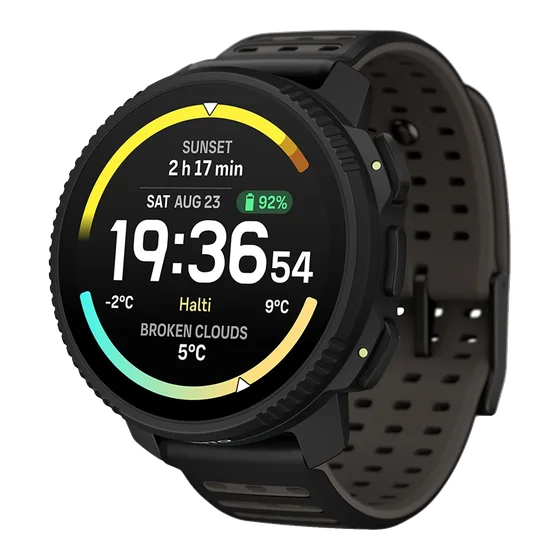
| Suunto Run | under $200 | Dual-band GPS at the lowest band | Suunto | 20 h dual-band; 12 days | 19 h highest-accuracy mode (OutdoorGearLab); 12 to 15 h in Alaska cold (CleverHiker); 3 to 4 days always-on | GPS: 3 testers good. HR: split by effort | Considered |
| Garmin Forerunner 165 (non-Music) | under $200 | Garmin Pay and altimeter at the lowest band | Older Garmin platform | 19 h GPS only; 17 h All Systems; 11 days | Lab results don't name the edition | Not counted for this edition | Considered |
| COROS PACE 3 | under $250 | Always-on MIP screen, lightest case | COROS | 15 h dual-frequency; 38 h GPS only; 15 days | Lab tests date from 2023 launch firmware | Not counted on current firmware | Considered |
| Watch | Band | What it has | Battery claimed by Samsung | Battery measured on this exact model | GPS and running HR on this exact model |
|---|---|---|---|---|---|
| Galaxy Watch Ultra (2025), 47mm LTE | under $700 | LTE, speaker, 64 GB; Android only | 48 h in Exercise Power Saving; 4.2 days in Power Saving; no everyday figure | Not measured; every test on file is of the 2024 watch, and none of those figures is used here | Not measured |
Call on this evidence: buy it, the overall pick.
Call on this evidence: buy it, for runners who want Garmin's coaching.
Call on this evidence: buy it, for runners who want phone-free Spotify and Garmin Pay.
Call on this evidence: buy it, for open-road runners whose budget stops under $200; not for hikers navigating under tree cover, where the PACE 4 is our pick.
Call on this evidence: considered, not a pick, until its own battery and heart rate are measured.
Who it's for: Android owners who need LTE on the run and can spend in the under $700 band, not buyers shopping under $300.
| Watch | Why it lost here |
|---|---|
| Forerunner 170 (non-Music) | The Garmin with coaching, Garmin Pay and an altimeter, held back only because its own battery and heart rate are unmeasured. The first watch we'd re-check. |
| Suunto Run | Accurate dual-band GPS at under $200, but DC Rainmaker found wrist HR lackluster on track intervals, owners find plans from Runna and Suunto's own AI never reach the watch, and the Run 2 has replaced it. Our under $200 roundup buys it for self-coached runners downtown or under trees; at under $300 the PACE 4 does that job with maps. |
| Forerunner 165 | An older Garmin without Training Readiness; the Forerunner 70 is the better start. |
| COROS PACE 3 | No maps, 15 h of dual-frequency GPS claimed, lab tests only from 2023, and the model the May 2026 bricking hit most often. The PACE 4 replaces it. |
| Galaxy Watch Ultra (2025) | Above this ceiling in the under $700 band, Android only, unmeasured on this edition, and already succeeded by the Ultra 2. |
How we research
Milewright doesn't test watches. It sets each maker's claim against what labs, reviewers and owners measured on the exact same model, and tells you which number to believe.
By price band
Trail & outdoors
Multisport & gym
Compare & decode
Reviews