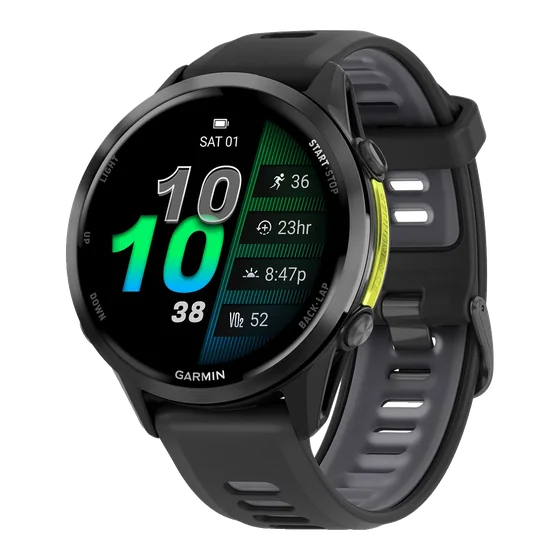
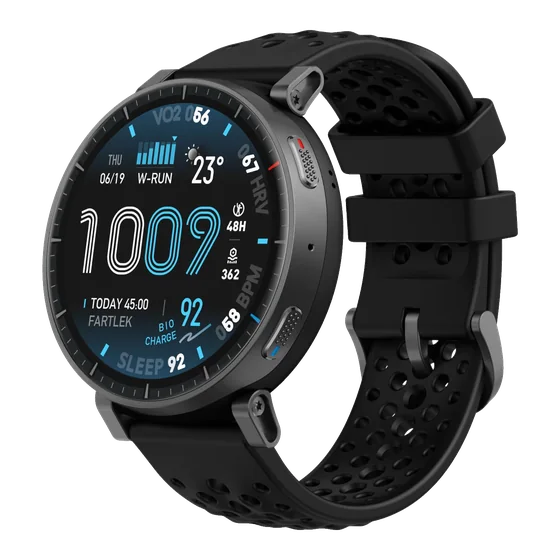
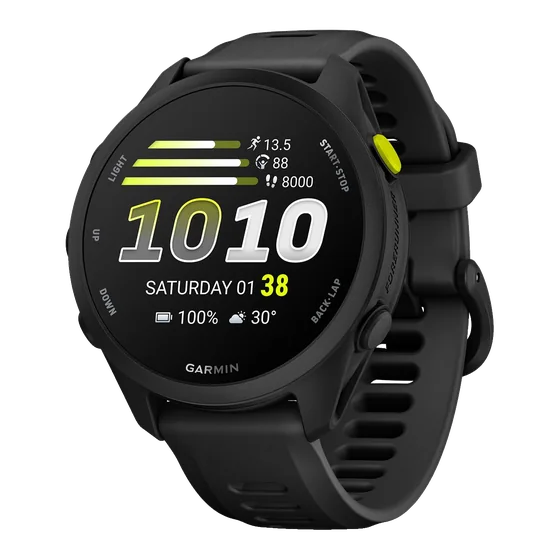
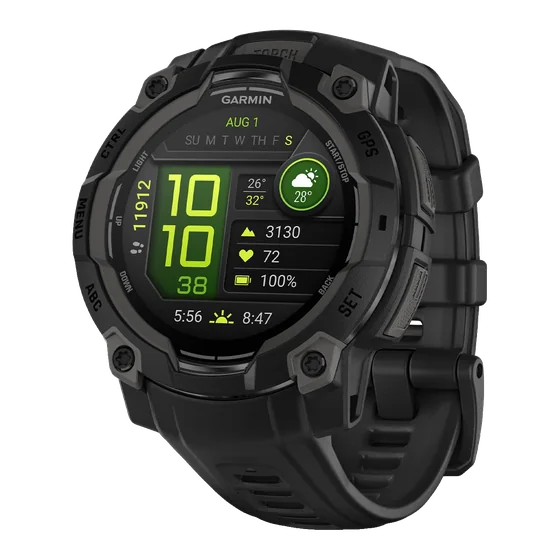
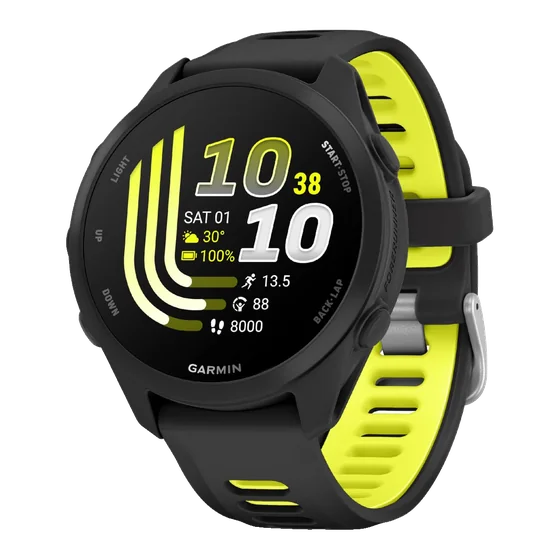
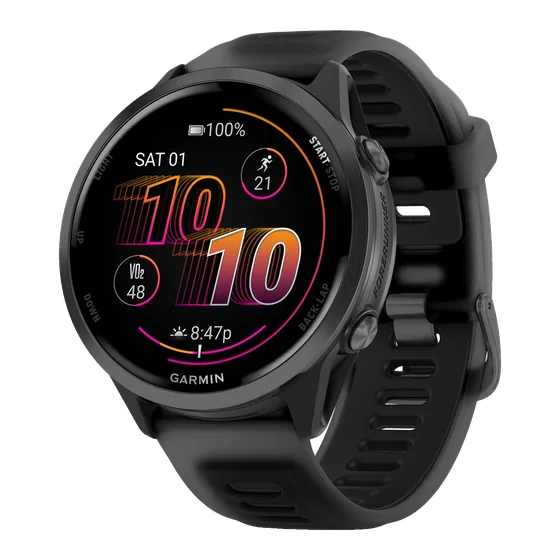
Not for hikers who navigate wooded trails and switchbacks; road runners on a hard budget are a different buyer, and our budget pages pick it for them
Single-band GPS that testers split on, and map navigation one long-term tester found needlessly complicated
Under $200
Garmin Enduro 4Wait
New: wait for a full battery test
Multi-day hikers who want Garmin's routable maps and the fewest charges
Only one independent test so far, and its hours are extrapolated
Under $900
Garmin fēnix 9 – 47 mmWait
New: wait for a test of the base model
Buyers who want Garmin's routable maps on a bright AMOLED flagship
Every test so far is on the Pro models
Under $1,000
Garmin fēnix 9 Pro – inReach, 47 mmWait
New: satellite SOS from the wrist
Solo hikers who want to call for help with no phone and no cell signal
Needs a paid inReach plan, and this exact version is untested
Under $1,200
Apple Watch Ultra 4Wait
New: for iPhone hikers, wait
iPhone owners who want one watch for the trail and daily life
Navigation is shallower than a Garmin's, and a day of standard GPS, not three
Under $800
COROS PACE 4 ProWait
New: wait for the battery fix
COROS fans who want the biggest, brightest COROS screen for maps
Measured GPS battery well under COROS's claim until a promised fix ships
Under $450
A watch that "has navigation" can mean a topo map with trail names. It can also mean a thin line on a black screen that leaves you guessing at every fork. Milewright's pick for hiking with maps is the COROS APEX 4 (46mm). Its topo maps are free and cover the world. Its battery was measured on a long mountain day with dual-frequency GPS and the map running. That pace projects to a little over two full days of nonstop navigating. Spread across a three-day trek with nights off the clock, you need no charger. The catch is in following a route. It shows you the map but won't plan a new way when you leave the line. On some imported routes, its turn alerts buzz for turns that aren't there. Trust the screen over the buzz.
Maps or breadcrumbs. A breadcrumb watch draws your planned route as a bare line. There are no trails, no contours, no creek. That's fine for retracing your steps. At a three-way junction it's useless: DC Rainmaker found the breadcrumb-only Instinct 3 left him choosing by trial and error. Every pick below shows real topo. One watch switched sides this fall. The PACE 4 gained maps in COROS's September 26, 2026 update. Older reviews predate it, and the FAQ on COROS's own product page has yet to catch up.
Next, decide whether you want to be shown the way or steered. The COROS and Suunto watches show the map and your line. They warn you when you wander off it. The Forerunner 970 and T-Rex 3 Pro can also work out a new route on the watch.
Judge battery with the map up, not by the box figure. Navigation and map pages burn power the headline number doesn't count. Run your own trip through our GPS battery planner.
The right screen depends on where you hike. MIP, on the APEX 4, is always on and sharp in sun but dull in deep shade. AMOLED is bright everywhere and costs battery when left on. Our AMOLED vs MIP guide weighs the trade. None of the five picks can call for help by satellite. For that, see our satellite SOS guide.
The cheapest band, under $200, holds a tempting option. The Amazfit Active Max has free contour maps. But its single-band GPS logged one long-term tester's walk well short, and drifted off roads for another. That's the wrong habit on a wooded switchback. For trail navigation we'd skip it and spend one band up on the PACE 4. On open roads it stays the budget pick in our Active Max review.
On paper COROS promises 41 hours with dual-frequency switched on. Nobody has run one flat on the trail, but the slice of a charge that was measured is encouraging. DC Rainmaker took it on a long mountain day with dual-frequency on and navigation running. It used about 2%/h. Kept up, that rate would leave the map glowing for more than forty-eight hours straight. Three ten-hour days would use a bit over half the battery. The maps are proper topo, with trails named and springs and summits marked, on 32 GB. Owners keep reporting they pan quickly, with no lag, even deep into long trips. It weighs 2.3 oz (64 g) with the stock silicone band, light enough to sleep in.
Its weak spot is following a loaded route. Treeline Review saw phantom or wrong-direction turn alerts on routes from Gaia GPS and the COROS app. Ride with GPS imports arrived with no turn alerts at all. The line on the map was right every time, though. On a planned hike that's an irritation, not a hazard, if you glance at the screen.
Our call: buy it. It's the watch for trips that run past a day between outlets, if you're happy to read a map rather than be steered by one. If the longest full rundown on record is all you care about, our GPS battery planner points you to the Suunto Vertical 2 instead. With the map up, though, the two burned battery at the same measured pace, and the APEX is the far lighter watch to wear for three days.
Until September 26, 2026 this was a breadcrumb watch. That day's update brought the same free topo maps as COROS's pricier watches. The user guide now says so, even if the product page's FAQ hasn't been told. Around the maps sits a superb tracker. Every lab that tested its GPS found it very good to excellent on roads, trails and downtown streets. It weighs 1.1 oz (32 g) on nylon.
The catch is that the maps are brand new and squeezed. Nobody has reviewed the finished version, and the beta rotated slowly. The screen is a small 1.2 in. On one tester's watch, system files already filled more than half the 4 GB of storage. You'll download the region you're hiking, not the country. Battery suits a day, not a trek. The box figure is 31 hours with dual-frequency on, or 24 if you keep the display lit. In that always-lit setup, DC Rainmaker's own reading came to about 4%/h, before maps even arrived.
Our call: buy it if your hikes finish by dinner. It's also the watch we'd hand most runners, as our PACE 4 review explains.
This is the cheapest watch here that will plan a new way back when you take the wrong fork. Amazfit's free maps do turn-by-turn and point-of-interest search. They also reroute on the watch when you stray. Add dual-band GPS, a red and white LED flashlight and sapphire glass. It all fits in the smaller of its two sizes, a case 1.8 in (44.8 mm) across. That's the most hiking for the money on a slim wrist. The Quantified Scientist tested this exact size. His GPS tracks were consistent on repeated loops. On runs, its optical heart rate stayed within shouting distance of his chest strap.
The battery is where the evidence runs out. Amazfit's own page lists 26 hours of accurate GPS in one place and 29 in another. Where I worked, a supplier who sent two different numbers for one part got a phone call before he got an order. No lab has measured this size navigating. One owner ran navigation on both sizes. He found it drained fast, and the remaining-distance text was too small to read.
Our call: buy it if your wrist is slim and rerouting matters more than a third day. Plan it as a long-day watch. If your wrist is slim but not tiny, and you'd rather have Garmin's maps and measured battery than save a band, the Forerunner 970 below is the lighter AMOLED we send slim-wristed hikers to in our Suunto Vertical 2 review.
AMOLED watches usually trade battery for brightness. This one barely trades at all. OutdoorGearLab ran it flat after 66 hours of continuous GPS in All Systems mode. That's the longest full rundown in our evidence, and why our GPS battery planner puts it first. DC Rainmaker took it on a long trail day with dual-frequency on. The screen and navigation ran the whole way. It used about 2%/h, the same pace as the APEX 4. So you get the APEX's endurance with a screen that stays readable under trees. The real LED flashlight earns its place on dawn starts and night descents. Suunto's free worldwide topo maps download over Wi-Fi while it charges.
The catch is on your wrist. It weighs 3.0 oz (85 g) in steel and is nearly 2 in (50 mm) across, in one size only. On a slim wrist it slides toward the wrist bone. One tester's heart rate read poorly until he moved it higher. Owners also find its maps less detailed than Garmin's. Like the COROS, it won't reroute you.
Our call: buy it if your wrist is average or larger and you hike in the dark. More in our Suunto Vertical 2 review.
This is the most map Garmin puts in a light watch. Its TopoActive maps recalculate when you miss a turn. ClimbPro counts down what's left of each climb. Around them you get a real white and red flashlight and a bright 1.4 in AMOLED, all in 2.0 oz (56 g). The manual lists Garmin's Outdoor Maps+ as a paid add-on. The TopoActive maps come free.
Battery is the trade. Garmin claims 21 hours of multi-band GPS. Tom's Guide's 10K at that setting burned 4.8%/hour, which projects to about 21 hours. At the lowest brightness on Garmin's automatic satellite mode, DC Rainmaker's navigated hike projected to about 30 hours. One owner backpacked 35 miles over six days and finished with 19% left. That's a two-day watch you can stretch to three with care. The APEX 4 is a three-day watch you don't think about. Testers and owners also agree the maps redraw slowly. You'll notice it at a junction and forget it between them.
Our call: buy it if you want maps that steer you and you also train hard on the road. It's our marathon and triathlon pick on the home page. See our Forerunner 970 review.
Five watches with maps have launched since September. None has enough testing on its exact model to win yet. One is worth waiting for.
Garmin Enduro 4
Wait
Price band: under $900
This is the one to watch for long trips. Garmin claims 60 hours of forced multi-band GPS without sun, and 90 with it. It adds routable maps, ClimbPro and a flashlight in 2.3 oz (66 g). The only independent test so far comes from Bautsch Sportstec. In its most accurate mode it used 1.4%/h on a walk and run, projecting to about 70 hours. With navigation running it used about 2%/h. The tester didn't say which GPS mode that was, so it can't be set squarely against the APEX 4's dual-frequency 2%/h. Nobody has run one flat. One early owner returned it because the MIP map was hard to read. Wait for a full test. If it holds up, it's the trek watch for anyone who wants Garmin's rerouting.
Garmin fēnix 9 (47 mm)
Wait
Price band: under $1,000
It brings routable maps, 64 GB and AMOLED. Garmin claims 25 hours forced multi-band and 30 on the automatic mode. Every test so far is on Pro models. The only base-model result came from a fēnix 9 whose case size the tester didn't give. It was far slower than a Pro at building a long route on the watch. Wait for a test of this exact watch.
Garmin fēnix 9 Pro inReach (47 mm)
Wait
Price band: under $1,200
It's the only watch here that can send satellite texts, not just an SOS, straight from your wrist with no phone anywhere. Coverage is the continental US. It needs a paid inReach plan. Garmin's own table halves its GPS time, from 32 hours to 16, when LiveTrack streams over the watch's LTE. This exact 47 mm AMOLED version is untested. Wait, and start with our satellite SOS guide.
Apple Watch Ultra 4
Wait
Price band: under $800
It works with iPhone only. Offline maps sync from the phone, and Backtrack retraces your steps. DC Rainmaker finds its navigation shallower than a fēnix's. His workouts projected to about 18.6 hours of standard GPS: a day on the trail, not three. Wait.
COROS PACE 4 Pro
Wait
Price band: under $450
It has a bigger 1.47 in screen with 32 GB of maps. One owner of both says it shows trail detail better than his APEX 4. But its battery falls well short. DC Rainmaker's dual-frequency, always-on runs projected under 20 hours, against COROS's own 30-hour claim for that setting. COROS has owned up to software faults behind the drain and says a fix lands this month. Its release notes showed nothing new as of October 30. Wait for the fix.
How the picks were decided
We set each maker's promise against what testers and owners measured on the exact model. One number counted above the rest: battery used with the map running. A watch needed two independent kinds of evidence on its own variant to win.
Does it show a real map, or just a line?
All five picks show topo maps with trails. The Instinct 3 AMOLED shows only a breadcrumb line, so it's out. Check the date on any review you read. The PACE 4's maps are weeks old.
How much battery does navigation really burn?
The APEX 4 and Vertical 2 both used about 2%/h. The same tester measured both on long mountain days with dual-frequency and the map up. The Forerunner 970 projects to about 30 hours at its thriftiest settings, a faster burn. No lab has measured the T-Rex 3 Pro navigating, and the one owner who tried it on both sizes saw the battery fall fast.
Will it last a three-day trek with no charger?
The APEX 4 and Vertical 2 will, with margin. The Forerunner 970 will if you run it at low brightness on Garmin's automatic mode. The PACE 4 and T-Rex 3 Pro are day watches with a stretch.
Can I bring my routes from Gaia GPS, Komoot or Strava?
Yes, but check the turn alerts. The APEX 4 draws imported lines accurately, while its alerts can misfire. Suunto takes routes from Komoot or a GPX file. One iPhone owner couldn't send an offline GPX to the watch, though, and returned it.
Most watches with "maps" make you choose between a screen worth reading and a battery worth trusting. The APEX 4 gives you both. You get a real topo map and enough charge to walk out on day three still navigating. And you'll forget you're wearing it. Buy the one that shows you the mountain and still has battery at the trailhead.
41 h dual-frequency; 53 h All Systems; 65 h Endurance
About 2%/h, a little over two days nonstop
DC Rainmaker, long mountain hike, dual-frequency, navigation on, October 2025 firmware
Projection
COROS APEX 4 (46mm)
24 days daily wear
12 days running almost daily, still at 34%
Tom's Guide
Partial
Suunto Vertical 2
No All Systems claim in our evidence (the 65 h claim is multi-band Performance)
66 h continuous GPS, All Systems mode
OutdoorGearLab
Rundown
Suunto Vertical 2
65 h multi-band (Performance)
About 2%/h, a little over two days nonstop; nobody has run one down in multi-band
DC Rainmaker, long trail run and hike, dual-frequency, always-on, navigation
Projection
Suunto Vertical 2
65 h multi-band (Performance)
14% used on a 4-hour hike
One Reddit owner, Performance mode, always-on off
Owner
Garmin Forerunner 970
21 h multi-band; 26 h GPS-only
4.8%/hour, projects to about 21 h
Tom's Guide, 10K, multi-band, always-on
Projection
Garmin Forerunner 970
Same
Projects to about 30 h
DC Rainmaker, short hike, lowest brightness, route plus ClimbPro, SatIQ, LiveTrack, launch firmware (June 2025)
Projection
Garmin Forerunner 970
Same
35 mi plus six days of wear, 19% left
One Reddit owner, SatIQ, display unstated
Owner
COROS PACE 4
31 h dual-frequency (24 h always-on)
About 4%/h
DC Rainmaker, Max GPS, always-on, launch firmware, before maps
Projection
Amazfit T-Rex 3 Pro (small case)
26 h or 29 h accurate GPS (both on Amazfit's page); 60 h long-battery mode
No lab figure; one owner of both sizes says navigation drains fast
Reddit owner
Owner
Garmin Enduro 4
60 h forced multi-band (90 h with solar)
1.4%/h, projects to about 70 h; about 2%/h with navigation, GPS mode not stated
Bautsch Sportstec, one walk and run, solar not separated
Projection
COROS PACE 4 Pro
30 h dual-frequency, always-on
Under 20 h projected
DC Rainmaker, Max GPS, always-on
Projection
Apple Watch Ultra 4
18 h workout; 45 h Max Extended
About 18.6 h projected
DC Rainmaker, a ride and a longer activity
Projection
Where sources disagree, and why it doesn't change the call
APEX 4 track shape. DC Rainmaker found the recorded track turned to "connect the dots" with switchbacks smoothed away whenever a route was loaded; Tom's Guide, Believe in the Run and The Run Testers saw excellent tracks, mostly without navigation. No COROS release note through V3.2008.0 (September 26, 2026) names a fix. The map display and distance stayed right, so it stays the pick.
APEX 4 turn alerts. Treeline Review's phantom turns on Gaia GPS and COROS-app routes, and missing cues on Ride with GPS imports, against owners reporting no mapping problems on long trips. Owners judged the map; Treeline judged the alerts.
PACE 4 maps. "No offline maps" in Tom's Guide (November 2025), TechRadar and The Run Testers, and still on COROS's product FAQ, against the user guide and release notes since September 26, 2026. Explained by firmware.
Vertical 2 route capacity. DC Rainmaker fit only about 10 to 12 routes in September 2025; an owner in October 2026 says 100. Likely firmware.
Vertical 2 owner drain. One owner used 14% on a 4-hour hike with always-on off, a faster burn than DC Rainmaker's 2%/h with it on. Unexplained; a partial-charge reading or map scrolling are possible.
Vertical 2 multi-day recording. One owner notes there is no "resume later", so a multi-day hike needs separate recordings or a paused activity.
Forerunner 970 map speed. Slow for DC Rainmaker, Tom's Guide and three owners; one owner sees no lag.
T-Rex 3 Pro battery. Amazfit's page gives 26 h in its battery section and 29 h in its comparison table for the same mode on the smaller case. Open.
Every watch we weighed
Watch
Maps
Storage
Reroutes on the watch
Evidence on this exact model
Call
COROS APEX 4 (46mm)
Topo and landscape, trail names, points of interest
32 GB
No
Lab battery with navigation, several labs on GPS, owners
Buy (winner)
COROS PACE 4
Topo and landscape since September 26, 2026
4 GB
No
Labs on GPS and battery; no review of finished maps
Buy
Amazfit T-Rex 3 Pro (small case)
Base, contour, ski
Shared with music and apps
Yes (claimed)
One lab on HR and GPS; owners
Buy
Suunto Vertical 2
Free worldwide topo
32 GB
No offline rerouting
Lab rundown and navigation pace, owners
Buy
Garmin Forerunner 970
TopoActive road and trail
32 GB
Yes
Labs on battery and GPS, many owners
Buy
Garmin Enduro 4
Routable
64 GB
Yes
One independent test
Wait
Garmin fēnix 9 (47 mm)
Routable
64 GB
Yes
Pro models only
Wait
Garmin fēnix 9 Pro inReach (47 mm)
Built-in, routable
64 GB
Yes
Siblings only
Wait
Apple Watch Ultra 4
Offline maps via iPhone, Backtrack
64 GB
Not claimed
Lab battery and GPS
Wait
COROS PACE 4 Pro
Topo and landscape
32 GB
No
Lab battery below claim, fix pending
Wait
Amazfit Active Max
Contour, terrain, ski, turn-by-turn
4 GB
Not stated
Labs split on GPS
Skip for trail navigation
Garmin Instinct 3 (45 mm, AMOLED)
None: breadcrumbs only
4 GB
n/a
Labs on battery and HR
Not for this page
Samsung Galaxy Watch Ultra (2025, 47mm LTE)
No topo maps in our evidence
64 GB
n/a
No test of the 2025 watch
Considered
Skip these, and also considered
Amazfit Active Max: skip it for navigating under trees, and buy the COROS PACE 4 one band up instead, for dual-band GPS and topo maps. The Active Max's maps are free and its battery long, but its GPS is single-band. Tom's Guide's long-term test logged one walk at 4.55 mi against Strava's 6.1 mi, T3 saw routes drift off roads, and Tom's Guide found map navigation needlessly complicated. What separates this page's reader is the wooded trail. The Run Testers' open-road runs matched flagships closely, so for road runners and open-trail weekend hikers on a hard budget it stays our pick on the home page. It's also the pick in our under $200 roundup, the roundup for the band above it, and our budget, beginners' and strength and running roundups, as well as its own Active Max review.
Garmin Instinct 3 (45 mm, AMOLED): breadcrumbs, not maps. A tough, buttons-only Garmin with a 23-hour multi-band claim, but no maps and no ClimbPro. If breadcrumbs on familiar trails will do, it's the Garmin pick on our under $500 page.
Samsung Galaxy Watch Ultra (2025, 47mm LTE), considered. Android only, with no topo maps in the evidence for this watch and no lab test of the 2025 version.
What we read
Research count for this page: 13 models weighed; 5 maker manuals among them; across this site's research, 367 sources kept in full; 148 Reddit threads read, kept as the reader's summary, not in full.
Milewright doesn't test watches. It sets each maker's claim against what labs, reviewers and owners measured on the exact same model, and tells you which number to believe.

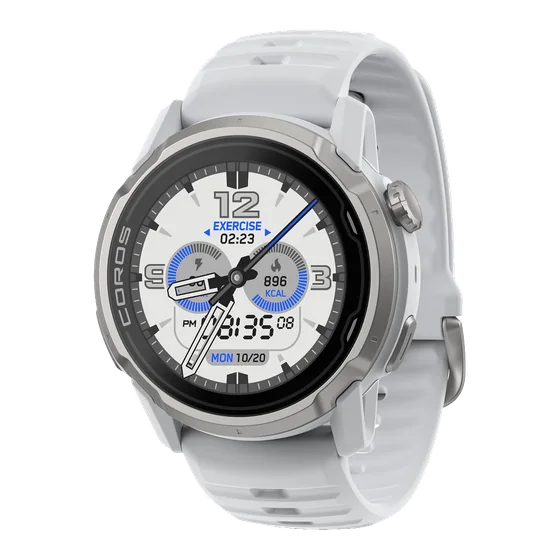
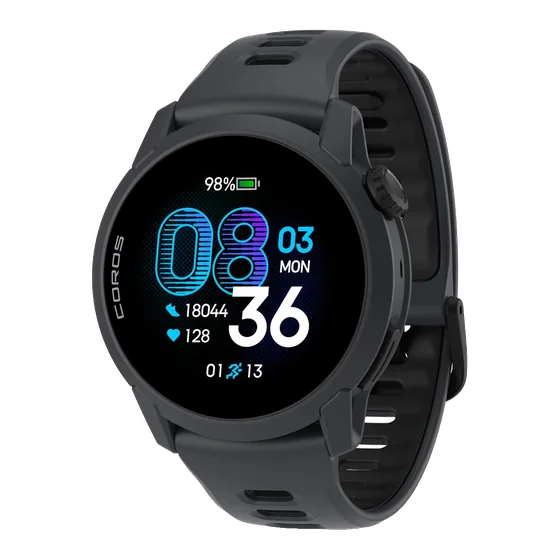 COROS PACE 4Best under $250 for day hikes with mapsUnder $250
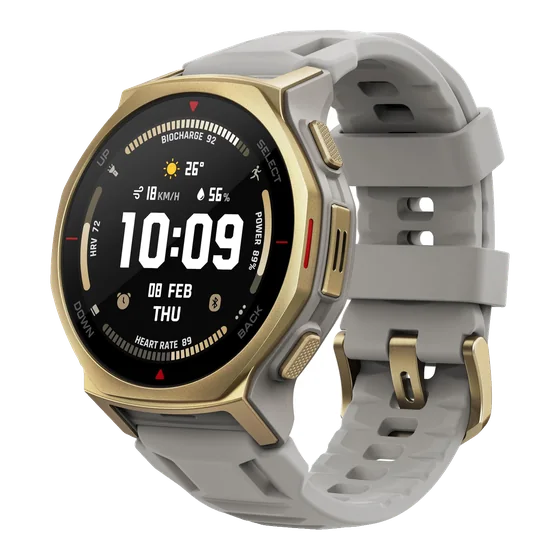 Amazfit T-Rex 3 ProBest for maps that reroute you on a slim wristUnder $400
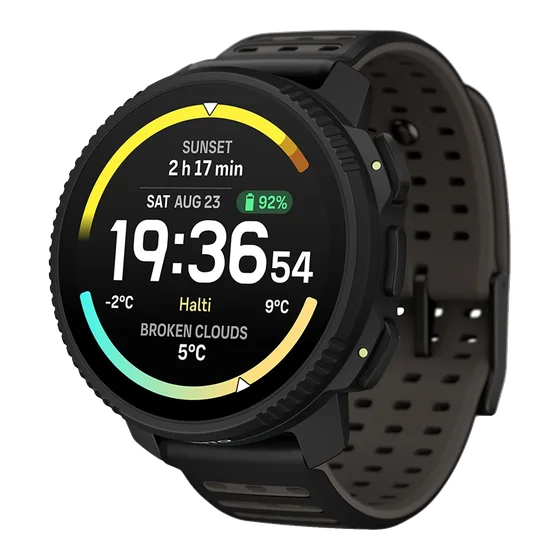 Suunto Vertical 2Best bright screen for long trail daysUnder $600