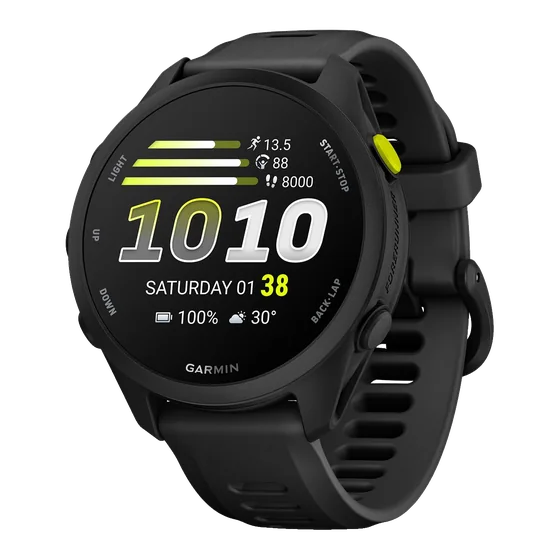
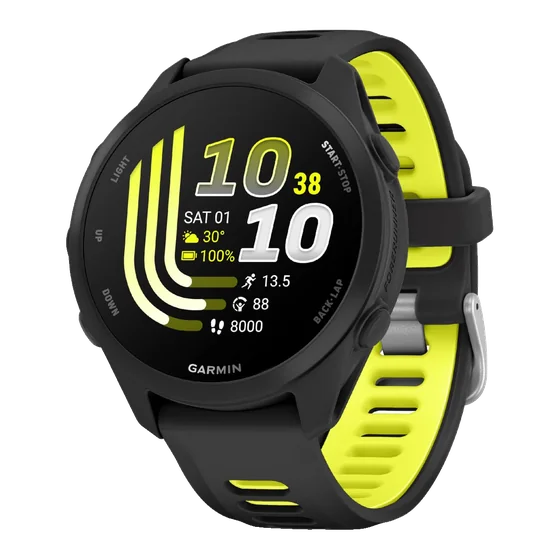
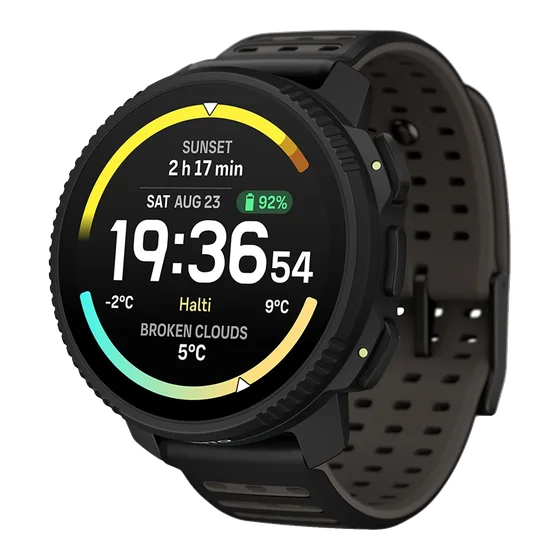
The verdict

Under $800Buy

Garmin Forerunner 970

Our call: buy it

Buy it. The Forerunner 970 is the watch we'd train for a marathon or triathlon on: race-accurate GPS, multi-band battery rated for 21 hours (enough for an Ironman on paper), maps and a real flashlight. Its weak spot is the open-water swim track.

Who it suits

Marathon and triathlon runners, iPhone or Android, who want race-accurate GPS, battery to spare, maps and a flashlight

The catch

Open-water swim tracks are weaker than Garmin's best, and no tester has rechecked them on current firmware

Opens Amazon.com · Prices change often

At a glance

Price bands, not prices

WatchVerdictWho it suitsThe catchPrice band and link
Garmin Forerunner 970Our pickOur call: buy itMarathon and triathlon runners, iPhone or Android, who want race-accurate GPS, battery to spare, maps and a flashlightOpen-water swim tracks are weaker than Garmin's best, and no tester has rechecked them on current firmwareUnder $800View on Amazon (opens in a new tab)
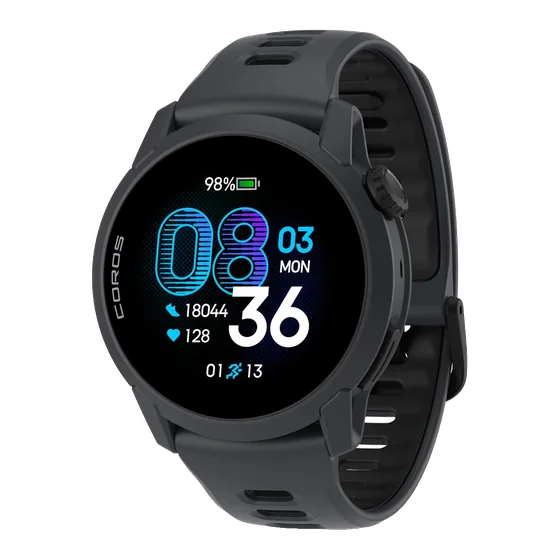
Garmin Forerunner 570 – 47mmBuyThe same race for one band lessRoad marathoners and triathletes on familiar routes who never need a map and don't mind charging every few daysNo maps, no LED flashlight, and its always-on screen needs charging twice a weekUnder $600View on Amazon (opens in a new tab)
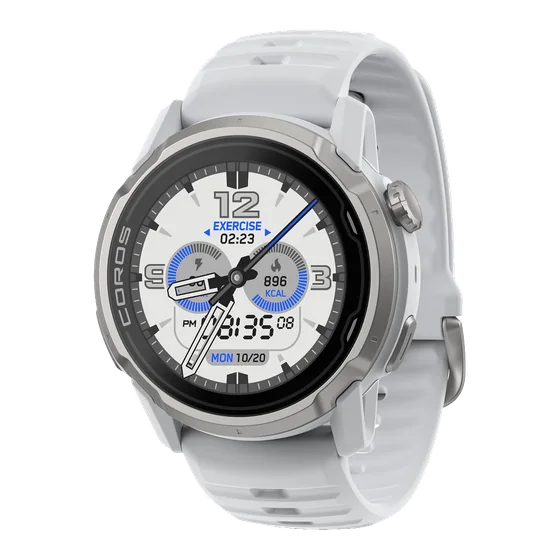
COROS APEX 4BuyFor trails and days off the gridHikers and trail runners who navigate for a day or more between chargesNo ANT+ sensors, no streaming music, and its open-water track cut the course shortUnder $500View on Amazon (opens in a new tab)
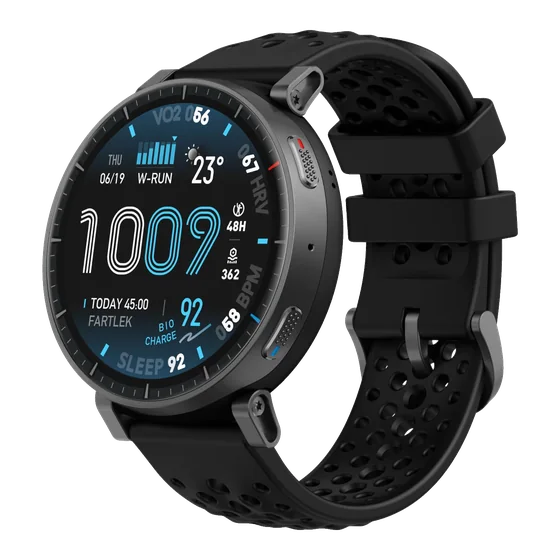
Apple Watch Ultra 4WaitWait: new, and iPhone onlyiPhone owners who want Apple Music, calls and messages on the wristEnding a workout needs a touch that testers found unreliable wet and with glovesUnder $800
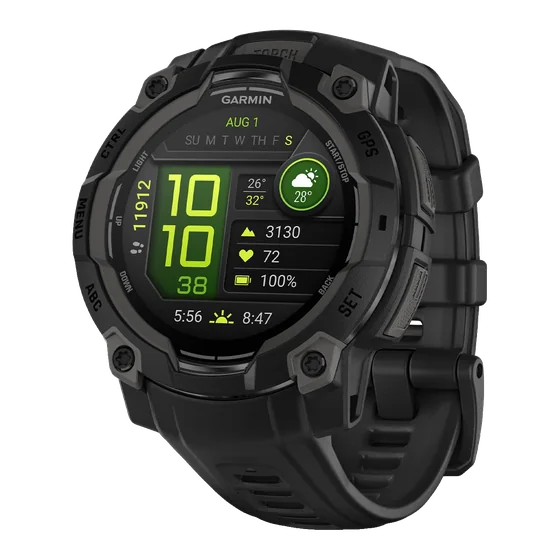
Garmin fēnix 9 – 47 mmWaitWait: the base model is untestedBuyers who want a tougher, dive-rated GarminEvery test so far was on Pro units, not this base 47 mm modelUnder $1,000

Milewright's call: the Forerunner 970 is the watch to buy for marathon and triathlon training. It brings GPS you can trust on race day, maps for a strange city and a real flashlight for the dark start. Garmin rates its multi-band battery at 21 hours, and one 10K's drain projects to about 21 as well. That's enough for an Ironman on paper. It has also spent a year and a half getting better at what it was worst at, which flagship watches rarely manage. At launch, its always-on screen lasted 2.5 days between charges. Testers a year in get four to six. The catch went the other way. The open-water swim track may have got worse, and nobody has rechecked it against a reference since.

Garmin Forerunner 970Under $800
Check price on Amazon (opens in a new tab)

Opens Amazon.com · Prices change often

What owning the Forerunner 970 is like

Our pick

Our call: buy it

View on Amazon (opens in a new tab)

Price band: under $800

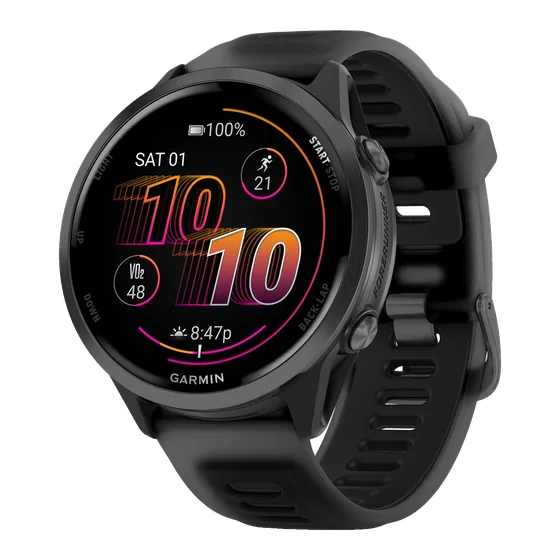
It's Garmin's top Forerunner, and it feels like it. A 1.4 in AMOLED touchscreen sits under sapphire in a titanium bezel, with buttons for wet hands. At 2.0 oz (56 g), it disappears on a long run. You get preloaded maps, a white and red LED flashlight, calls through your phone, Garmin Pay and an ECG app. Its 32 GB holds playlists from Spotify, Deezer, YouTube Music and Amazon Music. Apple Music has no app in Garmin's store at all.

The essentials hold up. Land GPS tracks came out perfect or near it across about 30 workouts against reference units. On a certified 10K, it logged 6.20 miles (9.98 km). Wrist heart rate follows a chest strap almost beat for beat on runs. Like every watch, it slips in the weight room.

The flashlight is what people living with it rave about, from campsites to the 3 a.m. bathroom trip. The gripes are slow maps, a laggy first button press and a slow save after each run. None of that would stop us buying one.

What changed after launch, issue by issue

How long does the Forerunner 970 battery really last?

Credit first: Garmin's manual prints six GPS figures, by satellite mode, with and without music. What it skips is the setting that decides your week: whether the screen stays on.

ModeWhat Garmin's manual claimsWhat testers and owners got
Smartwatch, screen wakes on a wrist raise15 daysOwners at 6–14 months get about 14 days; most didn't say which screen setting
Smartwatch, always-onNo figure in the battery table2.5 days at default brightness on launch firmware; about 4.5 days six months in; about 5.5 days a year in at lowest brightness
Multi-band GPS21 hoursDrained 4.8%/hour in a 10K race with always-on, which projects to about 21 hours
GPS with music14, 13 and 12 hours (GPS-only, Auto Select, multi-band)Not measured by anyone

In my old job, a part arriving without its tolerances went straight back to the supplier. A battery hour without its screen setting deserves the same. Fill that column in and the picture is reassuring. Garmin's battery updates and lower brightness took always-on from 2.5 days to four to six. DC Rainmaker's in-depth review, the one most buyers land on, was written on launch firmware. Its 2.5 days no longer describes this watch.

On race day, a marathon uses a fraction of the multi-band battery. On paper, a back-of-the-pack Ironman fits inside it with charge to spare. The gap: nobody has run one down from full in multi-band on current firmware, so the race figure is a projection from one 10K. If your longest day is an ultra needing two days of GPS without a charger, this isn't your watch. Our GPS watch battery planner points that runner to the Suunto Vertical 2 instead. For a marathoner or triathlete, this is battery we'd buy without a second thought.

Is the Forerunner 970 good for open-water swims?

This is the catch. DC Rainmaker swam in the sea against a GPS unit towed in a buoy. He found the 970's tracks weaker than Garmin's recent watches, and slow to recover whenever he stopped to tread water. Three months later, he called it "still not fixed" and arguably getting worse.

A calmer test is kinder. the5krunner swam one steady lake lap in a wetsuit. The 970 logged 833 yd (762 m) on a course listed at 820 yd (750 m), 1.6% long. Its track was smoothed straighter than he swam. Put together, stop-start sea swims trip it up, while steady lake swims land close.

Garmin's forum has pool threads too: lengths added or missed, and one swim cut by nearly a third. No tester has published a pool lap-count test. Nor has anyone run an open-water test on current firmware. That test is what would change our mind.

The race software is the strong part. Garmin's manual says the touchscreen switches off for swims, and transitions are timed separately by default. Auto Sport Change can detect each change of sport. Lock Device locks touch and buttons for the whole race. Our best triathlon watch roundup weighs the swim evidence across every watch. If your races start in a calm lake, we'd buy it as it stands. If they start in surf, buy it knowing the swim map will look rough.

Are the ghost touches something to worry about?

Scrolls registering as taps fill the busiest unresolved thread on the 970's Garmin forum, at 27,334 views. Views measure attention, not how many watches are affected. A replacement cured it for some people, and Garmin handles it case by case. Shower water has also started a workout through the touchscreen, which is more initiative than most of us show at 6 a.m.

Early crashes faded with updates for at least three people who reported them; one still freezes. Two displays failed, and Garmin replaced or exchanged both. The CPSC database shows no recall of any Garmin watch. This is a watch that may need a warranty swap, not one to steer around. We'd still buy it.
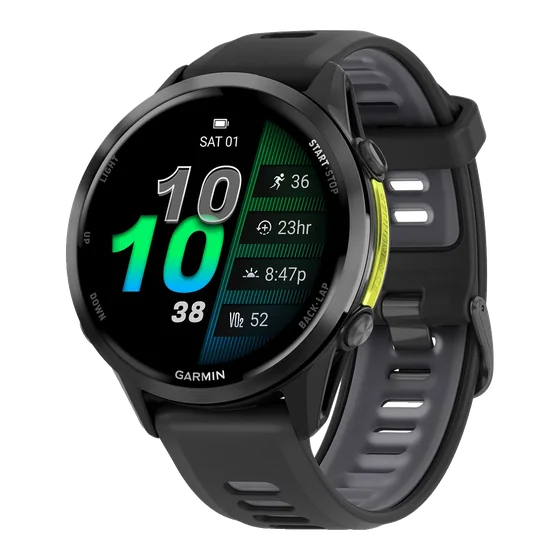
Are the maps and flashlight worth paying for?

For this reader, yes. The routable road and trail maps are free, and the manual lists Outdoor Maps+ as a paid add-on. They draw slowly. That grates on a trail but won't matter finding your hotel after a travel race. The flashlight earns its place every week. Add the extra battery over the 570 and you have the case for the step up, laid out in our Forerunner 570 vs 970 comparison. For a runner who travels to races or heads out before sunrise, they're worth the money.

Would a Forerunner 570, fēnix 9, Ultra 4 or APEX 4 serve you better?

Buy

The same race for one band less

View on Amazon (opens in a new tab)
WatchMulti-band GPS claimMapsLED flashlightOur call
Forerunner 970View on Amazon (opens in a new tab)21 hoursYesYesBuy
Forerunner 570 (47mm)View on Amazon (opens in a new tab)14 hoursNoNoBuy, for road racers
COROS APEX 4 (46mm)View on Amazon (opens in a new tab)41 hoursYesNoBuy, for trails
Apple Watch Ultra 418 hours (standard GPS)YesNoWait
fēnix 9 (47 mm)25 hoursYesYesWait

Should you buy the Forerunner 570 instead?

Price band: under $600

Same race software, same triathlon mode, one price band less. The 47mm's manual promises 14 hours in multi-band and 8 with music, plenty for a marathon. The savings come out of the extras. There are no maps and no LED flashlight, Gorilla Glass 3 stands in for sapphire, and you'll be reaching for the charger sooner. With always-on, a tester charged the 47mm every 3.5 days. If you race on roads you know, our Forerunner 570 review makes its case. We'd buy it.

Garmin Forerunner 570 – 47mmUnder $600
Check price on Amazon (opens in a new tab)

Opens Amazon.com · Prices change often

Is an Apple Watch Ultra 4 the better buy for an iPhone runner?

Price band: under $800

Not yet. It's new and works only with an iPhone. Apple claims 18 hours of standard GPS, against the 970's 21 in multi-band. One tester's marathon logged 26.57 miles, well over the distance. Ending a workout needs a touch that fails with wet gloves. Its real edge is Apple Music, calls and messages without your phone. Our Apple Watch vs Garmin for running comparison covers that trade. We'd wait for a race and swim test, and buy the 970 meanwhile.

Is the fēnix 9 worth the extra?

Price band: under $1,000

Garmin claims 25 hours of multi-band GPS for the base 47 mm, plus dive rating to 131 ft (40 m). Nobody has tested that base model. Every result so far, launch-firmware crashes included, came from Pro units. For a marathoner or triathlete, nothing yet justifies the extra band. Wait, and buy the 970.

Should a trail runner buy the COROS APEX 4 instead?

Price band: under $500

For a different runner, yes. On a long mountain hike with navigation and dual-frequency GPS, it drained 2%/h. That pace projects well beyond COROS's 41-hour claim. But it misses what triathletes need: no ANT+ sensors, an open-water track that cut the course short, and no streaming music. If your weekends are trails with a map up, read our COROS APEX 4 review. We'd buy it.

COROS APEX 4Under $500
Check price on Amazon (opens in a new tab)

Opens Amazon.com · Prices change often

The call: buy the Forerunner 970 for marathon and triathlon training

Our pick

Our call: buy it

Buy the Forerunner 970. Its land GPS is as good as anything measured. Its multi-band battery is rated for 21 hours, and one 10K's drain projects to about 21. That's enough for an Ironman, though nobody has run one down from full in that mode. The always-on screen that made early reviews wince now lasts most of a week. The swim track is the price of admission: fine in a calm lake, ragged in rough water. Our best watch for marathon training roundup lands on the same watch. Eighteen months in, it's the watch the launch reviews should have been about.

Garmin Forerunner 970Under $800
Check price on Amazon (opens in a new tab)

Opens Amazon.com · Prices change often

The evidence in full

32 sources

Research count for this page: 5 models weighed; 3 maker manuals among them; across this site's research, 367 sources kept in full; 148 Reddit threads read, kept as the reader's summary, not in full.

Forerunner 970 battery, by source, settings and firmware

SourceFirmware and dateSettingsResult
Garmin US manualClaimBy GNSS modeSmartwatch 15 days; GPS-only 26 h, Auto Select 23 h, multi-band 21 h; with music 14 h, 13 h, 12 h
DC RainmakerLaunch firmware, June 2025Always-on at default (two-thirds) brightness, one to three hours of GPS a day2.5 days; one-third brightness roughly doubles it
DC RainmakerLaunch firmware, June 2025Four-hour hike, lowest brightness, full navigation with ClimbPro, SatIQ, LiveTrackProjects to about 30 h (a pace, not a rundown)
Tom's GuideNot statedMulti-band, always-on, HR from HRM 600, one 10K4.8%/hour, projects to about 21 h (a pace, not a rundown)
Tom's GuideSix months, after battery updatesAlways-on below the brightest settingAbout 4.5 days ("around four or five days")
DesFitOne yearAlways-on, lowest brightness, eight-second timeout, night pulse oxAbout 5.5 days ("five to six days")
iRunFarFour months of trail runningDisplay setting not statedCharges every eight or nine days (about 8.5) from a low charge
Reddit owners6–14 monthsDisplay modes mostly unstated, likely raise-to-wakeAbout 14 days; continuous pulse ox and HR alerts cut one owner from two weeks to one
One Reddit ownerNot statedSatIQ, always-on and GPS hours unstated35 mi of backpacking plus six days of wear on one charge, 19% left

Disagreement, explained: the 2.5 days against four to six is firmware plus brightness. Owners' two weeks against reviewers' four to six is the screen setting, which most owners didn't state. No independent measurement of GPS with music exists; on Garmin's claims, a marathon with music in multi-band fits inside 12 h several times over. None of it shifts the call: buy it, and expect four to six days with the screen always on.

Open-water and pool swimming

SourceConditionsResult
DC Rainmaker, June 2025Several sea swims, launch firmware, reference GPS in a towed buoyWeaker than recent Garmins; struggles to re-acquire after treading water; still better than Polar Grit X2, Apple Watch Ultra 2 and Suunto Run. No distance figures.
DC Rainmaker, comment of 6 Sep 2025Then-current firmware, number not given"Still not fixed… I'd argue, getting worse". No later update found as of 1 Nov 2026.
the5krunner, 21 Sep 2025One lake lap of about fifteen minutes, wetsuit with the watch under the sleeve, calm, SatIQ, Polar Grit X2 in a pool buoy as reference, firmware not stated833 yd (762 m) against an official 820 yd (750 m), +1.6%; track smoothed; Apple Watch Ultra 3 on the other wrist followed the reference more closely. The tester doubts the official length because the buoys had moved.
Garmin forum, a swimmer of about a decadeOpen waterDistance lags for the first 110 yd (100 m) or so, then jumps; rests add distance

Likely cause of the split: DC Rainmaker's sea swims include deliberate stops, a re-acquisition test; the5krunner swam a short continuous lap. Both agree the 970's track isn't the closest to the reference.

Pool, from forum and Reddit threads with no tester test behind them: a swimmer six months in counts 1–3 extra laps a session on firmware 15.52; another had a 1,094 yd (1,000 m) swim saved as 766 yd (700 m) on firmware 17.33; a third, a month in, saw 27 yd (25 m) lengths missed 5–6 times, three others in that thread had the same, and its starter finds flip turns and a long push-off glide count better than open turns; one thread is about stroke data barely recorded; and in a 55 yd (50 m) pool, 164 yd (150 m) was recorded after 55 yd (50 m) swum. Against that, a triathlete's drill and swim session came out at the right distance (wrong pace and calories), and two people disagree on stroke-change detection. No thread ties a fix to a firmware version.

Race software (manual): touchscreen off during swims; transitions on by default and timed separately; press the lap button at the start and end of each transition, or turn on Auto Sport Change; Lock Device locks touchscreen and buttons for a multisport activity. No tester has run a race transition test on the 970 itself.

Heart rate

The Quantified Scientist, against a Polar H10 chest strap, one tester: running r = 0.98, indoor cycling 0.93, outdoor cycling 0.89 (0.97 on a second tester), weightlifting 0.79. DC Rainmaker found the optical sensor nailed short track intervals and outdoor rides. In the long-term Reddit thread, a runner a year and a half in sees about ±2 bpm against a chest strap; another had cadence lock and was sent a chest strap by Garmin.

Build and durability

Reviewers found the sapphire unmarked at six months (Tom's Guide, where the older 965 had scratched) and nine months; iRunFar's unit came through drops and dings over four months of trail use. Electronic faults (displays, a charging port, a button) were handled by replacement; see below.

Problems raised after launch

  • Ghost touches: Garmin forum thread at 27,334 views and 160 replies, still active. A replacement cured it for some, not all; one person went through three units; Garmin asks for videos and handles it case by case. Hardware against software: open. A Reddit owner hit ghost touches a few weeks in.
  • Crashes and freezes: early crashes faded with updates for at least three people in the main Reddit thread; three more at 10–12 months have had none; one still freezes and must restart to save workouts. Which firmware fixed them isn't established. At launch, DC Rainmaker saw crashes when the microphone triggered, and Garmin confirmed the round-trip re-routing feature "can fail" (June 2025).
  • Display failures: two; one died after an update at about four months (replaced), one malfunctioned mid-run (exchange offered). Failure rate unknown.
  • Elevation reading 2–4 times too high since an end-of-May update: one Reddit account; DesFit saw a "funky" altimeter on a handful of rides. Cause open.
  • Music: audio mutes on the second consecutive track skip on software 18.29 (the5krunner Fix Files); one runner's AirPods Pro drop at crowded race starts. Headphone dropouts turn up across Garmin's range, not only this model.
  • Single accounts: shower water starting an activity; a rear serial plate coming off; DesFit had three or four nights of sleep unrecorded over a year.
  • Map speed: DC Rainmaker, Tom's Guide and three Reddit posters find rendering slow; one sees no lag. DC Rainmaker found turning off map layers speeds it.
  • Recall: the CPSC database returned no recall whose title names Garmin (checked 4 Nov 2026).

Rivals: what's measured and what isn't

  • Forerunner 570 (47mm): manual claims 11 days smartwatch, 14 h multi-band, 8 h multi-band with music, 9 h GPS-only with music. Tom's Guide (47mm) charged every 3.5 days with always-on; Android Central (47mm) got about 7.5 days with gesture display. Multi-band race drain and swim tests for the 570 didn't state case size, so they aren't counted here.
  • Apple Watch Ultra 4: Apple claims 2.1 days of normal use, 18 h standard GPS, 45 h Max Extended (no live HR or splits). DC Rainmaker's extrapolation projects about 18.6 h of GPS; CNET measured about 2.5 days of daily wear. Marathon distances read long: 26.57 mi (The Morning Coffee Run). DC Rainmaker found ending a workout "so-so" wet and failing with gloves in the cold. One lake swim: track more jagged than a fēnix 9 Pro's, with no independent reference.
  • fēnix 9 (47 mm, base): Garmin claims 16 days, 30 h Auto Select, 25 h multi-band, 12 h GPS with music, 10 ATM, and weighs 2.6 oz (75 g). No tester or owner measurement on the base 47 mm; DC Rainmaker's launch crashes and the open-water and transition results belong to Pro units.
  • COROS APEX 4 (46mm): COROS claims 41 h dual-frequency and 24 days daily. DC Rainmaker measured a 2%/h drain over a long hike with navigation, a projection, not a rundown; with a route loaded, his trail track turned "connect the dots". No ANT+ sensor support; open-water track undercut the course; MP3s only. Weight 2.3 oz (64 g) on silicone.

Gaps

  • A full multi-band rundown over a marathon-plus effort on current firmware.
  • Any buoy-referenced open-water test after mid-2025 firmware, and any tester pool lap-count test.
  • Failure rates for ghost touches or displays; forum views show attention, not incidence.
  • Which numbered firmware fixed the early crashes.
  • Independent GPS-plus-music battery measurement.
  • Heart rate on tattooed wrists.

Sources

How we research

Milewright doesn't test watches. It sets each maker's claim against what labs, reviewers and owners measured on the exact same model, and tells you which number to believe.

How we research GPS watches