At a glance

Price bands, not prices

WatchVerdictWho it suitsThe catchPrice band and link
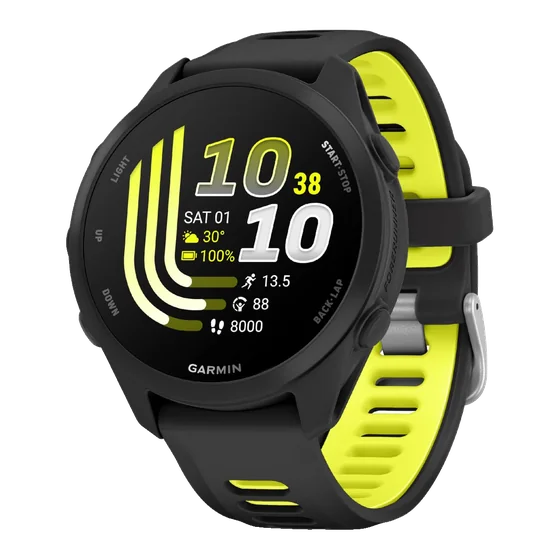
Garmin Forerunner 970Our pickBest triathlon watch, sprint to IronmanTriathletes building to a full Ironman who want automatic transitions and battery to spareOpen-water tracking is its weakest leg, and testers disagree on how weakUnder $800View on Amazon (opens in a new tab)
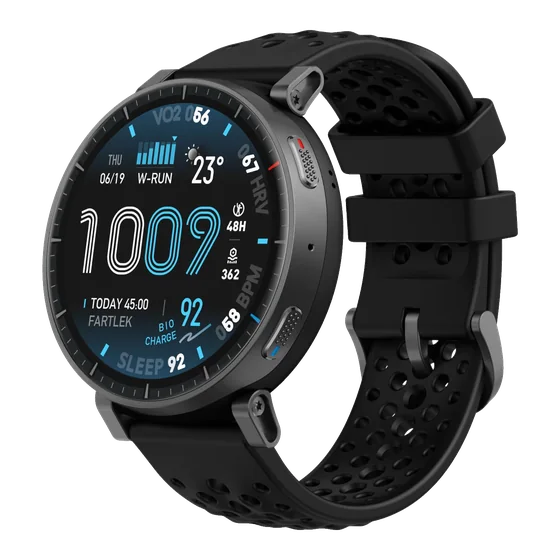
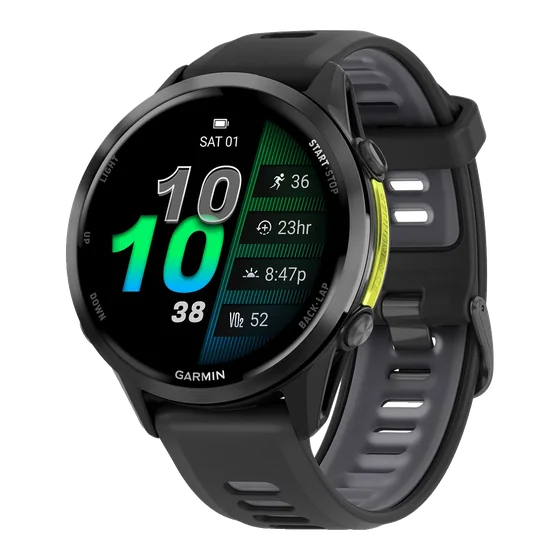
Garmin Forerunner 570 – 47mmBuyThe same race software for one band lessTriathletes racing sprints to 70.3s, or a full Ironman finished inside its multi-band hours14 hours of multi-band GPS claimed, which a long Ironman day can outlastUnder $600View on Amazon (opens in a new tab)
Garmin Instinct 3 – 45 mm, AMOLEDBuyBest buttons-only triathlon watch under $350Triathletes on a tighter budget who want automatic transitions, ANT+ sensors and no touchscreen at allNo tester has published a swim result for this exact 45 mm watchUnder $350View on Amazon (opens in a new tab)
COROS PACE 4BuyBest triathlon watch under $250First-time triathletes who want long battery, multi-band GPS and a tested open-water track on a small budgetNo automatic transitions: you press the dial to change legsUnder $250View on Amazon (opens in a new tab)
COROS PACE 4 ProWaitNew: wait for the battery fixCOROS fans who want the big bright screen and the long battery claim, once it holdsMeasured GPS battery falls well short of its claim until COROS ships a fix, and no swim test exists yetUnder $450
Apple Watch Ultra 4WaitNew: wait, even on iPhoneiPhone owners who want one watch for racing and daily lifeEnding a workout takes a tap that testers found unreliable wet, and its only swim test had no referenceUnder $800

The picks by price band

Under $250

COROS PACE 4Best triathlon watch under $250

Under $350

Garmin Instinct 3 – 45 mm, AMOLEDBest buttons-only triathlon watch under $350

Under $450

COROS PACE 4 ProNew: wait for the battery fix

Under $600

Garmin Forerunner 570 – 47mmThe same race software for one band less

Under $800

Garmin Forerunner 970Best triathlon watch, sprint to Ironman

Apple Watch Ultra 4New: wait, even on iPhone

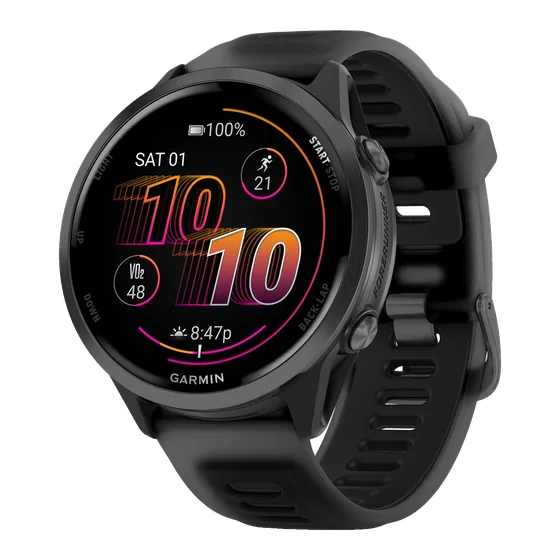
Every triathlon watch on the shelf promises three sports. The race is won or lost in the fourth. That's the transition tent, where you're wet, half out of a wetsuit and stabbing at a button with a numb thumb. Milewright's pick for a triathlete going from first sprint to full Ironman is the Garmin Forerunner 970. It changes legs by itself. It shuts off its touchscreen the moment you hit the water, and it pairs your bike's power meter. Garmin rates it at 21 hours with both GPS bands on, and the drain measured in a race projects to about the same. That's a long Ironman with daylight to spare. The catch is the swim. Open-water tracking is its weakest skill, and the two testers who measured it disagree on how weak. Our Forerunner 970 review has the full battery-by-firmware story.

Garmin Forerunner 970Under $800
Check price on Amazon (opens in a new tab)

Opens Amazon.com · Prices change often

What changes the answer for you

Three things move you down the ladder. Racing nothing longer than a 70.3? The Forerunner 570 runs the same triathlon software for one price band less. Capped at the under $350 band? The Instinct 3 AMOLED keeps automatic transitions and ANT+ sensors, and drops the touchscreen entirely. Capped at the under $250 band? The COROS PACE 4 has the longest battery here and a tested open-water track, but you change legs yourself. And if you hoped one Apple Watch could do it all on your iPhone, the new Ultra 4 isn't that watch yet.

Garmin Forerunner 970: best triathlon watch, sprint to Ironman

Our pick

Best triathlon watch, sprint to Ironman

View on Amazon (opens in a new tab)

Price band: under $800

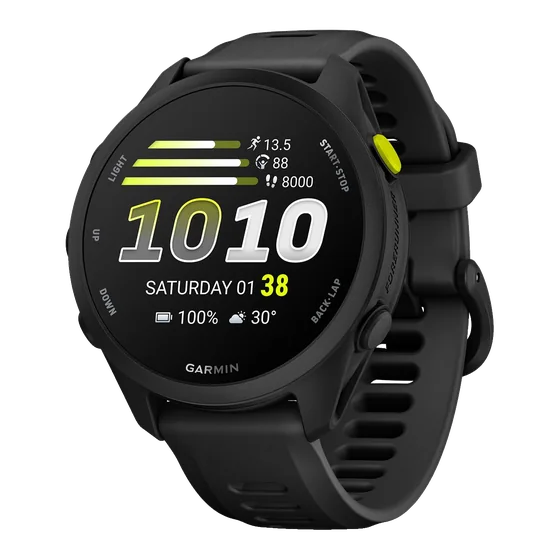
The box says 21 hours with both GPS bands tracking. No tester has yet drained a 970 to empty with both bands on, but the evidence points the right way. In a measured 10K race, the 970's drain projects to about 21 hours, right where the box puts it.

The race software is the real reason to buy it. Its manual times transitions separately by default. An optional Auto Sport Change spots the swim exit and the bike dismount on its own. A Lock Device setting freezes the touchscreen and buttons for the whole race. Put those together and the watch runs your day without you touching it. It also has maps and a real LED flashlight, which you'll appreciate at 5 a.m. in a transition area lit like a mall parking lot.

Its weak leg is the water, and here the evidence splits. DC Rainmaker swam in the sea, stopping on purpose to tread water. He found tracks worse than Garmin's recent watches, and on a later firmware he called it "getting worse". the5krunner swam one calm lake lap in a wetsuit. His track came out just 1.6% long, smoothed straighter than he actually swam. Both can be true. Swim steadily in a wetsuit and you'll get something close. Stop at a crowded buoy and the track wanders. Pool counts come only from owners, who report extra and missing lengths on more than one firmware.

If you're building toward a full Ironman and can stretch to this band, we'd buy it.

Garmin Forerunner 970Under $800
Check price on Amazon (opens in a new tab)

Opens Amazon.com · Prices change often

Garmin Forerunner 570 (47mm): the same race software for one band less

Buy

The same race software for one band less

View on Amazon (opens in a new tab)

Price band: under $600

Strip the maps, flashlight and sapphire off a 970 and you have the 570. The triathlon brain is the same. Its manual carries the same Auto Sport Change, the same touchscreen shutoff in the water and the same Lock Device setting. One quirk: it says to hold the lap button at each transition, where the 970's says press. The 570 manual also asks you to avoid pressing buttons under water. That's sound advice for a watch you'll be jabbing at while still knee-deep.

The difference that matters is battery. For the 47mm with both bands locked on, the manual's figure is 14 hours. That covers any sprint, Olympic or 70.3 with room left over. If your full Ironman will run longer, switch to Auto Select (16 hours claimed) or GPS Only (18 hours) before the gun.

The swim evidence is thin. DC Rainmaker swam one 570 beside a 970, and it came out a touch better. He put that down to luck, and he never said which case size he wore. On the 47mm itself, open-water and pool accuracy are not measured. Our 570 vs 970 comparison covers what else the step up buys, and the Forerunner 570 review covers living with it.

For triathletes whose races finish inside its multi-band hours, we'd buy it.

Garmin Forerunner 570 – 47mmUnder $600
Check price on Amazon (opens in a new tab)

Opens Amazon.com · Prices change often

Garmin Instinct 3 AMOLED (45 mm): best buttons-only triathlon watch under $350

Buy

Best buttons-only triathlon watch under $350

View on Amazon (opens in a new tab)

Price band: under $350

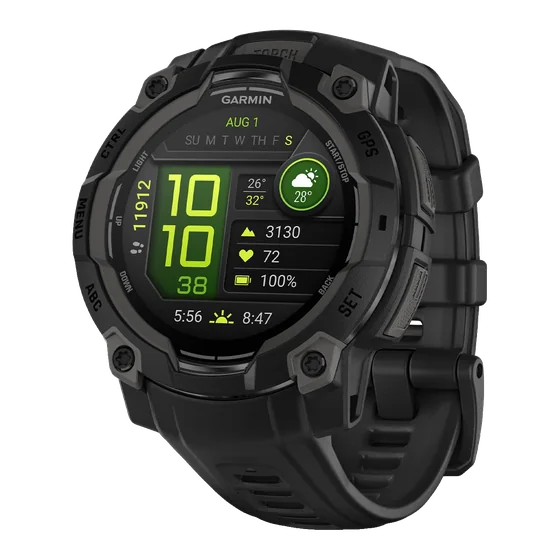
There's no touchscreen at all, just five buttons. That's the right answer to a wet thumb. Garmin's spec sheet gives it triathlon and swimrun profiles with automatic transitions. It pairs power meters over ANT+ and Bluetooth. Its 10 ATM rating is the toughest on this ladder.

In standard GPS mode, the box tells the truth: Garmin says 32 hours, and OutdoorGearLab got about 30 on this exact watch. Nobody has yet run one down on multi-band. There Garmin claims 23 hours, with SatIQ choosing when it needs both bands, which would cover a long Ironman if it's close. Wrist heart rate tracked a chest strap respectably on runs and rides.

Here's the honest gap. Nobody has published a swim test on this exact 45 mm watch. DC Rainmaker found an AMOLED Instinct 3 stayed accurate in open water, but he didn't say which size he wore. That's encouraging, not proof.

If you want Garmin's race software on a tighter budget and prefer buttons to glass, we'd buy it.

Garmin Instinct 3 – 45 mm, AMOLEDUnder $350
Check price on Amazon (opens in a new tab)

Opens Amazon.com · Prices change often

COROS PACE 4: best triathlon watch under $250

Buy

Best triathlon watch under $250

View on Amazon (opens in a new tab)

Price band: under $250

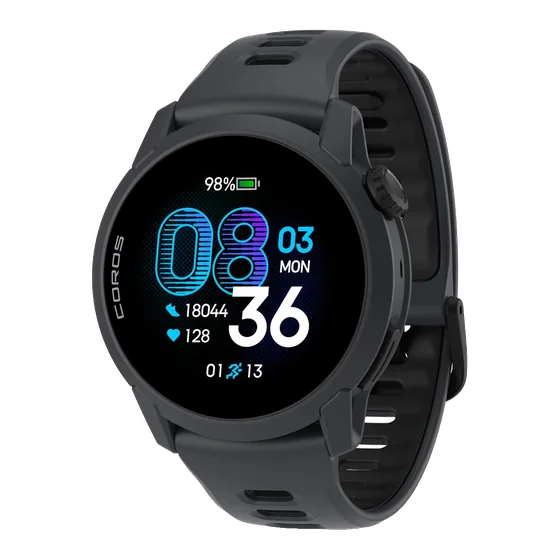
On COROS's battery page, dual-frequency tracking is rated at 31 hours with raise-to-wake, and a little less with the screen always on. DC Rainmaker's own PACE 4, display lit throughout on its most accurate GPS setting, used about 4%/h. That projects to about 25 hours. It's an Ironman with the display lit the whole way, from the cheapest watch on this page.

It's also one of only five watches we weighed with any open-water test on the exact model. The verdict was "acceptable", with one corner cut badly, which for COROS counts as a good day. One owner logged sixteen long pool sessions without a miscounted length. That's one person's report, not a test. At 1.4 oz (40 g) on the silicone strap, it disappears under a wetsuit sleeve.

The catch is transitions. COROS's own triathlon guide has you press the dial and choose Transition at each change. It describes no automatic sport detection. It's a general COROS article rather than a PACE 4 page, but nothing suggests this watch does better. Check your sensors too: COROS documents Bluetooth heart-rate straps and says nothing about ANT+.

For a first triathlon on a small budget, we'd buy it. The PACE 4 review has the battery on current firmware. COROS vs Garmin sets it against the Garmins at each price.

COROS PACE 4Under $250
Check price on Amazon (opens in a new tab)

Opens Amazon.com · Prices change often

New this year, and what we're watching

Two new watches matter to triathletes, and neither has earned a place yet. Nothing measured on an older model carries over to them. Garmin's new fēnix 9 (47 mm) and Enduro 4 have triathlon modes too. Every swim result so far belongs to fēnix 9 Pro units or to nobody, so we're waiting on a test of either exact watch.

COROS PACE 4 Pro: wait for the battery fix

Wait

Price band: under $450

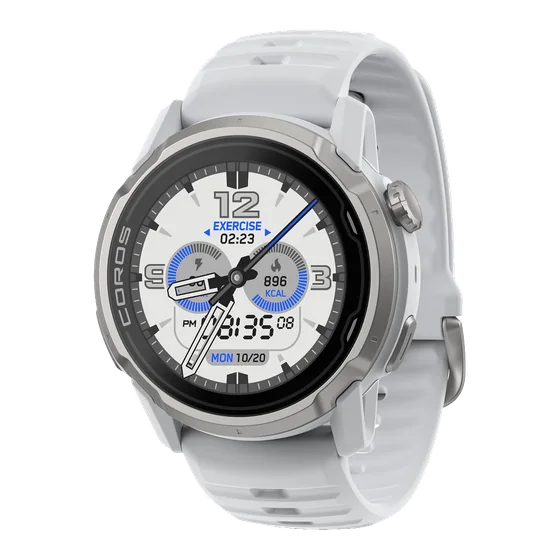
COROS's product page shows an example Ironman of 11 h 48 min, finished with 73% left. It's a lovely number with no GPS mode printed beside it. I treat a figure like that the way I'd treat fuel economy measured on the way down a mountain. With multi-band and the screen always on, DC Rainmaker's measured drain projected under 20 hours. The battery page promises 30 for exactly that combination, so more than a third of the claim went missing on the wrist. COROS blamed bugs and said a fix would ship this month. When we last read its release notes, on 30 October, they still listed only the September build. Transitions are manual and sensors are Bluetooth only. Nobody has swum a measured lap with it yet, though two testers have open-water results due. Wait for the fix and the swim tests.

Apple Watch Ultra 4: wait, even on iPhone

Wait

Price band: under $800

Apple's multisport mode spots transitions automatically. Water Lock switches on when a swim starts. Apple rates a workout at 18 hours, and DC Rainmaker's measured drain projects to about 18.6. That covers an Ironman only if you're quick or careful with settings. Ending a workout takes a tap, which he found unreliable wet and hopeless in gloves. Its one swim so far came out more jagged than a fēnix 9 Pro's, with no independent reference. Apple's strong open-water record was set by the Ultra 3, and a record doesn't come in the box with the next model. It's iPhone only. Wait for a referenced open-water test and a race transition test on the Ultra 4 itself.

How the picks were decided

We ranked what each price step buys a triathlete: automatic transitions, power meters, buttons or touch in the water, and battery for your longest race. Then we counted the swim evidence on each exact model. The count is sobering. Of the 14 models we weighed, only five have any open-water test on the exact watch, and the Ultra 4's single swim had no reference to judge it against. Only the Forerunner 970 has two testers. Not one has a published pool lap-count test, so every lap claim here comes from owners. Safety doesn't separate them either: the CPSC's recall database lists nothing for Garmin, COROS or Apple Watch.

Do I really need automatic transitions?

Not for a sprint. Even with them, the watch won't match the official clock. Garmin's auto transitions start T1 when you stop swimming, not when you cross the mat, so the watch's T1 reads long. Want splits that match the results sheet? Both Garmin manuals offer the lap button at the start and end of each transition. What automatic transitions buy you is not having to remember. By mile 80 of the bike, that's worth more than it sounds.

Will it last a full Ironman?

On multi-band GPS, measured drain puts the 970 and the PACE 4 through a long day. The Instinct 3 gets there on Garmin's claim, which nobody has tested on multi-band yet. The 570 covers yours if you'll finish inside 14 hours, or longer on a lower GPS setting. Put your expected finish time into the GPS battery planner to see how much margin each watch leaves.

How accurate is open-water swim tracking, really?

Less tested than anything else these watches do. The 970's track is close when you swim steadily and wanders when you stop. The PACE 4's is acceptable, with the odd cut corner. On the 570 47mm and Instinct 3 45 mm, it simply isn't measured. Treat swim distance as a training log, not a split to argue with a race official.

Will my bike's power meter pair?

On the Garmins, yes. The 570 and Instinct 3 pair ANT+ and Bluetooth meters, and the 970 recorded a power meter ride in testing. COROS documents only Bluetooth sensors for the PACE watches. If your power meter is ANT+ only, stay on the Garmin rungs.

Does a touchscreen work when it's wet?

Garmin's manuals switch the touchscreen off during swims and offer Lock Device for the whole race. That matters on the 970, which has a long-running forum thread about ghost touches, handled by replacing the watch. The Instinct 3 sidesteps the question with buttons only. The PACE 4 locks itself by default until you hold a button.
The ladder at a glance

WatchPrice bandChanges legs itselfBike power metersSwim tests on this exact model
Garmin Forerunner 970under $800YesYes, used in testingOpen water: two testers, split. Pool: not measuredView on Amazon (opens in a new tab)
Garmin Forerunner 570 (47mm)under $600YesANT+ and BluetoothNot measuredView on Amazon (opens in a new tab)
Garmin Instinct 3 AMOLED (45 mm)under $350YesANT+ and BluetoothNot measuredView on Amazon (opens in a new tab)
COROS PACE 4under $250No, press the dialBluetooth straps; ANT+ not statedOpen water: one tester, acceptable. Pool: not measuredView on Amazon (opens in a new tab)
COROS PACE 4 Prounder $450No, press the dialBluetooth onlyNot measuredWait for the battery fix

Our pick: Garmin Forerunner 970

Our pick

Best triathlon watch, sprint to Ironman

Buy the watch that gets the boring parts right. The 970 changes legs without being asked and keeps its screen out of the water. It talks to any power meter. It still has battery when the finish line lights come on. Its swim track is the part we'd forgive, because nobody has yet proved a rival swims better on the exact model you'd buy. Read the Forerunner 970 review before race day. Then let it run the transitions while you run the race.

Garmin Forerunner 970Under $800
Check price on Amazon (opens in a new tab)

Opens Amazon.com · Prices change often

The evidence in full

37 sources

Research count for this page: 14 models weighed; 10 maker manuals among them; across this site's research, 367 sources kept in full; 148 Reddit threads read, kept as the reader's summary, not in full.

Every product considered

Watch (exact)BandTriathlon mode and transitionsPower metersControls in the waterOpen water on this exact modelPool laps on this exact modelWhere it landed
Garmin Forerunner 970under $800Yes; Auto Sport Change optional, otherwise press lap (manual)Used in DC Rainmaker's ride testTouch plus buttons; touch off in swims; Lock DeviceDC Rainmaker, several sea swims: weaker than recent Garmins, "getting worse" on retest. the5krunner, one lake lap: 1.6% longNot measured by a tester; owner errors on fw 15.52 and 17.33Winner
Garmin Forerunner 570 (47mm)under $600Yes; Auto Sport Change optional, otherwise hold lap (manual)ANT+ and BluetoothSame as 970Not measured (one DC Rainmaker swim, case size not stated)Not measured; one forum report, size not statedPick
Garmin Instinct 3 AMOLED (45 mm)under $350Triathlon and swimrun, auto transitionANT+ and BluetoothFive buttons, no touchscreen; 10 ATMNot measured (DC Rainmaker's AMOLED unit, size not stated, was accurate)Not measuredPick
COROS PACE 4under $250Yes; manual transitions per COROS's general guideBluetooth straps documented; ANT+ and power meters not statedTouch plus three buttons; Hold to Unlock by defaultDC Rainmaker: acceptable, cut one cornerNot measured; one owner, no miscounts over sixteen sessionsPick
COROS PACE 4 Prounder $450Yes; manual transitions per COROS's general guideBluetooth onlyTouch plus three buttons; swim lock not statedNot measured; tests announcedNot measured; one review says "strong" with no countsWait (new)
Apple Watch Ultra 4under $800Multisport, automatic transitionsBluetoothWater Lock automatic; ending a workout needs a tapOne lake loop, no reference: more jagged than a fēnix 9 ProNot measuredWait (new)
Garmin fēnix 9 (47 mm, base)under $1,000YesANT+ and BluetoothTouch plus five sealed inductive buttons; 10 ATMNot measured on the base modelNot measuredConsidered: new, watching
Garmin Enduro 4under $900Yes, auto transitionANT+Touch plus buttons; 10 ATMNot measuredNot measuredConsidered: new, watching
Polar Vantage M3under $500Multisport; press BACK to change sport (Polar support)Bluetooth onlyTouch plus five buttonsNot measuredOwners: length counting works; stroke detection splitConsidered
COROS APEX 4 (46mm)under $500YesBluetooth only, no ANT+MIP touch plus three buttonsDC Rainmaker: undercut the courseNot measuredLeft out
Suunto Rununder $200Fixed triathlon profile, not customizableBluetooth, added by July 2025 firmwareTouch plus buttonsDC Rainmaker: poorNot measuredLeft out
Garmin vívoactive 6under $300No triathlon profile (manual)Not relevantTouch plus buttonsNot measuredNot measuredLeft out
Garmin Forerunner 70under $250No triathlon or open-water modeNoTouch plus buttonsNo open-water modeNot measuredLeft out
Garmin Forerunner 170under $300No triathlon modeYesTouch plus buttonsNot measuredNot measuredLeft out

Lab by lab

  • Forerunner 970 (one case size, so every result is the exact watch). Battery: Garmin's manual claims 21 h multi-band and 26 h GPS Only; Tom's Guide measured 4.8%/hour in a 10K race with always-on, which projects to about 21 h. No full rundown in multi-band mode has been published. Open water: DC Rainmaker, June 2025, launch firmware, several sea swims against a towed-buoy reference, tracks "not as good as I'm used to from Garmin's watches in recent years", poor at re-acquiring after treading water, still ahead of the Polar Grit X2, Apple Watch Ultra 2 and Suunto Run. His comment reply of 6 Sep 2025, firmware number not given: "still not fixed… I'd argue, getting worse". the5krunner, 21 Sep 2025, one lake lap in a wetsuit, reference GPS in a pool buoy: logged 1.6% long, smoothed, with an Apple Watch Ultra 3 on the other wrist closer to the reference; firmware not stated. No buoy-referenced test since mid-2025 firmware has been published. Pool: owner threads report extra lengths on fw 15.52, a long swim saved hundreds of meters short on fw 17.33, missed lengths in the first month, and turn style mattering (flip turns counted better than open turns); one owner's long drill session had the right distance but wrong pace. No tester pool count.
  • Forerunner 570 (47mm). Battery claims from the manual's 47mm column: 14 h multi-band, 16 h Auto Select, 18 h GPS Only. The only race drain figure (Tom's Guide 10K) didn't state the case size, so it isn't used for the 47mm. DC Rainmaker's single sea swim with a 570 didn't state size either. A forum owner on fw 17.33 saw pool distance freeze for several lengths and then catch up, with the final total apparently right; a Forerunner 955 owner saw the same, which points at shared firmware.
  • Instinct 3 AMOLED (45 mm). OutdoorGearLab replicated about 30 h in standard GPS mode (inferred to be the 45mm AMOLED from its measured weight and listed price); no multi-band rundown of this watch has been published, so Garmin's 23 h multi-band figure stands as a claim. DC Rainmaker's launch-firmware figures were on-watch estimates from SatIQ activities on an AMOLED unit of unstated size, not rundowns. The Quantified Scientist measured running HR at r = 0.89 against a Polar H10 on the exact 45mm, and lifting HR was poor, as on every watch here. DC Rainmaker's January 2025 review found GPS accurate in open water on that same AMOLED unit of unstated size, on launch firmware that also produced false incident-detection alerts while navigating; Garmin found the cause. Triathlete's review was of the 50mm and isn't used.
  • COROS PACE 4. Battery claims come from COROS's battery page; DC Rainmaker measured about 4%/h in Max GPS with the screen always on, which projects to about 25 h. Open water from DC Rainmaker's review. Pool from one owner in a long-course pool; another owner in the same thread, model not confirmed, sees laps trigger early. One triathlete owner noted no per-sport heart-rate zones and missed kick laps. ANT+ support is not stated by COROS either way.
  • COROS PACE 4 Pro. Firmware V3.2008.0 is the only release as of 30 Oct 2026. DC Rainmaker measured projected battery under 20 h in Max GPS with always-on; a runner's half marathon projected about 23 h, GPS mode not stated. DC Rainmaker plans an open-water shootout, and the5krunner's accuracy results were due in early November.
  • Apple Watch Ultra 4, new this year, so we're waiting. DC Rainmaker extrapolated 18.6 h from a ride and a six-hour activity, against Apple's 18-hour claim. the5krunner's Shepperton Lake loop, September 2026, had no independent reference. What would settle it: a referenced open-water swim, a pool count and a race transition test on this exact watch.

Disagreements that don't change the call

  • Transition times. In the5krunner's October 2026 sprint race, a fēnix 9 Pro's auto transition caught the swim exit but started T2 only when he paused at the rack, so its T1 ran long and its T2 short. An Apple Watch Ultra 3 in the same race was also off on T1. Both are method differences against the timing mats, not faults, and neither watch is a pick here.
  • Press or hold. The 970 manual says press the lap button at each transition; the 570 manual says hold. One 570 owner found the behavior is selectable.
  • Forerunner 970 everyday battery. Always-on results range from 2.5 days (launch firmware, default brightness) to 4–6 days (later firmware, lower brightness). It doesn't affect race battery.
  • Ghost touches on the 970. A large forum thread reports scrolls registering as taps, apparently unit by unit, with Garmin handling it case by case through replacements. Lock Device and the swim touchscreen shutoff limit its race-day impact.
  • PACE 4 wrist HR. Most testers found running HR close to a chest strap; The Quantified Scientist found it poor in winter testing. Triathletes chasing HR targets should pair a strap whichever watch they buy.

Skip these, and also considered

The COROS APEX 4 (46mm) is a superb watch for long days on the trail, as our APEX 4 review says, but for triathlon it lacks ANT+, its open-water track undercut the course, and COROS itself pitches the PACE line at triathletes. The Suunto Run tracks well on land, yet its open-water track was "barely acceptable if you only swam once a year" and its triathlon profile can't be changed.

Three Garmins never had a chance because none of them has a triathlon profile. The Forerunner 70 also lacks open-water swimming and power meters; it's the first running watch we'd buy, as our Forerunner 70 review explains, and the wrong one for a triathlon. The vívoactive 6 and Forerunner 170 fall short on the same missing profile.

We weighed the Polar Vantage M3 on its evidence and left it out: owners find its pool length counting sound, but you change sport by hand, its sensors are Bluetooth only, and no tester has measured its open-water swim.

The fēnix 9 (47 mm) and Enduro 4 are new, so they sit on our watch list rather than in the skip pile. Every published swim result on the fēnix 9 line comes from Pro units, mixed between a spot-on track and a struggling one on the same swim, while the Enduro 4 has no swim test at all and comes only in a 51 mm case.

Sources

How we research

Milewright doesn't test watches. It sets each maker's claim against what labs, reviewers and owners measured on the exact same model, and tells you which number to believe.

How we research GPS watches