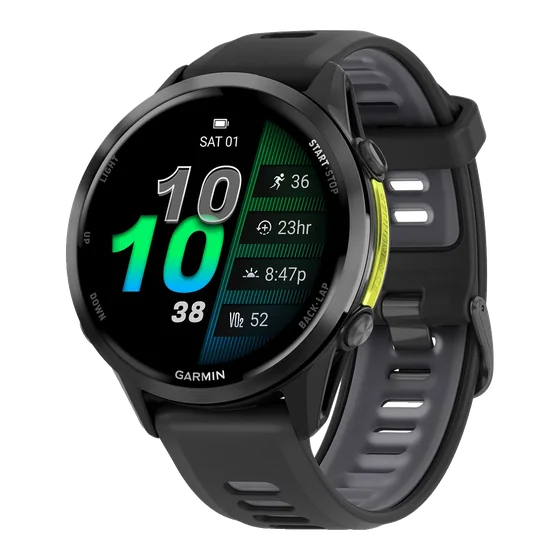
The five picks, from the first 5K up
Price band: under $250
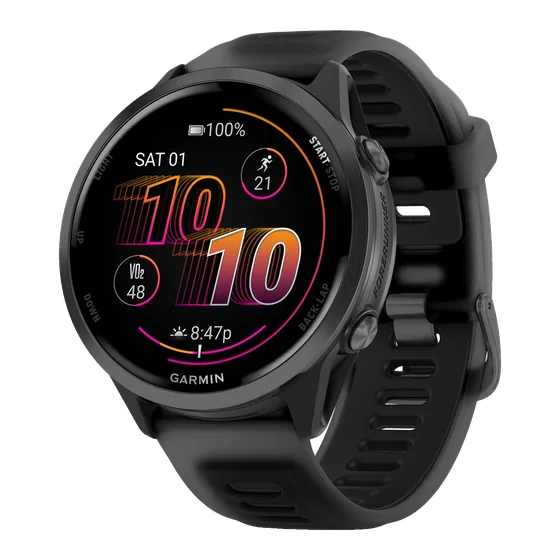
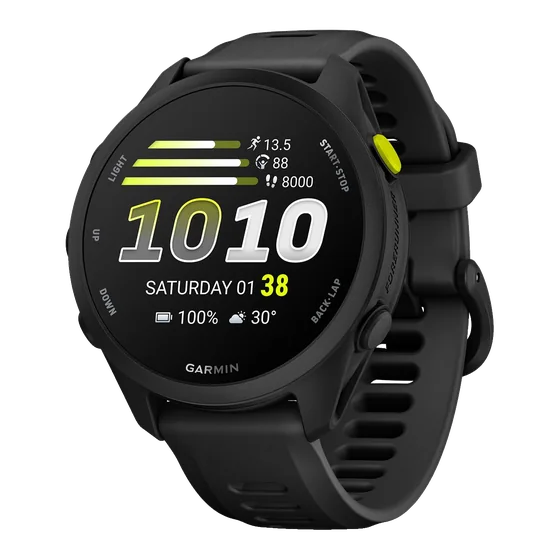
Garmin promises a coach in the box, and this claim arrives as advertised. Garmin Coach builds an adaptive plan around your race date, including run/walk plans for people starting from zero. Each day's workout appears on the watch, and it suggests one on days off-plan. Every morning, Training Readiness says whether to push or back off. You pay nothing extra for any of it. It pairs with iPhone and Android alike. At 1.4 oz (40 g), it's light enough to forget about by the second mile.
The GPS is the pleasant surprise. It's the cheaper single-band kind. Yet DC Rainmaker's tracks on trails, downtown streets and gravel came out virtually identical to Garmin's flagship Fenix 8 Pro in multi-band mode. Wrist heart rate stayed close to chest straps on steady runs. It lagged a few seconds only when easing off after a hard interval, the usual weak spot.
Battery is where the box and the run part company a little. Garmin rates it at 5 days with the always-on display. Real use landed either side of that: 4.5 days for a daily runner, 6 on a lighter schedule. Garmin's 13 days assumes raise-to-wake, and nobody has run that down yet. In its most accurate GPS mode, one lab saw it use nearly a tenth of its charge in an hour. That pace would empty it well before Garmin's 16 hours. It would still outlast any first half marathon.
On the treadmill, the FR70 manual has the fix. After the run, choose Calibrate & Save and enter the distance the treadmill shows. One early owner's treadmill complaint turned out to be a wrong number typed at exactly that step.
The catch is the missing list: no music, no maps, no Garmin Pay, no barometer. Hill totals are GPS guesses. For a first 5K, that's the right list to leave out. We'd buy it.
 Garmin Forerunner 70Under $250
Price band: under $250
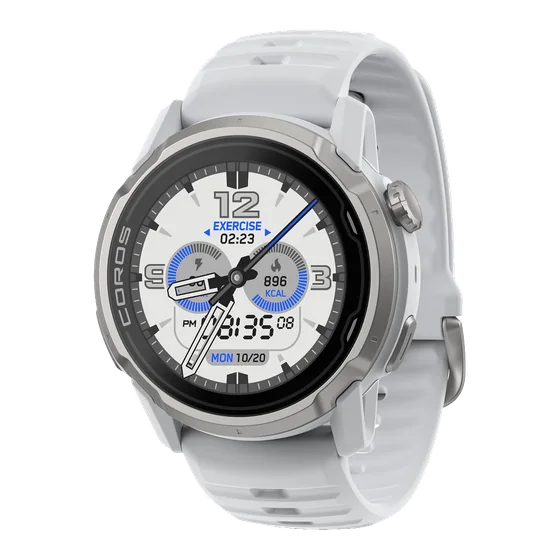
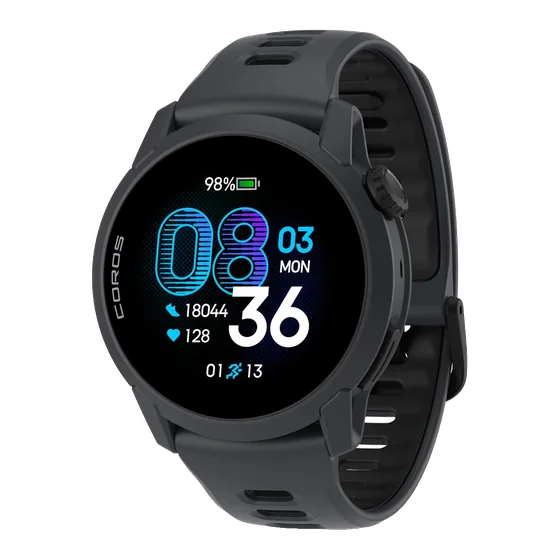
COROS claims 31 hours in its dual-frequency GPS mode. The accuracy that mode exists for is beyond argument. On roads, trails, downtown and race day, testers found its tracks among the cleanest they had recorded. In that mode, with the screen always on, it used only a small slice of its charge each hour. That pace projects to more than a full day of running. Leave the display lit around the clock and testers saw 4–6 days. One review that logged only a handful of workouts each week stretched a charge to 10–14 days, though it never said how the screen was set. On raise-to-wake, Tom's Guide's daily drain projects to about 10 days. Fitted with its nylon strap, it weighs 1.1 oz (32 g), the lightest watch here. Since September's firmware it also has free topo maps. COROS's own FAQ still says it doesn't.
COROS plans are free in its app. Coach-written workouts from TrainingPeaks or Final Surge load straight to the watch. There's no Garmin-style morning readiness score, so judging when you're tired is up to you.
The catch is winter. Three testers found its wrist heart rate close to a chest strap on runs. The Quantified Scientist tested in winter, found it poor, and suspected it had locked onto his stride. Runners who own one keep raising the same doubt once the temperature drops. Indoors is shakier. One Northeast US owner ran only on a treadmill for months, and his VO2 max never appeared.
For a runner who already knows how to train, it's the better watch for the money. That's why our COROS vs Garmin comparison puts it first. For a beginner who runs outside all winter and wants the most accurate distance, we'd buy the PACE 4.
 COROS PACE 4Under $250
Price band: under $350
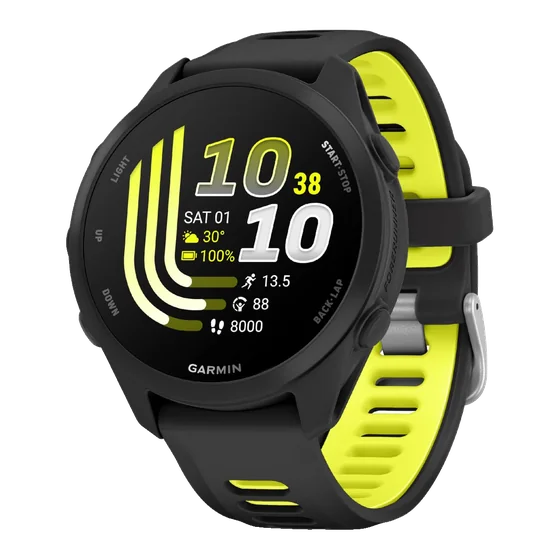
Garmin promises music with nothing in your pockets but a house key. Playlists from the big streaming services save to the watch, YouTube Music included since an update after launch. That holds, with fine print. Each service needs its paid tier to download. Apple Music doesn't work at all. Underneath, it's the Forerunner 70's coaching plus Garmin Pay, a barometric altimeter and 4 GB of storage. Testers who didn't name their 170 edition found its GPS tracks identical to the FR70's. On this Music edition, heart rate stayed close to a chest strap.
The catch is battery. Garmin claims 4 days with the always-on display. A daily runner's test came in at about 3.5, so you'll charge twice a week. Another tester got just over a week with several GPS runs, but didn't say how the screen was set. Music is the big drain. The manual cuts GPS time from 20 hours to 7.5 with music playing. That's a marathon with a podcast, not much more.
Headphones have stuttered once a run starts, on this model and on Garmin's other music watches. No firmware fix has been posted. Garmin's manual suggests a clear line between watch and headphone antenna, with the watch on the wrist that matches the antenna's side. It also suggests a silicone band over metal or leather.
What sets this pick apart is the coaching. If you'd give up Garmin's training feedback to pay the least for playlists on the wrist, our which Garmin to get guide picks the vívoactive 6 for you instead. If you're new, want the plan and readiness score, and would rather not carry the phone, we'd buy the Forerunner 170 Music.
 Garmin Forerunner 170 MusicUnder $350
Price band: under $200
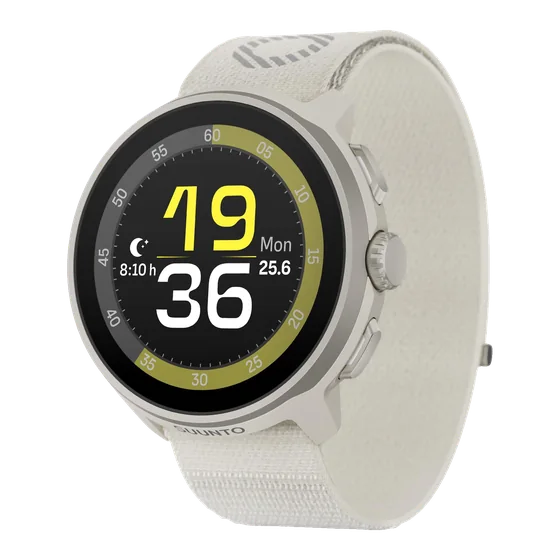
Amazfit's box reads like a watch from a couple of bands up. You get free topo maps, a bright 1.5-inch screen, 25 days of claimed battery and a gym mode that counts your reps. Its always-on figure holds up best. Amazfit says 10 days with the screen always on. Three runners at The Run Testers kept one going 16 days that way, at full brightness. People who also swim and lift in theirs still get more than a week. Nobody has yet run one down against the 25-day claim. If you'd forget the charger, nothing here forgives you more often.
On steady runs its heart rate tracked a chest strap closely. It spiked in intervals. Amazfit's Zepp Coach builds plans, and Runna supports it.
Where it falls down is distance. The chip listens on a single GPS band, and the tests disagree. On open routes its distances matched Garmin's flagships. Other testers saw tracks drift off the road and one walk come up well short. On suburban streets you won't notice. Downtown or under heavy trees, your mile splits may wobble. That also makes its maps a bonus for road runners, not a reason to trust it for finding your way on wooded trails. There's also no automatic screen lock. A jacket sleeve brushing the glass has ended runs early, which is not the coaching anyone ordered. The case is big at 1.9 in (48.5 mm) but light, about 1.4 oz (39.5 g) without the strap. If under $200 is a hard ceiling and your runs stay on open roads, we'd buy the Active Max. Our best running watch under $200 page explains why it beats its neighbors.
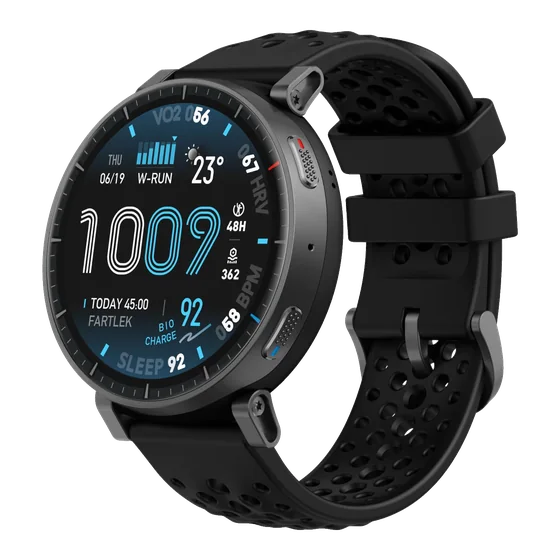 Amazfit Active MaxUnder $200
Price band: under $350
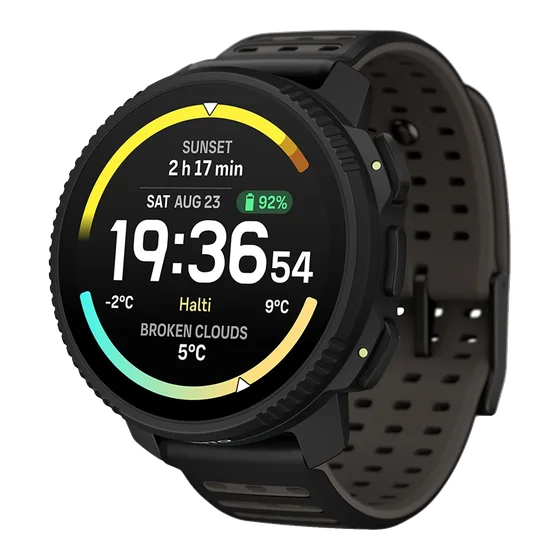
This is the watch for anyone cheated by a battery claim that quietly assumed the screen was off. Garmin claims 7 days with the always-on screen and 18 on raise-to-wake. The always-on figure lands on the box. A lab rundown came in just under seven days always-on. People who have worn one for weeks say the same. A third tester ran one flat over 16 days but didn't say how the screen was set. So nobody has yet run one down on raise-to-wake against the 18-day claim. You also get Garmin Coach run plans, Training Readiness, multi-band GPS and a real LED flashlight for dark mornings. Five buttons run it all, with no touchscreen.
The catch is size. At 1.9 oz (53 g) and 0.6 in (14.9 mm) thick, it's about a third heavier than the Forerunner 70. It's built more for the trailhead than the track. Testers with small wrists call the 45 mm case the limit. Its wrist heart rate also lagged a chest strap at the start of runs and on surges. If a week of always-lit screen matters more than a light wrist, we'd buy it.
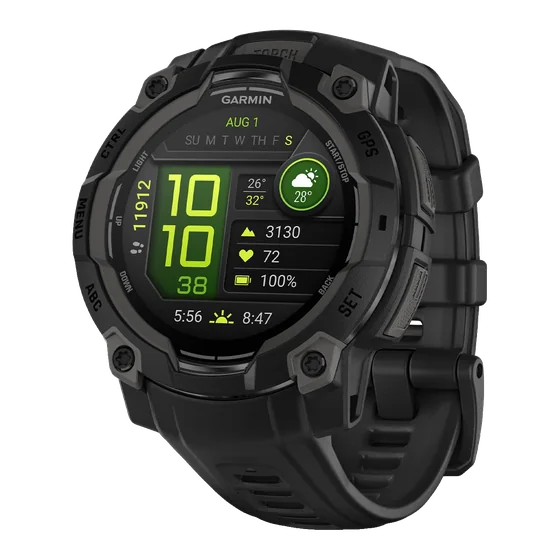 Garmin Instinct 3 – 45 mm, AMOLEDUnder $350