The quick answer
Our pick
Amazfit Active Max
Best under $200 for maps and battery
Opens Amazon.com · Prices change often
Running
By price band
Trail & outdoors
Multisport & gym
Compare & decode
The quick answer
Best under $200 for maps and battery
Opens Amazon.com · Prices change often
Price bands, not prices
| Watch | Verdict | Who it suits | The catch | Price band and link |
|---|---|---|---|---|
 Amazfit Active MaxOur pick | Best under $200 for maps and battery | Road runners who want free maps, their own podcasts and two weeks between charges | Single-band GPS that testers split on away from open roads | Under $200View on Amazon (opens in a new tab) |
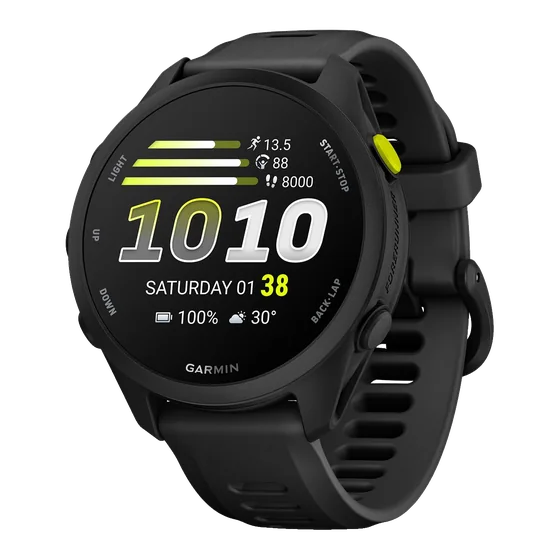
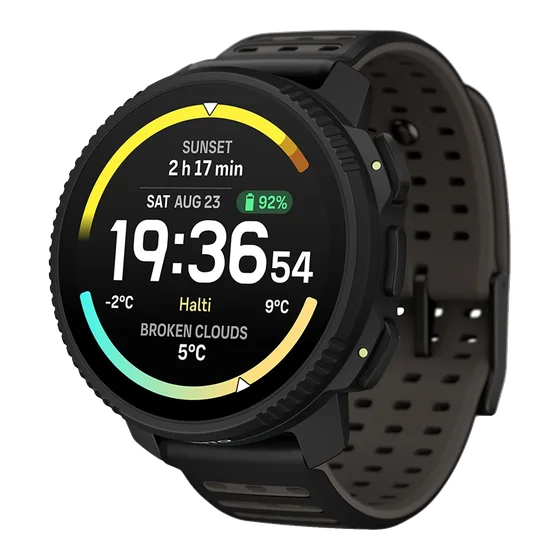
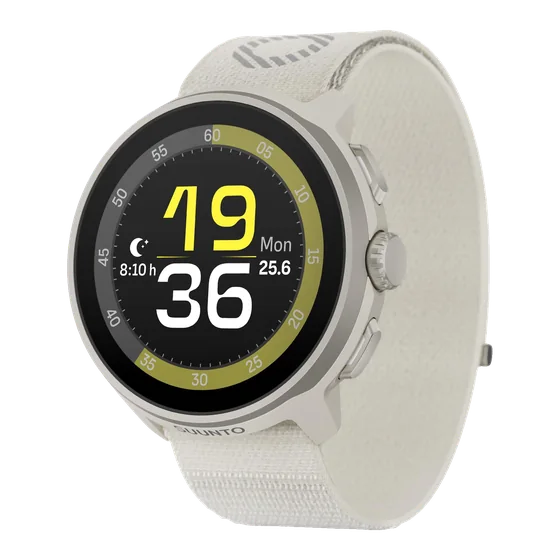 Suunto RunBuy | Best under $200 for distance you can trust | Runners whose routes go between tall buildings or under trees and who write their own workouts | Already replaced, and plans from other apps don't reach the watch | Under $200View on Amazon (opens in a new tab) |
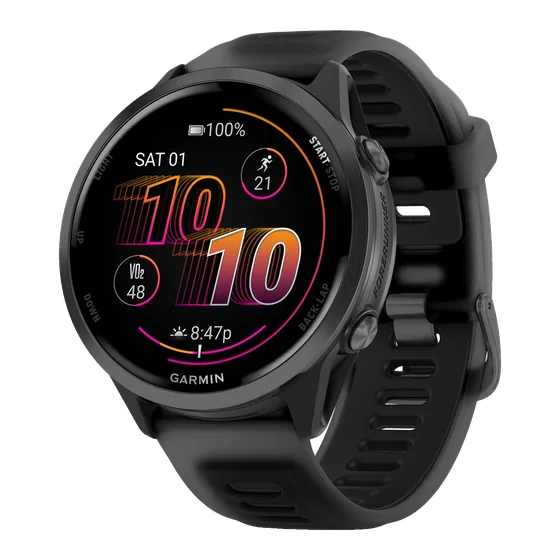
| Garmin Forerunner 165Skip | Skip it: the older Garmin in this band | Only buyers who must pay from the wrist or want an altimeter in this band and don't care about training feedback | Older Garmin software with no training readiness or load | Under $200 |
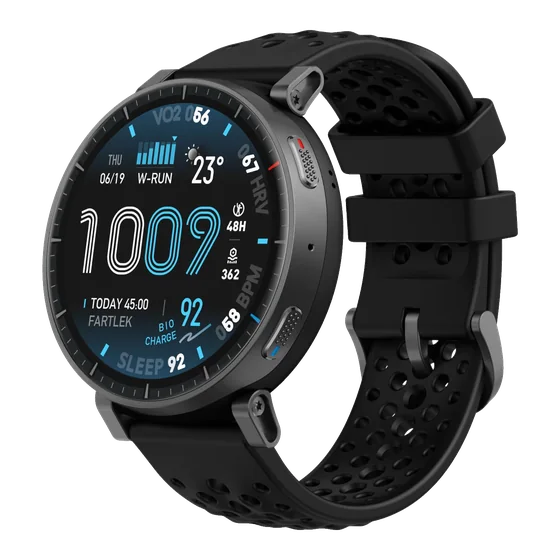
Every running watch under $200 leaves something out. The real question is which missing piece you'll never miss. For most runners on this budget, that's the Amazfit Active Max. It puts free topo maps and your own podcasts on your wrist. The Run Testers ran it for 16 days with the screen always on. Milewright's pick under $200 is the Active Max, for road runners who want maps and the fewest charges.
Its catch is the GPS. It listens on a single band, and testers split on it. It kept pace with Garmin's flagships on open routes, then lost a big slice of a walk elsewhere.
Amazfit Active MaxUnder $200Opens Amazon.com · Prices change often
Three things move it. If your runs go between tall buildings or under thick trees, and the distance has to be right, buy the Suunto Run. If you want Garmin, skip the Forerunner 165; the Garmin worth having sits one band up. If you can stretch that band, two watches there earn the stretch, and we weigh them below. The whole budget ladder is in our guide to what you give up at each budget.
Price band: under $200
Amazfit's box says 25 days of typical use and 64 hours of GPS. The days come out better than marketing usually does. With always-on at full brightness, The Run Testers got 16 days. Owners who swim, lift and run every week report about a week, with the watch off at night. That's not 25, but you charge it twice a month instead of twice a week. That's the part you live with.
The 64 hours is another matter. No tester has run the GPS flat, so it's a figure printed on the box and nowhere else. I'd treat it like a supplier quoting a service life with no test report attached: possibly true, not yet a fact.
The rest of the list is long and real. The contour maps cost nothing and give you directions at each turn. There's 4 GB of room for your own MP3s and podcast files, though Spotify can't play on it. There's a speaker, and it counts your reps on gym days. It's a big watch, 1.9 in (48.5 mm) across. The map menus are clumsier than they need to be; you learn them once.
The catch is the GPS. It hears one satellite frequency where multi-band watches hear two. Reflections off buildings and trees fool it more easily. On open routes, The Run Testers found its distance matched a Fenix 8 Pro and a Forerunner 970 closely. Then Tom's Guide had a walk logged at 4.55 miles against 6.1 on a phone running Strava. A watch that turns 6.1 miles into 4.55 is a generous coach and a poor witness. The evidence is broad, with several reviews and owners on this exact watch. Off the open road, it disagrees with itself.
It's for road runners who want maps, their own podcasts and the fewest charges. If distance downtown or under trees worries you, the Suunto Run below is the better buy. If you'll steer by those maps on wooded trails, you're a different buyer. Our roundup of hiking watches with maps skips the Active Max for that and sends budget hikers to the COROS PACE 4. We'd buy the Active Max.
Amazfit Active MaxUnder $200Opens Amazon.com · Prices change often
Price band: under $200
Suunto promises 20 hours of dual-band GPS, and this claim has its feet on the ground. OutdoorGearLab got 19 hours in its most accurate mode in Colorado. A tester in Alaska got 12–15 hours, and Suunto's user guide warns that cold shortens battery life. So plan a January long run around the low number. Either way, a marathon finishes with charge to spare.
That battery buys the best GPS in the band. It measured 1.98 miles on a known 2-mile course. On trails, testers found its tracks virtually identical to a Fenix 8 and an Apple Watch Ultra 2. Three labs agree on this exact watch, which is as strong as evidence gets at this price. It's light, too, at 1.3 oz (36.9 g) with its fabric strap. The trade is charging. With always-on, testers got 3 to 4 days, so this is a twice-a-week watch.
The catch is that Suunto has moved on. The Run 2 is already on sale. The original runs different software from Suunto's Race watches, with no SuuntoPlus apps. Owners find Runna workouts never reach the watch, and TrainingPeaks sessions must be rebuilt in Suunto's app. If you write your own intervals, you won't notice. If you follow another app's plan, you'll notice every week.
It's for runners on tall-building or tree-lined routes who'd rather have trustworthy distance than maps. If you can stretch a band, the COROS PACE 4 does the same job and adds maps. COROS rates it at 31 hours of dual-frequency GPS, falling to 24 if the display stays lit. One tester's drain rate projects to about 25 hours, though no one has yet tested a PACE 4 to empty that way. We'd buy the Run.
Suunto RunUnder $200Opens Amazon.com · Prices change often
Skip it: the older Garmin in this band
Price band: under $200
The 165 is the only watch here with Garmin Pay, Garmin's app and a barometric altimeter. Garmin claims 19 hours of GPS. OutdoorGearLab recorded 19 hours, but on a 165 whose edition it didn't name. So this exact watch's GPS hours remain unconfirmed. Its single-band GPS matched multi-band watches downtown, again on a unit of unstated edition.
What it lacks is the coaching Garmin now puts in its entry watch. There's no Training Readiness, Training Status or Load. This non-Music edition stores no music, and there are no maps. It launched in February 2024 and isn't on Garmin's newer shared software, where features arrive together. Updates since have been modest. Tapping to pay at the coffee shop after a long run is pleasant. It's a thin reason to choose a running watch.
Skip it, unless paying from your wrist or reading barometric altitude is the one thing you won't give up at this budget. If you want Garmin, stretch to the Forerunner 70.
Price band: under $250
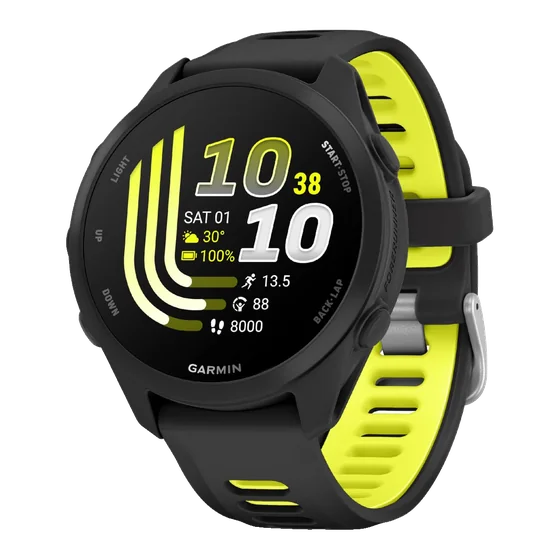
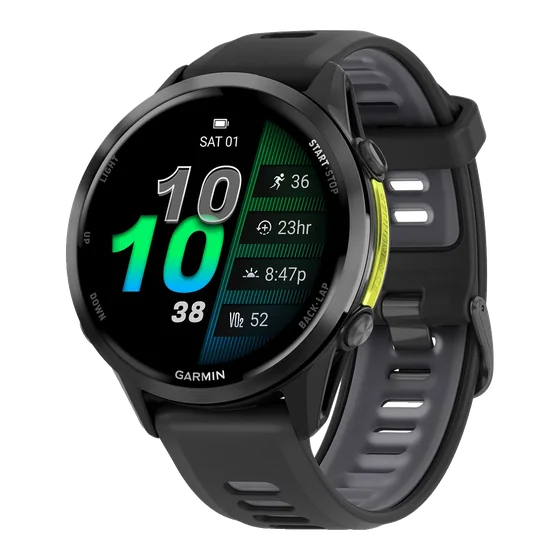
The Garmin Forerunner 70 replaced Garmin's old entry watch in May. It sits over this page's budget. Garmin claims 5 days with always-on. Testers got 6 with lighter running and 4.5 running every day, so the claim sits fairly in the middle. The GPS figure worth knowing is the best mode. One tester's hour of running burned just under 10%/hour. That pace projects to about ten hours, against Garmin's 16-hour All-Systems claim. It's a single sample, and still a marathon with time in hand.
Its single-band GPS is the surprise. Downtown and on trails, its track was virtually identical to Garmin's multi-band Fenix 8 Pro. Garmin Coach plans, run/walk included, come free on the wrist with a daily readiness score.
The catch is that it gives up the two things the 165 has over it: Garmin Pay and a barometric altimeter. Climbs come from GPS, and one tester found them reading low. It doesn't store music either.
It's for new and road runners who can stretch a band for a plan on the wrist. It's also our pick for a first running watch, and the whole case is in our Forerunner 70 review. If you can stretch, we'd buy it.
Price band: under $250
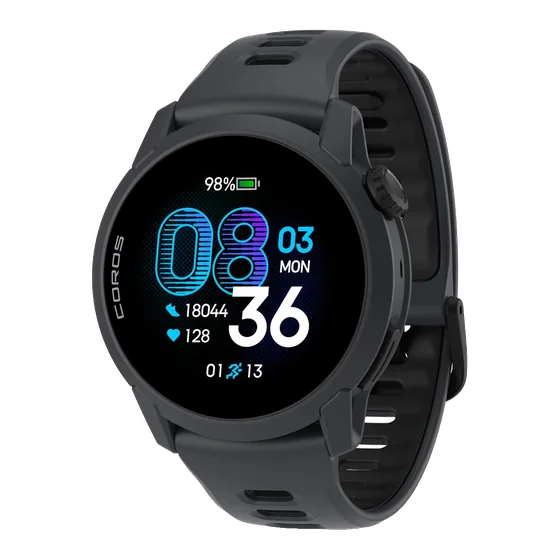
COROS says the COROS PACE 4 runs 31 hours in dual-frequency mode, or 24 with the display lit. On DC Rainmaker's runs in that mode, screen on, it drew about 4%/h. That pace projects to about 25 hours: a long trail day with room left over. It has more testing behind it than any watch here, and every tester came back with clean lines. The Run Testers wore it for six months, through a marathon and a half marathon, with no complaint about distance. At 1.1 oz (32 g) on the nylon band, it's the lightest watch here.
Maps arrived with the September 26, 2026 firmware: free topo and landscape maps. Reviews written before then say it has none. They're out of date, so don't pass on it over them.
The catch is that the maps are squeezed. They don't route, and the screen is 1.2 in. Storage is 4 GB, and system files had already taken over half of it on one tester's watch. That's fine for trails near home and tight for a road trip.
It's for runners who can stretch a band for clean distance and maps. It's also our pick one budget up, and our PACE 4 review weighs it in full. If you can stretch, we'd buy it.
Two watches here are under a year old: the Active Max (December 2025) and the Forerunner 70 (May 2026). The Forerunner 70 replaced the Forerunner 55 that older lists still lead with. Both already have several independent tests behind them. The one to watch is the Suunto Run 2, on sale since this fall and priced well above this band. Suunto pitches it on free maps and a brighter screen. None of its results carry over to the original Run. We see no sign of a new watch heading for this band, so we wouldn't wait.
We weighed the four watches people shop at this budget and two one band up. Each maker's promises went up against what independent testers and owners got on the exact model. No watch earns a buy on the maker's word. It needs two separate kinds of source, at least one of them not the maker, both about the very watch you'd get. None of these six watches has been recalled. When we searched the federal recall database in early November, it held nothing for Amazfit, Garmin, Suunto or COROS watches.
On an open road course, the evidence says yes. Off the open road, it's unproven. One walk that badly short is enough to make us cautious. If a PR on a city course is the point, buy the Suunto Run.
Tests or projections put four of them past a marathon. The Suunto Run measured 19 hours, or 12–15 in Alaska cold. The Forerunner 165 recorded 19 hours on an unnamed edition. The Forerunner 70 projects to about ten hours in its best mode, the PACE 4 to about 25 hours. The Active Max's case rests only on Amazfit's 64-hour claim, with no rundown behind it. If your race runs long, our GPS battery planner works out what your slowest finish needs.
Yes, if dual-band GPS is what you're paying for and your budget stops under $200. Suunto added power-meter support by firmware in July 2025, so it hasn't been abandoned. It hasn't committed to the Run's future either. Buy it for what it does today.
Only the Forerunner 165 has Garmin Pay. The Active Max carries Zepp Pay, but we couldn't confirm which US banks support it. Don't buy it for that. The Suunto Run has no payments, and neither do the two watches one band up.
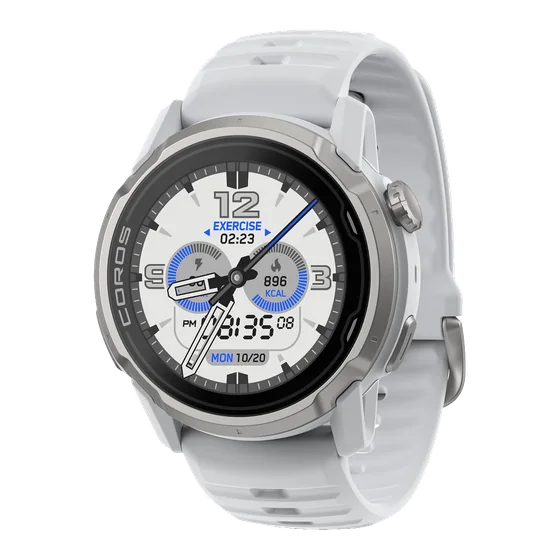
Its MIP screen is always on and easy to read in sun. One owner returned it because it was too dim indoors. On paper it runs 15 hours in dual-frequency mode, but every independent test of it dates from 2023. In May 2026 a firmware update killed watches days or weeks later, the PACE 3 most often. COROS support first offered a discount through a chatbot. Only after owners pushed did it confirm replacements. It sits in the under $250 band, where we'd buy the PACE 4. The two are compared in PACE 4 vs PACE 3. If hiking maps are your real need, see GPS watches for hiking with maps.
| Watch | Offline maps | Multi-band GPS | Music on the watch | Pay from the wrist |
|---|---|---|---|---|
| Amazfit Active MaxView on Amazon (opens in a new tab) | Yes, free | No | Your own files | Zepp Pay, US banks unconfirmed |
| Suunto RunView on Amazon (opens in a new tab) | Breadcrumbs only | Yes | Your own files | No |
| Garmin Forerunner 165 | Breadcrumbs only | No | No | Garmin Pay |
Best under $200 for maps and battery
Maps and your own podcasts sit on your wrist, and the charger can stay in a drawer for two weeks. The cheapest watch here to live with is the one you'll charge least. Its testing holds up everywhere except GPS off the open road. If your distance has to be right downtown, the Suunto Run is the better buy. For road runners on this budget, buy the Active Max.
Amazfit Active MaxUnder $200Opens Amazon.com · Prices change often
| Watch (exact variant) | Maps | Multi-band GPS | Music | Payments | Barometric altimeter | Software status | Call |
|---|---|---|---|---|---|---|---|
| Amazfit Active Max (A2557) | Free contour and ski maps, turn-by-turn | No, L1 only | MP3 and podcast files, 4 GB | Zepp Pay, US banks unconfirmed | Not stated in our evidence | Current, released December 2025 | Buy, overall pick |
| Suunto Run (first generation) | Breadcrumbs and routes only | Yes | MP3, FLAC, WAV, AAC files, 4 GB | No | Not stated in our evidence | Current, May 2025; replaced by the Run 2 | Buy |
| Garmin Forerunner 165 (non-Music) | Breadcrumbs and GPX courses | No | No (Music edition only) | Garmin Pay | Yes | Current, February 2024; not on Garmin's newer shared platform | Skip |
| Garmin Forerunner 70 | Breadcrumbs only | No | No | No | No | Current, May 2026; on Garmin's newer shared platform | Considered: one band up |
| COROS PACE 4 (standard, W336) | Topo and landscape since V3.2008.0, non-routable | Yes | MP3 files, 4 GB | No | Not confirmed in our evidence | Current, November 2025 | Considered: one band up |
| COROS PACE 3 (W331) | Breadcrumbs only | Yes | MP3 files, 4 GB | No | Yes, per COROS | Current, August 2023; still updated September 2026 | Considered |
| Watch | Maker's claim | What testers and owners got | What it means |
|---|---|---|---|
| Active Max | 25 days typical, 64 hours GPS, 10 days always-on (Amazfit's spec figure, restated by Gadgets & Wearables) | 16 days always-on at full brightness (The Run Testers, three runners); about 7 days for two owners with always-on, weekly swims, gym and GPS, not worn overnight | Twice a month; no independent GPS rundown |
| Suunto Run | 20 h dual-band (Performance mode), 40 h power saving, 12 days | 19 h in highest-accuracy mode (OutdoorGearLab, Colorado, November 2025); 12–15 h over two months of runs, hikes and skis in Alaska (CleverHiker), which reported almost 10%/h, a pace that projects to about ten hours; always-on 3 days with daily workouts (OutdoorGearLab), 4 days (DC Rainmaker); charge 78 min | Close to the claim in mild weather, short in cold |
| Forerunner 165 | 19 h GPS, 17 h All-Systems, 11 days, 4 days always-on, 20 days battery saver | 19 h GPS recorded by OutdoorGearLab (bought retail July 2024) on an edition it didn't name; owners 5–7 days, edition not stated | This exact watch's GPS hours are not confirmed |
| Forerunner 70 | 23 h GPS, 16 h All-Systems, 13 days, 5 days always-on | Always-on 6 days (Tom's Guide, newer runner) and 4.5 days running daily (The Run Testers); just under 10%/hour in best GPS mode over one hour (TechRadar), a pace that projects to about ten hours | Always-on claim fair; GPS hours unproven |
| PACE 4 | 31 h dual-frequency (24 h always-on), 41 h All Systems, 19 days (6 days always-on) | About 4%/h in max GPS with always-on (DC Rainmaker), projecting to about 25 hours; always-on about 6 days (DC Rainmaker), 4–5 days running daily (Tom's Guide), about 4.5 days over six months (The Run Testers) | Most race-day battery projected for any watch here |
| PACE 3 | 15 h dual-frequency, 38 h standard GPS, 15 days | Last independent battery test from 2023, against an older claim COROS has since lowered | Not measured on current firmware |
| Watch | Found good | Found trouble | On this exact model? |
|---|---|---|---|
| Active Max | The Run Testers (matched Fenix 8 Pro and FR970 closely; live pace lagged about 10 s); The Quantified Scientist (running loops solid) | Tom's Guide (a walk at 4.55 mi against 6.1 mi on Strava; climb 1,588 ft against 1,232 ft) | Yes: two good, one trouble |
| Suunto Run | OutdoorGearLab (1.98 mi on a known 2-mile course); DC Rainmaker (virtually identical to Fenix 8 and Apple Watch Ultra 2 on trail); CleverHiker (strong, sometimes short by up to 0.2 mi) | One Suunto forum tester (long on every run, up to nearly 3%) | Yes |
| Forerunner 165 | DC Rainmaker (matched or beat multi-band watches downtown and on MTB switchbacks); OutdoorGearLab (+/-0.03 mi on a 2.80-mile known course) | None | Edition not stated in either test |
| Forerunner 70 | DC Rainmaker (virtually identical to multi-band Fenix 8 Pro on trail, downtown and gravel); The Run Testers (matched multi-band watches) | None | Yes |
| PACE 4 | DC Rainmaker, Tom's Guide, The Run Testers (six months), The Quantified Scientist | TechRadar compared against a single Huawei watch, a weak reference rather than a fault | Yes |
| PACE 3 | DC Rainmaker (2023: most accurate COROS at the time, strong downtown) | Open water struggled in one section | Yes, launch firmware only |
We'd skip the Forerunner 165. Its GPS is sound, but the lab results come from 2024 firmware on an unnamed edition, it lacks the training readiness and load the Forerunner 70 carries, and its software sits outside Garmin's newer shared platform. It earns a place only where Garmin Pay or an altimeter in this band is non-negotiable.
The Forerunner 70 and PACE 4 were weighed and left off the picks only because both sit in the under $250 band, over this page's budget; on the evidence, either is worth the stretch.
The COROS PACE 3 was considered and left out. It offers always-on MIP and a dual-frequency mode, and it was still getting updates in September 2026. But no independent test of it is newer than 2023, and the May 2026 firmware failures hit it hardest. It also shares the under $250 band with the PACE 4. That watch has maps and more recent battery testing, though its dual-frequency hours are a projection (about 25 hours) rather than a rundown.
| Question | What the sources say | Where it stands |
|---|---|---|
| Active Max always-on days | 16 days (The Run Testers) against about 7 days (two owners) | Explained by use: swims, GPS hours and overnight wear |
| Active Max screen lock | The Run Testers found no auto screen lock, and a sleeve brush ended runs | We have no Active Max manual, so we can't say whether a setting fixes it |
| Active Max map navigation | Tom's Guide found map navigation needlessly complicated | A usability quirk, not a fault |
| Active Max GPS hours | One review's spec table lists far fewer GPS hours than Amazfit, with no test behind it | Treated as an error |
| Active Max wrist HR | 0.96 r against a chest strap on runs, on pre-release firmware; missed nearly all set peaks in lifting (The Quantified Scientist) | Fine on runs, not for the gym |
| Suunto Run wrist HR | Within about 1 bpm of a chest strap on steady runs (OutdoorGearLab); bobbing on track intervals (DC Rainmaker); smoothed over intervals (CleverHiker) | Pair a strap for intervals |
| Suunto Run battery drain | In one r/Suunto thread, two owners report sudden drain, one after an update, and a third had none at two months; none of them is confirmed to own this exact first-generation Run | Not evidence for this watch; its daily battery comes from the lab figures above |
| Suunto Run compass | The user guide documents a gyro-assisted compass; one review says it has none | The manual is right |
| Suunto Run power meters | Launch reviews say no; firmware on July 3, 2025 added them | Explained by the firmware date |
| Forerunner 70 extras | Daily Suggested Workouts and Quick Workouts come with Garmin Coach (Garmin press release) | Free; Garmin Connect+ extras are optional |
| PACE 4 running HR | Good for DC Rainmaker, Tom's Guide and The Run Testers; poor for The Quantified Scientist in winter, with suspected cadence lock; owners lean his way in cold weather | Open |
| PACE 4 maps | The COROS FAQ still says no full mapping; the user guide and V3.2008.0 release notes (September 26, 2026) list topo and landscape maps | The FAQ is stale |
| Forerunner 70 battery replacement | DC Rainmaker says, replying to a reader, that the battery is user-replaceable | Procedure and US parts not yet published |
6 models weighed; 3 maker manuals among them; across this site's research, 367 sources kept in full; 148 Reddit threads read, kept as the reader's summary, not in full.
How we research
Milewright doesn't test watches. It sets each maker's claim against what labs, reviewers and owners measured on the exact same model, and tells you which number to believe.
By price band
Trail & outdoors
Multisport & gym
Compare & decode
Reviews