The quick answer
Wait
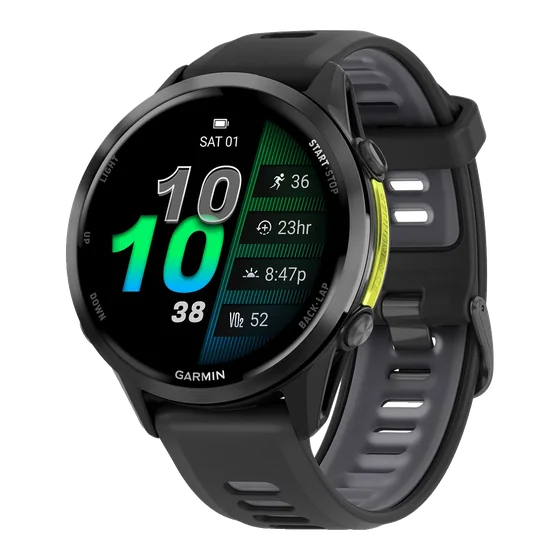
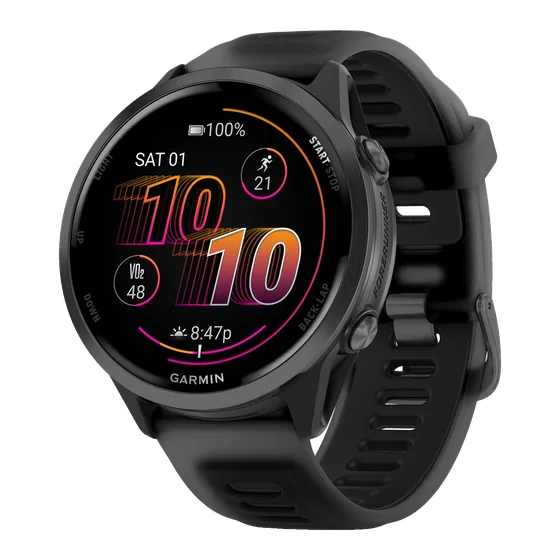
Garmin fēnix 9 Pro – inReach, 47 mm
The one to watch: satellite SOS with no phone
Under $1,200
Running
By price band
Trail & outdoors
Multisport & gym
Compare & decode
The quick answer
The one to watch: satellite SOS with no phone
Price bands, not prices
| Watch | Verdict | Who it suits | The catch | Price band and link |
|---|---|---|---|---|
| Garmin fēnix 9 Pro – inReach, 47 mmWait | The one to watch: satellite SOS with no phone | Solo hikers and trail runners who want to text or call for help with no phone and no cell signal | Satellite sends are slow and need you to stop and aim, and every LTE and satellite feature needs a paid Garmin plan | Under $1,200 |
| Apple Watch Ultra 4Wait | Free satellite SOS for two years, iPhone only | iPhone owners who want SOS from the wrist without a monthly bill at first | Texting by satellite needs a watch cellular line and an iPhone 14 or later, and Apple publishes no price after the free two years | Under $800 |
| Garmin fēnix 9 – 47 mmWait | The watch half of a watch plus inReach Mini 3 | Hikers who want global satellite coverage and tracking from a handheld, with a Garmin on the wrist | No SOS of its own, two things to carry and charge, and the base 47 mm model is untested | Under $1,000 |
An LTE watch won't get you help where your phone has no bars. LTE is a cell tower by another name. For a dead zone you need a satellite, and there are three ways to wear one. Garmin's fēnix 9 Pro inReach texts by satellite from your wrist with no phone at all. Apple's Watch Ultra 4 gives you satellite SOS free for two years. Or you wear a plain fēnix 9 and clip a separate inReach Mini 3 to your pack strap. The running costs split them more than the hardware does. Garmin's cheapest watch plan comes to $279.65 over three years. Apple charges nothing for two years and hasn't said what comes after. The Mini 3 starts with a $39.99 activation fee. Milewright's one to watch for SOS from the wrist is the fēnix 9 Pro inReach (47 mm), because it can text from the backcountry with no phone and no phone line. We'd still wait. All three watches came out this fall, and nobody has shown how often a watch's satellite message gets through when it matters.
Garmin's manual lays out the chain. The fēnix 9 Pro inReach uses your phone's connection when the phone is in Bluetooth range. Out of range, it uses its own LTE. With no tower either, it falls back to a satellite. Over satellite it sends texts, check-ins, an interactive SOS and weather requests. Voice messages, photos, calls and live tracking need LTE.
The satellite is geostationary, parked over the equator. So the manual tells you to stop, aim with an on-screen compass, and allow "30 seconds or more" of good signal. Coverage is the continental US, parts of Canada and most of Europe. That leaves out Hawaii and everything north of the 65th parallel. Every one of these features, SOS included, needs an active Garmin inReach plan. Without one, the watch can only ask your phone to call for help.
Apple uses low-orbit satellites passing overhead. It quotes about 30 seconds to send in ideal conditions, and a minute or more under trees. Emergency SOS by satellite works without a carrier plan. Messages and Find My by satellite need a cellular line on the watch. They also need an iPhone 14 or later, switched on and connected somewhere, though not necessarily with you.
A handheld inReach such as the Mini 3 uses Iridium satellites, which Garmin gives as global coverage. It also does satellite live tracking, which Garmin says its watches can't.
No. LTE needs a cell tower, so where there's none in range, it can't help. Garmin's watch can roam onto partner networks your phone may not use, but it still needs a tower. The Galaxy Watch Ultra (2025) is an LTE watch for Android owners, and Samsung's claims as we read them mention no satellite. LTE earns its keep on a run around town without your phone. Past the last tower, only a satellite counts.
Decide by where you go before you decide by brand. If your trips stay in the lower 48 and you want one thing on your body, a satellite watch covers you. Garmin's works with no phone at all. A handheld inReach is the better tool if:
Whichever route fits, wait for evidence on the exact watch. Right now the satellite feature has been described more than measured.
| Route | Hardware price band | Cheapest plan that keeps SOS | First year | Three years |
|---|---|---|---|---|
| fēnix 9 Pro inReach (47 mm) | under $1,200 | Garmin Enabled, $7.99 a month: SOS and unlimited LTE, satellite texts paid as you go | $87.89 | $279.65 |
| Apple Watch Ultra 4, SOS only | under $800 | No plan: Emergency SOS by satellite | $0 | $0 for two years; year three unpriced |
| Apple Watch Ultra 4, with texting | under $800 | Verizon watch line, $15 a month: LTE plus Messages and Find My by satellite | $180 | $540, plus Apple's unpublished year-three price |
| fēnix 9 (47 mm) plus inReach Mini 3 | under $1,000 for the watch; the Mini 3 isn't on our product list | Garmin Essential, $14.99 a month, plus a $39.99 activation | $219.87 | $579.63 |
Garmin's higher tiers buy bundles of satellite texts, up to unlimited on Premium at $49.99 a month. That tier comes to $1,749.65 over three years on the watch, or $1,839.63 with the Mini 3. Every tier is in the evidence at the foot of the page.
Where the figures come from. Garmin's prices are from its US plans page, read Nov 1, 2026. Plans bill monthly with no contract. Watches get a free first month and no activation fee. The Mini 3 pays the $39.99 activation, and we've assumed no free month. We couldn't confirm the Enabled tier is open to a handheld, so the Mini 3's row starts at Essential. The Enabled row assumes you send no satellite texts; each one adds to the bill. Apple's terms and Verizon's $15 a month were read the same day. We didn't read other carriers' pages.
Nobody outside Apple knows. Apple says its satellite features are free for two years from activating an Ultra 3 or later. It publishes no price for afterward. I spent a career reading supplier quotes, and a line item marked TBD always turned out to be a cost. Budget for a third-year charge of unknown size, due around fall 2028 for a watch activated this fall.
Garmin's own US plans page, read Nov 1, 2026, lists the Enabled tier at $7.99 a month. That pays for SOS and unlimited LTE, with satellite texts billed as you send them. Some launch-week coverage quoted $9.99 a month. We go by the maker's page, since it sends the bill.
The one to watch: satellite SOS with no phone
Price band: under $1,200
Garmin promises a full fēnix that can text home or call for rescue by satellite, with your phone left in the car. The radio side holds up. Of the three routes, this is the one where the watch alone can text home by satellite, with no phone and no phone line behind it.
What it won't be is quick. DC Rainmaker tested a fēnix 9 Pro inReach whose size he didn't state. He needed 20 to 30 seconds to find the satellite and 5 to 10 more to send. All the while, his arm was held out like a man hunting for one bar in a parking garage. After repeated failures, the watch suggests taking it off and turning your back to the sky. He called it "finicky", and still carries an inReach Mini for serious trips. One owner's check-ins sat pending for minutes until LTE was switched off by hand. That's a single report, but it's the wrong kind of story for an SOS button. Garmin's own fine print says the watch's SOS has "important limitations compared to other inReach devices". That is as close as a maker gets to recommending its other product.
Credit Garmin for printing the battery cost. It rates this watch at 32 hours of GPS, and 16 hours with live tracking over LTE. The radio halves your day, in the maker's own words. The 18-day smartwatch figure is harder to recognize. The same tester got about 5 days on a 47 mm Pro inReach whose screen type he didn't state. He ran an hour or two of GPS a day with the screen always on. Owners keep returning theirs over LTE drain. The manual says to set LTE to Auto rather than On, and to send a test message before a trip.
Garmin also said in June that you can suspend the plan and keep up to 12 months of free SOS. That reached us through a UK boating trade body, not the US plans page. Confirm it with Garmin before you count on it.
Wait. Every satellite test so far is on a sibling of unstated size, and no owner has reported a rescue or a timed send. We want a full review of the 47 mm AMOLED model itself. It's a wait on our hiking watch with maps roundup too.
Free satellite SOS for two years, iPhone only
Price band: under $800
Apple promises satellite SOS and satellite texting from the wrist, free for two years. The SOS part is generous and real: it needs no carrier plan. DC Rainmaker, who has used both systems, prefers Apple's low-orbit link to Garmin's. It's quicker and needs less aiming.
The strings come with texting. To tell your partner you're late but fine, the watch needs its own cellular line, $15 a month on Verizon. It also needs an iPhone 14 or later, switched on and connected somewhere. Apple's support pages flag two things for before you leave. Turn on iMessage via satellite. And know that a nearby iPhone in Airplane Mode blocks satellite. That second one will catch someone saving phone battery at camp.
Apple rates it at 18 hours of GPS, and testers' measured drain projects to about 18.6 hours. That's one long day on the trail, not a weekend. Nobody has measured what satellite sends cost in battery on any watch here. And it works only with an iPhone.
Wait. No owner has reported a satellite send with the iPhone left at home, and year three is a blank on the bill. For iPhone owners who want one watch for everything, we set the Ultra 4 against Garmin's running flagship in Apple Watch vs Garmin for running. It's a wait there as well.
The watch half of a watch plus inReach Mini 3
Price band: under $1,000
The base fēnix 9 has no LTE and no satellite. On its own it can only ask your phone to call for help. Add an inReach Mini 3 and you get what the watches can't give you: Iridium's global coverage, satellite tracking your family can follow, and an SOS that doesn't depend on aiming your wrist. It's the setup people who know Garmin's watch satellite keep choosing. The tester above carries a Mini. So does one owner of the largest Pro inReach, who calls his watch the third backup.
The catch is that everything doubles. You get two things to charge and carry, an activation fee and no free month. Neither half is measured in our evidence. There's no test of the base 47 mm fēnix 9, and none of the Mini 3, which isn't on our product list, so we give it no price band. The Enduro 4 has no LTE or satellite either, and could be a longer-lasting watch half. It's waiting on a full battery test, as our ultra marathon watch page explains.
Wait for a test of the base 47 mm fēnix 9 before buying the watch half.
Wait, and know what you're waiting for. Four things would let us make a call:
These watches launched in September and October. Garmin has promised its Mac map-sync fix before year end. Owner reports should build through the winter, and we'll revisit this page as they land.
Satellite SOS on a watch is real now. Whether it gets through while your hands shake at dusk is the one spec nobody prints.
Garmin prices from its US plans page, read Nov 1, 2026. Apple terms from its support pages and Verizon's smartwatch plans page, both read Nov 1, 2026. The watch's first year is the free month plus the paid months after it; the Mini 3 pays a $39.99 activation and is assumed to get no free month.
| Route and hardware | Plan, as its provider lists it | What it pays for | First year | Three years |
|---|---|---|---|---|
| fēnix 9 Pro inReach (47 mm), under $1,200 | Garmin Enabled, $7.99 a month | SOS, unlimited LTE texts, calls and live tracking; satellite texts and weather $0.50 each, check-ins $0.10 | $87.89 | $279.65 |
| (same watch) | Garmin Essential, $14.99 a month | Unlimited LTE; 50 satellite texts or weather requests included, unlimited check-ins | $164.89 | $524.65 |
| (same watch) | Garmin Standard, $29.99 a month | 150 satellite texts included | $329.89 | $1,049.65 |
| (same watch) | Garmin Premium, $49.99 a month | Unlimited satellite texts | $549.89 | $1,749.65 |
| Apple Watch Ultra 4, under $800 | No plan | Emergency SOS by satellite | $0 | $0 for two years; Apple publishes no price for year three |
| (same watch) | Verizon watch line, $15 a month | LTE, plus Messages and Find My by satellite | $180 | $540, plus Apple's unpublished year-three satellite price |
| fēnix 9 (47 mm), under $1,000, plus inReach Mini 3 (not on our product list) | Garmin Enabled, $7.99 a month | Not confirmed for a handheld in what we read | Not confirmed | Not confirmed |
| (same pair) | Garmin Essential, $14.99 a month, plus $39.99 activation | 50 satellite texts or weather requests included | $219.87 | $579.63 |
| (same pair) | Garmin Standard, $29.99 a month, plus $39.99 activation | 150 satellite texts included | $399.87 | $1,119.63 |
| (same pair) | Garmin Premium, $49.99 a month, plus $39.99 activation | Unlimited satellite texts | $639.87 | $1,839.63 |
| Source | Unit | What they found |
|---|---|---|
| Garmin manual | fēnix 9 series | Stop, aim with the on-screen compass, allow 30 seconds or more of good signal; send a test message before a trip |
| DC Rainmaker, Sep 2026 | fēnix 9 Pro inReach, size and screen not stated | 20 to 30 seconds to lock, 5 to 10 to send; arm held away from the body; an "Alternate" off-wrist method appears after repeated failures; moving a short distance fixed one failure; verdict "slow, cumbersome, and finicky"; carries an inReach Mini for frequent messaging or tracking |
| Apple Support | Ultra 3 or later | About 30 seconds in ideal conditions, over a minute or several under foliage; clear view of sky and horizon; watch must be dry |
| One Reddit owner | "9 Pro" inReach, size not stated | Check-ins pending for minutes under open sky in remote hills; worked once LTE was turned off manually. Firmware unknown; contradicts the manual's phone, then LTE, then satellite fallback |
| One Reddit owner | fēnix 9 Pro inReach, largest size, AMOLED (sibling) | Still carries an inReach Mini and a satellite-capable phone; treats the watch as a third backup |
Not found anywhere: a real SOS incident, a timed watch-only send by an owner, an owner's bill after the free month, or a battery cost per satellite message on any watch here. DC Rainmaker prefers Apple's low-orbit system for speed and aiming; he favors Garmin's on cost and phone independence. With LTE coverage, Garmin's watch can stream live tracking without a phone, which is where owners report using it most.
| Watch | Maker's claim | What was measured or reported |
|---|---|---|
| fēnix 9 Pro inReach (47 mm) | 18 days smartwatch; 32 h GPS (Normal); 26 h Max Accuracy; 16 h with LTE LiveTrack | DC Rainmaker: about 5 days on a 47 mm Pro inReach, screen type not stated, with an hour or two of GPS a day (Garmin assumes half an hour), always-on screen, LTE on Auto. LTE forced On "can basically take the watch from happy to dead in a day"; his boat-day result is a chart with no figures. Owners: one returned it over LTE drain and kept a Mini 3; one returned a 47 mm Pro inReach after about five days on light use, with a support ticket unanswered for over a week |
| Apple Watch Ultra 4 | 18 hours GPS; 25 hours Extended; 45 hours Max Extended | DC Rainmaker's drain over a short ride and a longer outing projects to about 18.6 hours. A projection, not a rundown |
| fēnix 9 (47 mm) | 16 days smartwatch; 30 h GPS (Normal) | No measurement on the base model |
The CPSC recall database, queried Nov 4, 2026, returned no recall naming Garmin or Apple Watch.
5 models weighed; 2 maker manuals among them; across this site's research, 367 sources kept in full; 148 Reddit threads read, kept as the reader's summary, not in full.
How we research
Milewright doesn't test watches. It sets each maker's claim against what labs, reviewers and owners measured on the exact same model, and tells you which number to believe.
By price band
Trail & outdoors
Multisport & gym
Compare & decode
Reviews